
Plan a Casino Stay Without Guessing What’s Included
A practical overview of accommodation, casino rooms, food, transport and facilities, with booking terms treated separately from promotional claims.
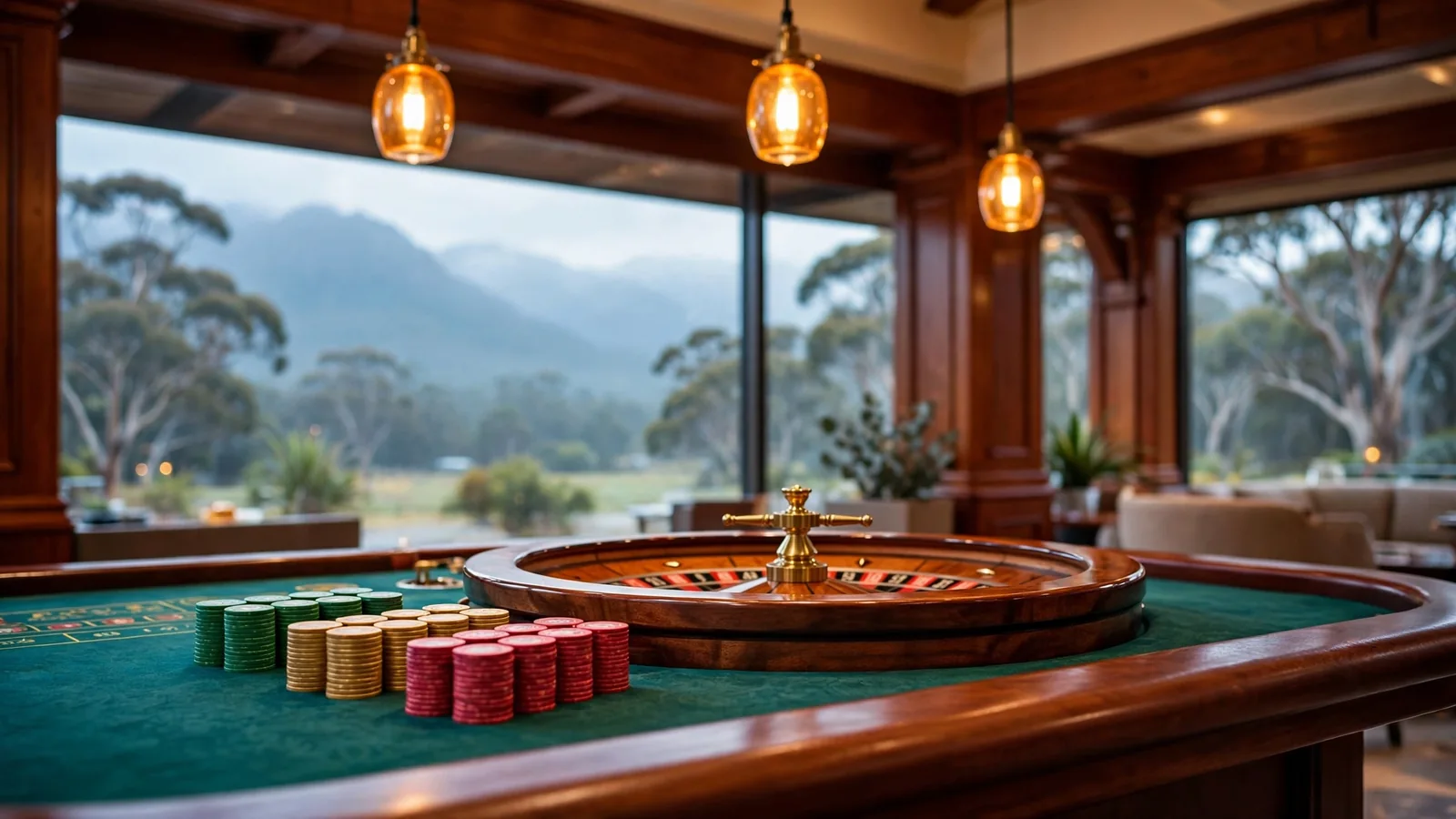
Hotel Rooms and On-Site Stays
A casino-themed trip can make a hotel look like part of the experience, but I’ve learned not to treat “casino hotel” as a promise that a room, gaming floor and booking deal all belong to one package. The label can blur separate things: where you sleep, what you plan to do, and what a booking actually includes. Read those as separate decisions before you pay.
For a stay in Tasmania, start by identifying the accommodation itself and confirming the booking details directly with the property. Look at the room description, dates, total price and cancellation conditions on the same screen before committing. A headline rate can sound tidy until you discover that it applies only to particular dates or comes with terms that don’t suit your plans. “Deal” is marketing language; the conditions are the useful part.
I’ve made the mistake of booking around an appealing headline and only afterwards checking what I’d actually bought. Now I slow down. Does the price cover the room you intend to book? Are any inclusions clearly described, or are you filling in the gaps yourself? What happens if your plans change? If a detail matters to you, get it confirmed by the accommodation provider rather than relying on an assumption built from a photo or a package name.
If you’re choosing a casino for Tasmania in 2026, check the available licensing and payment details before deciding what matters to you. This list gives you a concise reference for the information provided about each operator.
-
House of Pokies
- License
- international iGaming licence – jurisdiction not named in the source
- Payout speed
- PayID 1-24 hours
- Min. deposit
- A$30 (PayID from A$10)
You can note that House of Pokies lists PayID payouts of 1–24 hours and a minimum deposit of A$30, or A$10 when using PayID. Its source describes the licence as international but does not name the jurisdiction.
-
7Bit Casino
- License
- Curacao, operated by Dama N.V.
You can note that 7Bit Casino is licensed in Curacao and operated by Dama N.V.
-
Rollero Casino
- License
- Curacao Gaming Control Board OGL/2023/176/0095 (Hollycorn N.V.)
You can check its listed Curacao Gaming Control Board licence, OGL/2023/176/0095, and the named operator, Hollycorn N.V.
-
LevelUp Casino
- License
- Curacao eGaming OGL/2023/174/0082 (Dama N.V.)
- Min. deposit
- A$15
You can note LevelUp Casino’s listed Curacao eGaming licence, OGL/2023/174/0082, and its operator, Dama N.V. The stated minimum deposit is A$15.
-
Golden Pokies
- License
- Curacao
You can note that Golden Pokies is listed as licensed in Curacao.
-
WinSpirit Casino
- License
- Curacao eGaming OGL/2024/923/0383 (Antillephone N.V.)
- Min. deposit
- A$30
You can note WinSpirit Casino’s listed Curacao eGaming licence, OGL/2024/923/0383, issued to Antillephone N.V. Its stated minimum deposit is A$30.
-
Vegaz Casino
- License
- Curacao OGL/2024/1335/0780
- Min. deposit
- EUR 20
You can note Vegaz Casino’s listed Curacao licence, OGL/2024/1335/0780. The stated minimum deposit is EUR 20.
-
Playfina Casino
- License
- Curacao eGaming (Hollycorn N.V., since 2017)
- Min. deposit
- A$20-30 (depends on the offer)
You can note that Playfina Casino is listed as licensed by Curacao eGaming, with Hollycorn N.V. named as operator since 2017. Its minimum deposit is A$20–30, depending on the offer.
-
Uptown Pokies
- License
- Curacao (operating since 2017)
- Min. deposit
- A$20
You can note that Uptown Pokies is listed as Curacao-licensed and operating since 2017. Its stated minimum deposit is A$20.
-
Wild Tokyo
- License
- Curacao
- Payout speed
- crypto 30-60 minutes, fiat 1-5 days
- Min. deposit
- A$10
You can note Wild Tokyo’s stated payout times: 30–60 minutes for crypto and 1–5 days for fiat. Its listed licence is Curacao, and its minimum deposit is A$10.
Room photos deserve the same scepticism. They can help you understand the style of a space, but they don’t tell you every practical detail. Read the room’s written description and check whether the selected option matches your needs. If you have a particular requirement, ask before booking and keep the answer with your confirmation. A vague impression is a poor substitute for a clear booking record.
The phrase “on-site stay” also needs care. It can sound as if staying overnight automatically gives you access to every facility or makes every part of the visit seamless. Don’t build your itinerary on that implication. Confirm separately what the accommodation booking covers and what arrangements apply to the activity you’re planning. Keep the room reservation and any other booking confirmations handy; they may be managed under different terms.
When comparing Tasmanian casino hotel options, use the same checklist for each property rather than comparing headline prices alone. Check the full cost for your dates, the room description, cancellation terms and any stated inclusions. Make sure the selected dates and room are correct before submitting payment. If a rate is described as limited or special, read the conditions attached to it instead of assuming you can change it later without a cost.
I also avoid treating a casino’s name in a listing as proof that the accommodation is inside the venue. Wording can be loose, and a nearby property is not necessarily an on-site hotel. Confirm the property’s location and how the booking describes its relationship to the casino. That one small check can prevent an expectation mismatch.
If you’re comparing casino hotels in Tasmania, decide first whether you care most about the room, the booking terms or having casino-related plans nearby. Those are not interchangeable priorities. A lower-looking price may be the wrong choice if its conditions don’t fit your trip; a package may be poor value if you wouldn’t use what it includes. I’d rather book a straightforward room on clear terms than pay extra for a label that leaves the important details fuzzy.
And don’t let the word “casino” do the work of checking. A hotel reservation is an accommodation purchase, not a promise of gambling access or a particular experience. Confirm what you are booking, save the written terms, and make the decision on the details you can actually see. Less sparkle. Fewer surprises.
Poker Rooms, Tournaments and Other Casino Rooms
A poker room, a tournament schedule and a room of Electronic Gaming Machines (EGMs) are three different things. Search results can blur them together, but they answer different questions: whether poker is played in a dedicated area, whether organised competitions are scheduled, and what gaming facilities are on the floor. A “casino room” could also mean a private function space, so the label alone does not tell you what takes place there.
For a visit to a Tasmanian casino, treat poker tables and tournaments as details to check with the venue before making plans. A listing that mentions poker does not necessarily mean there is a dedicated poker room, regular tournaments or a game running on the day you want to go. Tournament information can change, too. Look for a current schedule and the specific conditions for taking part rather than relying on an old event page or a general directory entry.
I’ve learned not to read “poker” as a promise of a seat at a table. It may describe a past event, a room used for several purposes or something that is not running when you arrive. Check what the venue means by the term and whether the information applies to your intended visit. Small distinction. Big difference.
A sports bar is separate again. It is a place to watch sport, not evidence of poker facilities or a tournament programme. If your plan depends on watching a particular match, confirm the venue’s current offering directly; don’t assume a casino has a sports bar because that phrase appears alongside its name online. Bar services and event details are best checked separately from poker arrangements.
“Rooms” can also refer to accommodation, private spaces or areas within a gaming floor. If you mean a poker room, use that exact description when checking venue information. If you mean somewhere to sleep, that is a different question entirely. It sounds obvious, but vague room labels can send you to the wrong information.
For anyone considering EGMs, expect identification checks before play. Don’t try to bypass them: failing to meet venue requirements can have legal consequences. Poker rooms and poker tournaments are not the same as playing pokies, and the rules and arrangements for one should not be assumed to apply to the other.
Online poker is not a workaround for unavailable tables or an event you missed. Under the Interactive Gambling Act 2001, operators cannot provide real-money online poker to people physically in Australia. That restriction applies to casino-style online games, including poker, even when a site presents itself as an offshore option. Sports betting is treated differently, but it does not make online casino games lawful for Australian customers.
When checking any poker or gaming detail, keep the question narrow: Is there a dedicated poker area? Is a tournament actually scheduled? What does “casino room” refer to in that listing? And is the information current for the day you plan to visit? Clear answers are more useful than a flashy label. No guesswork.
Getting There and Parking
A parking search can make a casino visit sound settled before you have even chosen a destination. I’ve learned to separate the practical question — how will I get there and leave? — from the bigger “best casino in Tasmania” question. A glossy result or a map pin is not a parking plan.
Before setting out, confirm the venue’s current address and arrival arrangements through its own official channels. Check whether the directions lead to the casino entrance or somewhere nearby, and whether any parking information applies to the day and time you plan to go. I would not assume that a pin, an old review or a third-party listing is current. Small details matter when you are already on the road.
Parking, valet and the cost of arriving
Searches for free parking or valet parking are really asking about convenience and cost. Those are fair things to check, but the wording in a listing does not tell you whether a service is available on your visit, whether it has conditions, or where you need to go first. Confirm those points with the venue rather than treating a search result as a promise.
If you are driving, work out your return trip before leaving home. Decide who is driving, and do not drive after drinking. If you expect to gamble, set a session budget from money you can afford to lose; don’t raise your bets to try to recover losses. I have made that mistake, and it turns a night out into pressure. Not worth it.
Don’t confuse a physical visit with online play
Some people searching for a casino in Tasmania are actually looking for online pokies, bingo or dining information. Those are different questions from getting to a venue, and an online result is not evidence of a physical location or a parking facility.
There is also an important legal distinction. Under the Interactive Gambling Act 2001, operators may not provide real-money online casino games — including pokies, poker and table games — to people in Australia. This restriction applies to the operator; players are not subject to criminal liability simply for using an offshore service. Offshore sites are not regulated under Australian law, and access may be blocked.
A VPN can make a player’s apparent location differ from their physical one, but using one to reach region-blocked pokies sites breaches the site’s terms and may lead to account suspension. I wouldn’t treat a changed IP address as a workaround that makes an online casino a safe or lawful alternative to visiting a venue.
For an actual trip, keep the planning plain: confirm where you are going, check the latest arrival information directly, and arrange a safe way home. For a parking question, the venue itself is the place to verify the answer. A map can get you close; it cannot guarantee what you will find when you arrive.
Accommodation Near the Casino
Looking for accommodation near a Tasmanian casino is really a location question before it is a hotel question. The name on a booking page may not tell you how close a property is to the venue you intend to visit, and “nearby” can mean different things depending on whether you plan to walk, drive or use public transport. I would pin down the casino’s exact location first, then compare places around that point.
I wouldn’t treat a listing that mentions a casino as proof that it is next door. Open the map, check the route to the venue itself, and see whether the journey suits how you’ll get around. A short straight-line distance can be less useful than the actual route. If you expect to arrive late or leave after a visit, check transport options for those times rather than assuming they will be available.
Check the full cost, not just the nightly rate
A low headline price can look like a “deal” until you add the details that matter: taxes or other fees, parking charges, cancellation conditions and the cost of getting to the casino. Compare the total for your dates, not a generic rate shown without dates. If the booking is non-refundable, be certain about your plans before paying.
Do
- Compare the total cost for your specific dates
- Check cancellation conditions and fees
- Confirm inclusions with the provider in writing
Don't
- Rely on a generic headline nightly rate
- Assume a casino promotion covers the hotel
- Trust a photo as a complete room description
I’d also read the property’s own description carefully. Confirm what the room booking includes and whether parking, breakfast or other extras are included or charged separately. Don’t assume that a casino promotion covers accommodation, or that a lodging offer is connected to the casino at all. Treat each offer as a separate claim and check its terms before making a decision.
If you need accessible facilities, a particular bed arrangement or a late check-in, ask the accommodation provider directly and keep the answer in writing. A photo or short label on a booking page may not answer the practical question you have. Better to clear it up before you travel.
Make the booking fit the visit
The best place to stay is not automatically the one closest to a casino. You might prefer somewhere that works for the rest of your trip, especially if you have other plans in Tasmania. Compare the location against your full itinerary, then decide whether proximity is worth a higher total cost or a less flexible booking.

Before confirming, check that the address on the accommodation listing matches the property you intend to book. Review the arrival instructions, check-in times and cancellation policy, and save the confirmation somewhere you can access while travelling. If any detail is unclear, contact the property rather than relying on a third-party summary.
I’d keep a little space between booking and assumptions. A casino name in a hotel description does not establish that the property is affiliated with the venue, nor does it guarantee a special rate. Likewise, a promotion may have conditions that change its value. Read what is actually included.
That simple check can spare you a frustrating surprise: the right location, the right dates, and a price you understand before you commit. No glossy promise needed.
Contact Details, Bars and Events
A phone number copied from an old directory can be worse than no number: it may be out of date, or belong to someone with no connection to the venue. I’d start with the casino’s own current website and use the contact details published there, rather than trusting a search snippet, social post or third-party listing. Check that the page is genuinely official before sharing personal information or making plans.
If you need to ask about a booking, accessibility, an event or a general enquiry, be specific. A clear question is more useful than asking whether the place is “open for everything”. For a call, note the department or contact option given on the official page, if one is listed. For a written enquiry, keep a copy of your message and any reply; that gives you something to refer back to if details change.
I’ve learned not to treat a listing as confirmation. “Live music” can mean a particular date, not a regular programme, and an event page may be old even when it still appears online. Look for a date, venue location and current booking information together. If one of those is unclear, confirm it directly before travelling. A poster shared by someone else is a lead, not a promise.
The same caution applies to bars. A venue’s name or a photo can suggest what is available, but neither confirms current service, entry arrangements or whether a particular space is operating. Check the venue’s own current information for the specific bar you have in mind, and ask directly if the detail matters to your plans. Don’t assume that an event listing confirms food or drink options; those are separate details.
Searches for baccarat or craps are also not proof that either game is offered at a particular Tasmanian casino, or that it will be available when you visit. If a table game is the reason for your trip, ask the venue directly whether it is currently offered and whether there are any relevant conditions. I wouldn’t build an evening around a game based only on an old review or a general casino description. Check first.
For maps, use the map or directions linked from the official venue website where possible, then compare it with a current mapping service. Map pins and business listings can be misplaced or stale. I would not rely on a map image reposted without a date, especially if it is being used to plan a specific visit. Parking arrangements are a separate practical question; confirm those through the venue’s own current information rather than assuming a map pin answers it.
One last check before setting out: make sure the event date and the contact information belong to the same venue, and that neither comes from an archived page. It takes a minute. Better than a wasted trip.
Breakfast, Buffet, Rewards and Casino Jobs
Breakfast and buffet searches can make a casino sound like a self-contained resort, but those labels don’t tell you what is actually available on the day you plan to visit. I’d treat a breakfast listing, a buffet mention and a resort description as separate claims, not assume one proves the others. A venue might have food service without a buffet, or a buffet without breakfast. Check the operator’s current visitor information before building your plans around a meal.
I’ve learned not to trust a polished phrase like “all-day indulgence” until I can pin down the practical details. Look for the service period, whether booking is needed, what the menu covers and whether the information applies to the casino itself or another nearby business. If those details aren’t clear, contact the venue before travelling. A search result can stay visible long after an offer or service changes.
“Resort” is another word that can stretch. It may describe a broader property or simply be used loosely in a listing; it doesn’t, by itself, confirm a particular package or facility. If you’re comparing a casino resort with a standalone casino, check what is included in the specific offer you’re considering rather than relying on the label. Keep meal plans separate from gaming plans. One doesn’t make the other better value.
Rewards: read past the headline
A rewards programme can sound generous in its advertising while the useful details sit in the terms. Before signing up, find out what earns points, what points can be exchanged for, whether there are exclusions and whether an offer expires. Conditions can change, so save or review the terms that apply when you join.
I don’t treat rewards as a reason to spend more. A perk is only worthwhile if it suits something you would have chosen anyway. If it nudges you to keep playing, raise your stakes or return when you would otherwise leave, it may cost more than it gives back. Set a session budget from money you can afford to lose, and don’t increase bets to try to recover losses. Chasing is how a small mistake gets bigger.
Be especially wary of gambling promotions presented as help with rent, groceries or bills. That hope is an illusion, not a dependable plan. If gambling is starting to affect your finances or mood, step away and contact Gambling Help Online.
Looking at casino work
For casino jobs in Tasmania, start with the employer’s own careers page and read each position description closely. Hospitality, customer service, security, gaming operations and administration are different kinds of work, with different requirements; a broad jobs listing won’t tell you which roles are currently open or what qualifications they need. Confirm the location, duties, employment conditions and application method directly with the employer.
I’d also be cautious with listings that ask for payment to apply, request sensitive personal information before a credible hiring process or promise easy money. Check that the role appears on an official careers page, and use contact details published by the employer to confirm anything that feels off. A genuine job advert should explain the work and the selection process plainly.
Whether you’re checking a breakfast plan, a rewards offer or an application, the useful details are the ones attached to that exact service or role. Read those first. Then decide.
Opening Hours, Development and Entertainment
“Open” can mean more than one thing: a casino may be trading, a particular area may be unavailable, or a venue may be preparing to reopen after a closure. I’ve learned not to treat an old listing or a search snippet as a reliable answer when planning a visit. Check the venue’s own current notices before setting off, and look for a date attached to any announcement. If there is no recent update, don’t assume an old opening time still applies.
The same caution matters when you see talk of a Tasmanian casino development. A proposal, a planning process and a finished project are different stages, and headlines can blur them together. Before taking a claim as settled, look for a clear statement about what has actually been approved or built, who is responsible for the project, and whether the information is current. A rendering or a promise about future facilities is not proof that those facilities are available today.
Entertainment needs the same date check. A general venue description does not tell you what is happening on the night you plan to visit, and a past listing does not establish that an activity is continuing. For a specific show or event, use the organiser’s or venue’s current announcement and confirm the date and any conditions before making plans. I’ve made the mistake of treating an attractive listing as a guarantee. It isn’t.
Reviews can help with atmosphere and service, but they are snapshots of someone else’s visit. Give more weight to details that are clearly dated and describe what the reviewer actually experienced; broad praise or complaints without context tell you very little about current conditions. A review that mentions a menu, for instance, is not a dependable guide to what is available now. Menus and other venue details can change, so check the current version directly rather than relying on a copied listing.
If you’re looking for work connected with a casino development, separate confirmed vacancies from general discussion about future jobs. An announcement that a project may create employment does not mean roles are being recruited now. Check the organisation’s current careers information and make sure the vacancy is genuine before sharing personal details or applying.
For a useful visit plan, I’d verify three things close to the day: whether the venue is operating, whether the activity you want is actually scheduled, and whether any development-related change affects access or availability. Keep those checks separate. “Open” does not mean every facility or activity is running. Small distinction.
Restaurants at the Casino
If you’re looking for a restaurant at a casino in Tasmania, start by confirming the exact venue rather than relying on a broad listing. “Casino restaurant” can sound like one straightforward place to book, but it doesn’t tell you which property, dining room or service you’ll actually find. I’ve learnt not to plan an evening around a name that turns out to be old or vague.
Check the restaurant’s own current information before setting out. Look for a clearly identified dining venue, its latest menu and the days and hours it serves. A page that mentions dining without naming a restaurant or showing current details isn’t enough to establish what is available. If the information is unclear, contact the venue through its official channel and ask directly whether the restaurant is operating and taking bookings.
Menus deserve a proper look, not just a glance at the headline. Check whether the published menu is current and whether it suits the reason you’re going: a full meal, a particular dietary need or a planned celebration. Don’t assume a casino restaurant has a certain cuisine, price range or menu just because another property does. Those details belong to the individual venue.
I’d also confirm practical booking details before making plans. Check whether reservations are required, whether the kitchen serves throughout the stated opening period, and whether any conditions apply to your booking. If you need an accessible table or have an allergy, ask the restaurant directly rather than relying on an old listing or a general description. A quick confirmation can save a wasted trip.
For anyone comparing restaurants at a casino with places elsewhere in Tasmania, use the same yardstick: current menu, clear service information and a direct way to confirm a booking. A glossy photograph is not proof that a restaurant is open today. Nor does a search result for a casino in Tasmania establish that a particular dining room is on site; make sure the location and restaurant name match the venue you intend to visit.
I’ve made the mistake of treating a polished listing as a promise. It isn’t. Restaurant information can change, so check close to the day you plan to go, especially if your visit depends on a specific menu or service time. If you cannot find clear, current details, keep your plans flexible until the venue confirms them. That is less exciting than a grand recommendation, but it is more useful than pretending every casino has the same restaurant offer.
Address, Dress Code and Spa Facilities
When I look up the best casino in Tasmania in 2026, I don’t treat a map pin or a polished listing as enough to settle the practical details. An address needs to match the venue’s own current information before you plan a trip around it. If listings disagree, pause and confirm the location through an official channel rather than trusting whichever result looks most complete. Small checks save a pointless journey.
The same goes for the dress code. I’ve learned not to read “smart” or “relaxed” as a firm rule; those words can mean different things, and a venue may set requirements for particular areas or occasions. Check directly before you go, especially if you’re planning to visit at a specific time. Don’t assume that what was acceptable on an earlier visit still applies.
Spa searches need the same careful approach. A casino-related listing can make a day spa sound like part of the venue when it may refer to something nearby, a separate business, or an outdated page. Confirm whether spa facilities are actually on site, what access involves, and whether you need to book. I wouldn’t build a day around a spa visit until those details are clear.
Searches about casino games deserve one extra distinction: an in-person venue and an online casino are not the same thing. Under Australia’s Interactive Gambling Act 2001, operators cannot provide real-money online casino games, including pokies and table games, to people in Australia. So an online page promoting those games is not a reliable way to establish what a physical Tasmanian venue offers. Don’t confuse a game catalogue with a confirmed on-site facility.
I’d use a simple check before setting off: confirm the address, ask about entry expectations, and verify any spa or other facility directly with the venue. If the answer is vague, get clarification rather than filling the gaps with assumptions. There’s nothing glamorous about making one more call. It beats arriving with the wrong idea of what’s there.
Food Options and Pool Facilities
When I’m trying to work out whether a casino visit will cover a meal or a swim, I separate what sounds plausible from what’s actually confirmed. A venue name or a polished travel listing doesn’t prove there’s a food court, casual food outlet or pool on site. I wouldn’t build a day around any of those facilities without checking directly with the venue first.
That’s especially true for food courts. The phrase can suggest several counters and quick choices, but it shouldn’t be read as confirmation that one exists at a Tasmanian casino. If you need a particular kind of food, have dietary requirements, or are planning around a tight schedule, ask about the specific option rather than relying on a general description. Small detail. Big difference.
The same caution applies to pool searches. A pool may be associated with a hotel or another nearby facility without being part of the casino itself. Before packing swimwear or promising the kids a swim, confirm whether a pool is available to visitors, where it is, and whether access has any conditions. Those are practical questions, not details I’d guess at.
For general food options, keep the distinction clear: an on-site casual outlet, a food court and a sit-down restaurant are not interchangeable. If you only want something quick, ask specifically about quick-service choices and when they’re available. If you’re comparing venues, use the same checklist for each one and treat any unconfirmed amenity as unavailable for planning purposes.
I’ve learned not to let a search result turn a possibility into a plan. Confirm the food arrangements and pool access before you travel, and make other arrangements if either is essential to your visit. No assumptions, no wasted trip.
How do NSW pokies regulators monitor player protection?
NSW has mandatory pre-commitment systems that require players to set a loss limit before playing.
How does region blocking work?
Online casinos use your IP address to estimate your location and can block access from excluded countries. Blocked games may be absent from the lobby or fail to load.
What is pokies region blocking?
It is a restriction that prevents games from being offered to players in certain locations, often because of licensing rules. For Australian players, a casino or software provider may block access based on their IP address.
Which club has the most pokies in NSW?
Club Liverpool has the highest number of operational poker machines among clubs in NSW.