
Check the route before you consider a payment
Payment labels can hide different deposit and withdrawal routes, while Australian law limits what real-money online casino services may offer.

Start With the Payment Categories, Not the Sales Pitch
A payment label tells you what kind of route is being discussed. It does not tell you that the route is available, suitable, or lawful for a particular transaction. I learned to separate those questions after treating a familiar logo as if it settled everything. It doesn’t.
There is an important Australian boundary before any comparison: under the Interactive Gambling Act 2001, providing real-money online casino games to people in Australia is illegal for operators. The categories below are a way to understand payment terminology, not a recommendation to fund an online casino account or a claim that any particular service is available here.
A specialist review identifies four broad categories often discussed in casino-payment guides: bank transfers, e-wallets, prepaid vouchers and cryptocurrencies. That is a description of how guides group payment routes, not proof that every category works for Australians or is appropriate for a real-money gambling transaction. The label is only the beginning.
Bank transfers move funds through a bank-linked route. The phrase can cover different processes, so it does not tell you exactly how a payment is initiated or handled. It also says nothing by itself about whether a particular transaction will be accepted. “Bank transfer” sounds reassuringly plain. The details matter.
When choosing an online casino payment method in Australia, check both the deposit minimum and how long withdrawals may take. These details can help you focus on options that fit your budget and payment preferences.
-
House of Pokies
- License
- international iGaming licence – jurisdiction not named in the source
- Payout speed
- PayID 1-24 hours
- Min. deposit
- A$30 (PayID from A$10)
House of Pokies lists PayID withdrawals at 1–24 hours, with a A$30 minimum deposit and PayID deposits from A$10. Its source describes the licence as international but does not name the jurisdiction.
-
7Bit Casino
- License
- Curacao, operated by Dama N.V.
7Bit Casino is operated by Dama N.V. and holds a Curacao licence. The available details do not specify payment methods or processing times.
-
Rollero Casino
- License
- Curacao Gaming Control Board OGL/2023/176/0095 (Hollycorn N.V.)
Rollero Casino is licensed by the Curacao Gaming Control Board under OGL/2023/176/0095, with Hollycorn N.V. named as the operator. Payment details are not specified in the available information.
-
LevelUp Casino
- License
- Curacao eGaming OGL/2023/174/0082 (Dama N.V.)
- Min. deposit
- A$15
LevelUp Casino has a minimum deposit of A$15 and a Curacao eGaming licence, OGL/2023/174/0082, held by Dama N.V. The available details do not specify payment processing times.
-
Golden Pokies
- License
- Curacao
Golden Pokies is identified as a Curacao-licensed casino. No payment method or timing details are provided.
-
WinSpirit Casino
- License
- Curacao eGaming OGL/2024/923/0383 (Antillephone N.V.)
- Min. deposit
- A$30
WinSpirit Casino lists a A$30 minimum deposit and a Curacao eGaming licence, OGL/2024/923/0383, held by Antillephone N.V. The available information does not give withdrawal times.
-
Vegaz Casino
- License
- Curacao OGL/2024/1335/0780
- Min. deposit
- EUR 20
Vegaz Casino has a Curacao licence, OGL/2024/1335/0780, and a stated minimum deposit of EUR 20. Payment processing details are not specified.
-
Playfina Casino
- License
- Curacao eGaming (Hollycorn N.V., since 2017)
- Min. deposit
- A$20-30 (depends on the offer)
Playfina Casino has a A$20–30 minimum deposit, depending on the offer, and is described as a Curacao eGaming casino operated by Hollycorn N.V. since 2017. No payment processing times are provided.
-
Uptown Pokies
- License
- Curacao (operating since 2017)
- Min. deposit
- A$20
Uptown Pokies is described as a Curacao-licensed casino operating since 2017, with a A$20 minimum deposit. The available details do not specify payment methods or withdrawal speeds.
-
Wild Tokyo
- License
- Curacao
- Payout speed
- crypto 30-60 minutes, fiat 1-5 days
- Min. deposit
- A$10
Wild Tokyo lists a A$10 minimum deposit, with crypto withdrawals taking 30–60 minutes and fiat withdrawals 1–5 days. It holds a Curacao licence.
E-wallets are accounts or services used to hold or move money electronically. Seeing the term does not establish which wallet is supported, what the wallet’s own rules allow, or whether the transaction can proceed. Nor does the category tell you what happens after a payment reaches its destination. A wallet is a type of service, not a blanket approval.
Prepaid vouchers are paid for in advance and then used as a payment instrument. Their basic appeal is straightforward: the amount available is tied to what has been loaded. But “prepaid” does not mean every voucher is interchangeable with every other one, or that a merchant accepts it. The name describes the format, not its reach.
Cryptocurrency refers to digital assets transferred through blockchain networks. That category includes different assets and networks, with different mechanics. It should not be read as a suggestion to use crypto for online gambling: digital currency is not an acceptable deposit method for online wagering in this context. A fast-sounding label cannot change that boundary. And blockchain transfers are irreversible and have no chargeback option, so errors can be final.

You may also see labels that do not fit neatly into those four groups: a bank-linked payment interface, a phone wallet, or a mobile-billed service. They describe different parts of the process. A phone can be the device used to authorise a bank payment; that does not make the underlying route a phone-billing method. Likewise, a product name can describe a wallet or payment interface without telling you what transaction it supports.
That distinction is useful when a page calls something a “payment solution”. The phrase may refer to the provider, the technology connecting accounts, or simply a button in a checkout screen. It is not a technical guarantee. I now look past the label and ask what is actually being described: where the funds come from, how the instruction is made, and what rules govern the service.
For Australian readers, the safest use of this vocabulary is as a map, not a menu. A category can help you understand a payment explanation, but it cannot establish availability or make prohibited gambling services lawful. Familiar names and polished checkout screens don’t change that. The label isn’t the transaction.
A Deposit Option Is Not Automatically a Cashout Option
A payment button can tell you how an account might be funded; it does not, by itself, tell you how money could be sent back. A specialist review describes casino payment methods as potentially different for deposits and withdrawals. That distinction is easy to miss when a page presents a neat row of logos, as if each one works in both directions.
I’ve learned not to read a list of online casino payment methods as a promise about the whole transaction. A method may be offered for adding funds but absent from the withdrawal choices. The reverse can also be true: the route offered for a payout may not be the one used to pay in. The label is only one part of the arrangement.
That matters before any money moves. If you assume the deposit route is also the cashout route, you may only discover the difference when you try to withdraw. Then the practical questions arrive together: which method is available, what account details are required, and whether the operator has asked you to confirm who you are and how the funds were sent. Not a small detail.
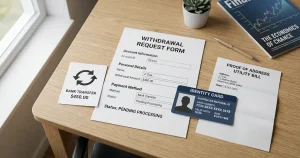
Verification is one reason a payment can involve more than pressing a button. A specialist review says an operator may ask for an identity document issued by government, evidence of your address dated within the past three months, or material showing that the payment method belongs to you. Those are possible requests, not a guarantee that every account will be asked for the same documents. Requirements can depend on the operator and the account.
I would treat those checks as part of the payment process, not as a surprise hurdle to think about only after a balance appears. If details do not line up, a withdrawal can become a conversation about documents rather than a simple transfer. Use accurate account information and keep your payment records accessible; that is less glamorous than a “quick cashout” claim, but more useful.
There is a bigger Australian context, too. The Interactive Gambling Act 2001 makes it illegal for operators to provide real-money online casino games to people physically in Australia. Describing payment mechanics is not an endorsement or an invitation to use an offshore service. A payment method does not change the legal position of the service behind it.

For me, the sensible way to read any casino payment description is to separate three things: how funds might go in, how a withdrawal might be handled, and what verification might be required along the way. A deposit confirmation settles only the first question. It does not prove that a cashout route is available or that the account has completed any checks.
That’s the mismatch in plain terms. A familiar name or a successful payment can make the process feel settled, but it only confirms that one step worked. The rest can have separate conditions. I wouldn’t confuse access to a deposit option with a clear path back out.
The Australian Constraints That Change the Payment Picture
A payment option can look familiar and still behave differently when it is used for an offshore gambling transaction from Australia. I used to treat the card logo as the answer: Visa or Mastercard on the page, so the payment should go through. That assumption is too simple. The institution handling the transaction can matter as much as the name printed on the card.
A specialist review reports that many standard Visa and Mastercard transactions to offshore casinos are blocked by Australian financial institutions. That does not mean every card transaction will fail, or that a logo promises acceptance. It does mean a declined payment may reflect a restriction on the transaction rather than a typo or a temporary glitch. I would not read a successful payment elsewhere as evidence that the same card will work for gambling-related transactions.
This catches people out because card payments are familiar in everyday life. But familiar does not mean available for every purpose. An online payment page may show card brands without confirming that a particular Australian-issued card can be used for the transaction. The screen can make it look settled before the bank has had its say. Annoying, but worth knowing.
PayPal is a clearer case. PayPal has explicitly prohibited gambling transactions in Australia since 2021. So seeing PayPal as a general payment brand elsewhere does not make it a suitable route for an Australian gambling transaction. I would not try to treat it as a workaround or assume that a different button, account setting, or merchant description changes that restriction.
That distinction matters when you look at lists of casino payment services. A list can mix methods that exist in Australia with methods that are usable for a particular transaction, and those are not the same thing. Names such as Visa and Mastercard may be familiar, but that familiarity says nothing by itself about whether an Australian financial institution will process a payment to an offshore gambling business. PayPal’s restriction is more direct: its stated policy rules out gambling transactions in Australia.
I once saw a payment page as a menu: choose a brand, tap through, done. It is better to read it as a claim that needs checking. The brand name is only one part of the route; the financial institution and the nature of the transaction can affect what happens. If a payment is refused, switching between familiar card details or repeatedly submitting the same transaction does not establish that the route is available.

There is also a difference between a method being technically visible and being a dependable option. A page can display a card symbol without telling you how an Australian bank will treat that transaction. Likewise, a payment provider’s general presence in Australia does not establish that it permits gambling payments. I would take the restriction itself seriously rather than infer permission from a logo or a checkout screen.
For Australian readers, the practical point is modest but important: do not judge online payment methods by how ordinary they seem in other settings. Visa and Mastercard can face blocks on offshore casino transactions, according to a specialist review, while PayPal has expressly barred gambling transactions in Australia since 2021. Those constraints change what a payment screen means. A familiar logo is not a green light.
What Happens Between a Bank Transfer and a Casino Balance
A bank transfer can look complete in your banking app while the receiving account still shows no change. That gap is the part people often miss: the bank moves the money, but the casino’s payment gateway—the system that routes and records a payment—may not update the account at the same moment. A status such as “sent” is not the same as a confirmed balance.
There can also be a human step. A specialist review describes casino bank transfers being handled manually once or twice a week. Under the example it gives, a withdrawal requested on Friday may not arrive until Wednesday. That is a reported processing pattern, not a timetable you can safely apply to every operator or transaction. The operator, its procedures and the route used can all affect what happens.
That’s a long wait.
The important point is that a transfer’s timing has more than one stage: the payment has to be initiated, processed by the relevant parties, and then reflected in the account or received by the bank. A payment gateway for an online casino may show a request as pending while those steps are incomplete. A bank confirmation alone does not tell you when the casino will mark a transaction as settled, and an account screen may not reveal whether a delay is with the bank or the operator.
Weekends make the distinction easier to notice. If manual handling happens on set days, a request made near the end of the week can sit until the next processing window. The Friday-to-Wednesday example shows why a payment that has left your account—or a withdrawal that has been requested—can still be in limbo. Don’t read “bank transfer” as “bank staff are moving it continuously.”
I’ve learned not to treat a payment status as a promise. Keep the confirmation and note the time you initiated the transfer; if the balance has not updated, those details help you describe what happened. Check the operator’s displayed status and contact channel rather than sending another payment to try to force the first one through. Duplicate attempts can make it harder to tell which transfer is being discussed.

One more thing matters before any of this: Australian law prohibits operators from providing real-money online casino games to people in Australia. A description of payment processing is not an endorsement or a suggestion to use such a service. If you encounter a payment page, don’t assume that a polished casino payment gateway makes the underlying service lawful or that a displayed processing estimate guarantees arrival.
The useful takeaway is simple: a transfer request and a credited balance are separate events. If the route relies on manual processing, the calendar can matter more than the speed suggested by the word “transfer.” Don’t count money as available until the receiving account confirms it.
SMS Billing Isn’t the Same as a Prepaid Voucher
“Pay by SMS” sounds simple: approve something on your phone and the cost appears through a mobile-billing arrangement. But that label alone does not tell you who processes the payment, how it is charged, or whether the service is genuinely available for the transaction being described. I would not treat a text message, a phone-billed charge and a prepaid voucher as interchangeable just because they all involve a phone or a small payment.
That distinction matters when a page describes a casino SMS payment as if it were a standard option. A payment claim needs to explain the actual route: whether money is charged to a mobile account, sent through a bank-linked service, or paid from a voucher balance. If it stays vague about that, you cannot tell what you are authorising. “Easy” is doing a lot of work there.
Do
- Check if the payment description names the specific payment type
- Verify where the charge comes from
- Confirm the process for refunds or withdrawals
Don't
- Treat "Pay by SMS" and prepaid vouchers as interchangeable
- Assume a vague "easy" label explains the actual payment route
- Infer withdrawal support from a deposit-only label
A prepaid voucher has a clearer limit. You can spend only the amount loaded onto it, so it can set a boundary on what you put into a payment. That does not make the voucher a complete two-way payment method. A voucher deposit generally cannot be sent back to the same voucher as a withdrawal; you would need a separate way to receive money.
That is the trade-off: a defined spending cap on the way in, but no matching cashout route on the way back. I used to focus on the first half and overlook the second. Bad habit.
Before relying on any voucher or phone-billed option, read the payment description as a practical instruction rather than a sales label. Does it name the payment type? Does it say where the charge comes from? Does it explain what happens if you need a refund or withdrawal? If those details are absent, the label has not answered the important questions.
The same caution applies to mentions of payment software, alternative payment systems or names such as CashtoCode and eCheck. A name in a list does not prove that a particular service is offered, that it works for a particular transaction, or that it can handle money in both directions. Availability can depend on the operator and the payment route; do not infer more from a logo or a short description.

For Australians, there is a larger point behind the wording: real-money online casino services are prohibited under the Interactive Gambling Act 2001. A payment label does not change that legal position. I would not take a claim about phone billing or a voucher as a recommendation to use an online casino.
If you encounter these claims, separate the mechanisms in your head. Phone billing is about how a charge is authorised or collected; a prepaid voucher is loaded with a set amount and limits spending to that balance. Neither description, by itself, tells you that withdrawals are supported. The voucher’s limit is real. Its cashout role is not.
Check the Cashout Route Before You Fund an Account
A payment logo on a casino payment portal tells you little on its own. It may indicate that a method can be used to add funds, not that it can send money back out. Before entering payment details, look for a separate withdrawals or cashouts page and check what it says about the route, account requirements and any conditions attached.
I’ve learned not to treat a deposit button as a complete payment plan. A specialist review has reported that PayID availability for deposits depends on the operator and that withdrawal support needs to be checked separately. That’s a reason to verify the details on the payment screen itself, not assume the review describes the operator’s current setup. Payment arrangements can change.
- Find a separate withdrawals or cashouts page
- Check if the specific route is supported for withdrawals
- Review account and identity requirements
- Read any conditions attached to the payment method
- Examine the fine print of any "no deposit" promotions
The same care applies when a portal lists familiar options such as PayPal, POLi, Boku or Neosurf. A name appearing somewhere on a site does not establish that it is available to you, that it can be used for withdrawals, or that it is suitable for a particular transaction. Check the operator’s own payment information rather than relying on a logo, an old review or a promotional banner. If the withdrawal route is unclear, don’t send money.
There’s also an important Australian context. The Interactive Gambling Act 2001 prohibits operators from providing real-money online casino-style games to people in Australia. Payment information should not be read as an endorsement or an invitation to use an offshore service. A portal can describe how a transaction is handled; it cannot make the underlying service lawful.
Promotions deserve the same scepticism. “No deposit” does not mean “no conditions”. A promotion may still come with wagering requirements, identity checks and rules that affect whether or how a withdrawal can be made. Read those terms before taking any action, and don’t assume a headline offer overrides the payment rules. Fine print matters.
If you are checking a portal, look for the withdrawal method by name, confirm that the operator says it supports that route, and read the terms attached to it. Make sure the displayed information applies to withdrawals rather than deposits, and that any promotion’s conditions are clear. If the page only shows deposit methods, that is not confirmation of a cashout option. Stop there.

This is a dull check, but it can prevent a more frustrating one later. I’ve been too quick to trust a neat row of payment logos; the useful detail is what the portal actually says about getting funds out. No clear route, no deposit.
Provider Fees and Withdrawal Speeds Can Change the Real Cost
A payment can look quick on the cashier screen and still cost you time or money on the way out. I learned to compare the amount that lands in my account, not just the method’s headline speed. For a withdrawal, the relevant details are the operator’s processing time, the provider’s transfer time and any fee or currency conversion along the route.
A specialist review describes MuchBetter withdrawals as faster than traditional bank transfers, which it says can take up to five days. That is a reported comparison, not a clock you can set by: the operator still has to process the request, and the route available to you may differ. A fast e-wallet step does not make every part of a cashout instant.
Skrill gives another example of how fees can eat into the convenience. A specialist review reports that a Skrill withdrawal to a bank takes one to two days and that some casinos charge a transaction fee of 1–3%. That fee is not universal, so check the cashier’s terms rather than assuming the figure applies to your account. If the withdrawal involves currency conversion, the exchange rate can also change what arrives. One specialist review puts AUD-to-EUR conversion costs at 2–4%; treat that as a reported figure, not a guaranteed quote.
MuchBetter
Withdrawals are reported as faster than traditional bank transfers.
Skrill
Bank withdrawals take one to two days, with potential casino fees of 1–3%.
Cryptocurrency
Litecoin takes 10–30 minutes with low fees, while Bitcoin can take up to an hour during congestion.
Cryptocurrency is a different route, not a deposit suggestion. A specialist review reports Litecoin withdrawals at 10–30 minutes, with low fees. Another comparison gives a wider estimate of about 10 minutes for Litecoin and says Bitcoin can take up to an hour when its network is congested. Those are network-time estimates, not promises about how long an operator takes to approve or send a withdrawal. Ethereum has its own cost to watch: a specialist review warns that gas fees can reduce the winnings received.
The displayed fee is only part of the calculation. A blockchain transfer cannot be reversed, and there is no chargeback option if the address or network is wrong. Check the withdrawal details carefully before confirming anything. A quick transfer is no comfort if a mistake cannot be undone.
I used to focus on the advertised speed and overlook the small print. That was the expensive part. Compare the operator’s fee, any provider charge, conversion costs and the time each stage may take. If the terms do not make the net amount clear, pause before choosing a route.
“Instant” Depends on the Method—and the Route
“Instant” sounds simple until you look at the path a payment takes. A specialist review describes Visa and Mastercard deposits as instant, but that is a timing claim about a transaction that goes through—not a promise that every card payment will be accepted or appear in an account straight away. The payment option has to be available, the transaction has to clear, and the casino’s payment integration has to handle it correctly.
That distinction matters in Australia. A card brand on a payment screen tells you how the operator says a payment can be routed; it does not confirm that your bank will permit that transaction or that the option is suitable for your circumstances. I have learned not to treat a fast label as a green light. Speed is only one part.
BPAY works on a different timetable. A specialist review puts BPAY payments at one to two business days, so it is not the choice to rely on when you expect funds to be ready for real-time play. Another specialist review characterises BPAY as rarely used for real-time gameplay and as a possible backup when PayID is unavailable. That describes a reported use, not a guarantee that a particular operator offers BPAY or that it will be available when you need it.
The useful comparison is not simply “instant payment” against “slow payment.” Ask what the label measures. It may refer to the time for a provider to send a payment, rather than the time until the casino balance updates. If a transaction needs an extra check, or the operator does not support that route in the way you expected, the advertised speed will not settle the practical question.
So read the payment screen as a description of possible routes, not a promise about your individual transaction. Check the stated processing time and any conditions shown before acting, and do not assume that one method’s timing applies to another. An instant label can be accurate for a completed card deposit and still be useless if the route is unavailable to you.
For me, the better habit is to judge a payment by both its stated timing and whether it can actually be used—not by the word “instant” in isolation. Labels aren’t guarantees.
PayID and Wallet Apps on Your Phone
PayID is an identifier for a bank account, not a separate wallet holding your money. It can connect an Australian account to a mobile number, email address or ABN through the New Payments Platform. The major Australian banks support PayID, but that does not mean every payment portal offers it or that a displayed PayID route will work for every transaction.
I used to see a familiar payment logo and assume the whole route was settled. It isn’t. An operator’s payment screen is where you would need to confirm whether PayID is available and whether the operator supports it for withdrawals as well as deposits. A specialist review has described PayID as an option at some offshore casino sites, but availability can change; treat that as a lead to verify, not a blanket promise.
A phone wallet works differently. Apple Pay can make a deposit using a card stored in the phone’s digital wallet, with biometric authentication to approve the payment. A specialist review reports this use at some casino payment pages; that does not establish that it is available on a particular site or in every Australian transaction. Nor does a phone-based approval tell you where the money goes after it leaves your account.
That distinction matters. PayID sends a bank payment using an identifier; Apple Pay presents a stored payment card through the wallet. Both may appear on a phone, but they are not interchangeable, and neither label tells you whether a withdrawal route exists. Check the operator’s own payment information before relying on either, and confirm withdrawal support separately.
There is a legal point that a payment button cannot solve: Australian law prohibits operators from providing real-money online casino games to people in Australia. A method appearing on a screen does not make the service lawful or amount to an endorsement.
Keep the payment details straight. A phone is just the interface; the underlying route still matters.
Using a Phone Doesn’t Make Every Payment Mobile-Friendly
A payment can be easy to start on a phone and still be awkward to use overall. The screen is only the interface; the underlying route still determines whether a payment is accepted and what happens if you later need to withdraw. I’ve learned not to treat a neat mobile checkout as proof that the whole process will work the way I expect.
A bank-linked option may open your banking app, while a digital wallet may ask you to authenticate on the device. That can make the deposit step feel straightforward. But a mobile casino payment is not automatically a complete in-and-out route: the payment portal may show one method for adding funds and a different set of options for cashouts.
A specialist review notes that PayID deposit availability depends on the operator, and withdrawal support needs to be checked separately. Don’t assume that because you can see a payment choice on your phone, it will also be available when you want money sent back. Check the operator’s payment information before doing anything, and be wary of screens that leave the withdrawal route unclear.
Phone billing deserves the same care. A button on a small screen does not tell you whether the charge is going through a bank-linked service, a wallet, or your phone account. Read the payment description before confirming; if the route and any conditions are not clear, stop there. No tap is worth guessing over.
There is also a bigger Australian context: real-money online casino games are prohibited services when offered to people in Australia under the Interactive Gambling Act 2001. A polished mobile page does not change that, and a familiar payment logo does not make the service lawful.
My rule is plain: judge the payment by its route, not by how smoothly it fits on a phone. Small screen, same checks.
Are there fees for using e-wallets at Australian online casinos?
Yes, fees can apply: some casinos charge 1–3% for Skrill withdrawals, and Neteller charges 1.45% for credit-card funding. Check the fees for the specific payment route before using it.
Do Australian online casinos charge fees for deposits or withdrawals?
They may: bank transfers can carry a $5–$15 flat fee, while crypto withdrawals are usually free. Currency conversion from AUD to EUR can also cost 2–4%.
Are instant payouts really instant?
Not always. Litecoin withdrawals can take 10–30 minutes, while bank-transfer cashouts may take up to five days; casino bank transfers may also be processed manually only once or twice a week.
How quickly does my money actually appear after I hit deposit?
Visa and Mastercard deposits are instant, while BPAY payments take one to two business days. Availability depends on the payment method and whether the operator supports it.