
Know What You’re Getting Before You Play
See how Australian rules, game features, free-play limits and pokie odds shape what online and land-based play can offer.

Online Pokies in Australia: The Legal Line You Need to Know
Searching for an online pokie can make it look as though real-money play is just a matter of finding a site that loads. The legal position is different. Under the *Interactive Gambling Act 2001*, it is an offence for an operator to offer real-money pokie games to people in Australia. There is no Australian licence for a business to provide that service to Australian residents.
That distinction matters. The law targets the provider, not the Australian resident who plays. If you use an offshore service to play pokie games for money, you are not committing an offence under the Act merely by playing. That does not make the service legally authorised in Australia, or turn an offshore licence into an Australian one. The operator’s position and the player’s position are not the same.
I used to read a site’s confident claims about being “available to Australians” as if that settled the question. It doesn’t. A website can accept visitors, display games and describe itself as licensed somewhere else; none of that changes the Australian rule on offering real-money online pokies here. Access is not approval.
Choosing a pokie machine is only part of the decision; you should also consider what is known about the casino offering it. This list gives you a concise reference to the available operator details.
-
House of Pokies
- License
- international iGaming licence – jurisdiction not named in the source
- Payout speed
- PayID 1-24 hours
- Min. deposit
- A$30 (PayID from A$10)
You can note its PayID payout timeframe of 1–24 hours and its minimum deposit of A$30, or A$10 when using PayID. Its listed licence is an international iGaming licence, but the jurisdiction is not named.
-
7Bit Casino
- License
- Curacao, operated by Dama N.V.
You can note that 7Bit Casino is operated by Dama N.V. and holds a Curacao licence.
-
Rollero Casino
- License
- Curacao Gaming Control Board OGL/2023/176/0095 (Hollycorn N.V.)
You can note Rollero Casino’s Curacao Gaming Control Board licence, OGL/2023/176/0095, and its operator, Hollycorn N.V.
-
LevelUp Casino
- License
- Curacao eGaming OGL/2023/174/0082 (Dama N.V.)
- Min. deposit
- A$15
You can note LevelUp Casino’s Curacao eGaming licence, OGL/2023/174/0082, and that it is operated by Dama N.V. Its minimum deposit is A$15.
-
Golden Pokies
- License
- Curacao
You can note that Golden Pokies holds a Curacao licence.
-
WinSpirit Casino
- License
- Curacao eGaming OGL/2024/923/0383 (Antillephone N.V.)
- Min. deposit
- A$30
You can note WinSpirit Casino’s Curacao eGaming licence, OGL/2024/923/0383, held by Antillephone N.V. Its minimum deposit is A$30.
-
Vegaz Casino
- License
- Curacao OGL/2024/1335/0780
- Min. deposit
- EUR 20
You can note Vegaz Casino’s Curacao licence, OGL/2024/1335/0780, and its minimum deposit of EUR 20.
-
Playfina Casino
- License
- Curacao eGaming (Hollycorn N.V., since 2017)
- Min. deposit
- A$20-30 (depends on the offer)
You can note that Playfina Casino has a Curacao eGaming licence and has been associated with Hollycorn N.V. since 2017. Its minimum deposit is A$20–30, depending on the offer.
-
Uptown Pokies
- License
- Curacao (operating since 2017)
- Min. deposit
- A$20
You can note that Uptown Pokies holds a Curacao licence, has operated since 2017, and has a minimum deposit of A$20.
-
Wild Tokyo
- License
- Curacao
- Payout speed
- crypto 30-60 minutes, fiat 1-5 days
- Min. deposit
- A$10
You can note that Wild Tokyo holds a Curacao licence and has a minimum deposit of A$10. Its listed payout times are 30–60 minutes for crypto and 1–5 days for fiat.
What enforcement looks like
The Australian Communications and Media Authority, or ACMA, is the federal body that oversees compliance with the Act. Its work includes taking action against prohibited interactive gambling services and monitoring whether operators are following the law.
One tool is website blocking. ACMA can ask Australian internet service providers to block access to sites that provide prohibited gambling services or advertise them in Australia. The regulator says enforcement action has led to more than 1,455 gambling and affiliate websites being blocked since November 2019. Blocking can make a site harder to reach from Australia, but it is an enforcement measure, not a sign that every prohibited service has disappeared or that a site still loading is lawful.
There are also differing published totals for services that have left the Australian market since enforcement began in 2017. One account puts the number above 210; another says more than 190. The figures do not match, so it is more honest to state the disagreement than to present either total as a settled count.
For someone trying to play a pokie machine online, this can create a confusing gap between what is visible and what is permitted. A search may surface pages promoting games or explaining how to access them. Some sites may be blocked, while others remain reachable for a time. Either way, the fact that you can open a page does not mean the operator is allowed to offer real-money play to people in Australia.
Advertising is part of the enforcement picture too. ACMA can seek blocks against websites that advertise prohibited interactive gambling services in Australia, as well as sites that provide them. So promotional pages and affiliate sites can attract attention alongside the gambling service itself. A “welcome” page is still marketing; it does not alter the underlying legal line.

What this means for players
The practical takeaway is not that the player faces the same offence as the operator. They do not. But it is also not a green light to treat offshore real-money games as an ordinary, locally authorised service. Australian residents have no local online pokie licence to check, because no such licence exists for this kind of real-money offer.
That leaves you dealing with a service operating outside Australia’s permitted online market. If something goes wrong, the fact that the operator has a licence in another country does not make that licence an Australian authorisation. It may tell you something about the operator’s claims in its own jurisdiction, but it does not change the Act’s application here.
I’ve learned not to confuse a polished site with a lawful local service. They can look reassuringly ordinary: game menus, account pages, payment instructions, and a support button. None of those details answers the central question. Is the operator permitted to offer real-money online pokie games to someone in Australia? Under the current legal framework, it is not.
The same boundary applies whether someone calls it an online pokie machine, a pokie app, or a casino game in a browser. The format does not change the legal status when real money is involved. A free online pokie or simulator is a different subject because it does not involve staking money for a cash prize; that distinction is worth keeping clear, rather than treating every game that looks like a pokie as the same service.
So, when you come across a real-money offer, separate three things: whether the page is accessible, what the operator claims about its own licence, and what Australian law permits. They are not interchangeable. A blocked site is one visible sign of enforcement; an unblocked site is not proof of approval. The legal responsibility described in the Act falls on the operator offering the prohibited service, while an Australian resident is not committing an offence simply by playing with an offshore operator. That is the line to keep in view.
What Makes One Pokie Machine Feel Different from Another
Two pokies can look much the same on a screen and still play quite differently. I used to judge a game by its theme and whether the buttons felt straightforward. That tells you almost nothing about what a spin can pay. The useful details are usually in the paytable, the paylines and the game’s volatility.
A paytable is the game’s map of winning combinations and their payouts. It tells you which symbols matter, what combinations count and how prizes change with your stake. Take a moment to open it before you play. A bright title screen can make a game feel simple, but the paytable is where the rules become concrete.
Paylines are the patterns across the reels that can form a win. Pokie titles may have different numbers of fixed or variable paylines. With fixed lines, the game sets the lines in play; with variable lines, you can choose how many to activate. That choice affects how your stake is used, so check what the screen shows before spinning. More lines do not automatically make a machine better. They just change which patterns are counted and how much you are staking when you play.

The paytable and paylines belong together. A symbol might pay only when it appears in a particular arrangement, and the relevant line determines whether that arrangement counts. I’ve made the mistake of seeing familiar symbols and assuming I knew what they did. I didn’t. A quick look at the rules would have saved me from guessing.
Volatility describes the broad shape of a game’s payouts. Low-volatility games tend to pay smaller amounts more often. High-volatility games tend to pay less often, but can produce larger wins. Neither label tells you what will happen in a particular session; it describes the kind of payout pattern the game is designed around.
That distinction matters more than a flashy theme if you’re deciding what might suit you. Lower-volatility games may suit players who prefer frequent, more consistent wins. If you prefer a game with the possibility of larger payouts and accept that they may come less often, a higher-volatility title may feel more appealing. “Consistent” is not a promise of profit; it describes the relative pattern, not a result you can count on.
When I compare machines, I try to read the paytable first, check whether paylines are fixed or variable, then consider whether the volatility matches what I’m comfortable with. It’s a more useful routine than picking whatever looks lively or assuming the best pokie machine is the one with the loudest screen. A familiar theme can still hide rules you haven’t checked.
Do
- Read the paytable first
- Check if paylines are fixed or variable
- Match volatility to your comfort level
Don't
- Pick a game based on a flashy theme
- Assume a loud screen means a better machine
- Guess the rules without checking the information
You don’t need to memorise every symbol or compare every game in the room. Just make sure you know what counts as a win, how the lines work and what sort of payout pattern the game has. If any of that is unclear, pause rather than guessing. Small check. Better choice.
A pokie machine’s look can be part of the appeal, but it shouldn’t be the whole decision. Two machines with similar graphics may have different paytables, line structures and volatility. Read the game information on the machine itself; then you can compare the mechanics rather than choosing on appearance alone.
Free Pokie Play: Useful Practice, Not a Preview of Wins
A free demo is handy for one thing: seeing how a pokie is laid out before you decide whether you even like it. You can try the buttons, follow the symbols across the reels and find where the game explains its features, without putting money into a spin. I’ve used demos that made a game’s rhythm clear straight away, and others that left me wondering what half the screen was trying to tell me.
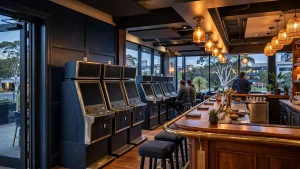
That is practice with the interface, not practice at winning. Demo results are not indicative of real-money outcomes. A run of free spins that looks generous does not mean the same thing will happen when money is involved; a quiet demo session does not mean the game is due to pay. Online pokie outcomes are generated by a random number generator, and one spin is independent of the one before it. The demo cannot give you a useful forecast of what a later session will bring.
What free play can show you
When a game offers a no-stakes mode, use it to get familiar with the parts you can actually inspect:
- The layout: See where the reels, spin button and game information sit. Some interfaces hide useful details behind small icons.
- The rules: Open the help or paytable pages and check how the game says its symbols and features work.
- The pace: Find out whether animations and feature sequences suit you, or whether the game feels slow or cluttered.
- The controls: Try the available settings so you know what they do before making a decision about whether to continue.
That’s enough to decide whether a title holds your attention. It isn’t a system for choosing winning spins. I once stayed with a demo because a bonus feature had appeared several times in a short stretch. I treated that little run as a hint. It wasn’t one. I’d learned how the feature looked, not what would happen next.
A demo is a tour, not a rehearsal
Free play can make the game feel familiar, which is useful. It can also make the next step feel more predictable than it is. That’s the trap. Knowing which button starts a spin, or what a symbol means, does not give you control over the result.
So keep a clear line between learning the game and expecting it to repeat what you saw. The same applies if the demo produces a run of disappointing results: it does not prove that a better run is waiting. The outcomes in free play are not a promise, a preview or a pattern you can carry into a different session.
If you’re trying a pokie for the first time, pause when you’ve understood the rules and decided whether you enjoy the presentation. Don’t keep replaying just to “unlock” a better outcome. That language makes random results sound like a challenge you can solve. It isn’t.
Check what “free” means
A free-play option should let you explore without staking money. Read the screen carefully before you start, because a play mode and a paid mode can sit close together in the same interface. If you are unsure whether a button will start a no-stakes demo, don’t press it until you have checked.
A search for a free pokie may also bring up videos, game pages or other material that shows how a title works without offering a playable demo. Those can help you recognise the layout, but watching someone else’s spins is no better as a guide to your own results. It shows what happened in that recording, nothing more.
And if you meant a physical pokie machine for sale rather than a game to try for free, that is a different question. A demo is software access, not a cabinet you own. The useful part is modest: learn the controls, read the rules, and see whether the game suits your taste. Then leave the results where they belong. Not a forecast.
Land-Based Pokies in Perth: What Crown Perth Actually Shows
For a legal, land-based casino in Perth, the name to know is Crown Perth. It is the city’s only legal casino of this kind; Western Australia has no legal online casino market. That makes the venue a specific local option, not a shortcut to finding a “best” Australian pokie machine. There are plenty of machines to choose from, but the information available about them has limits.

Crown Perth has more than 2,500 gaming machines. That is a large floor, and it means you may encounter a broad mix of games and machine setups. But a big selection does not tell you which one will pay more during your visit. Nor does a machine’s popularity establish that its payouts are better. I’d be wary of anyone turning a busy machine or a familiar cabinet into a promise.
What the machine has to show
Western Australian rules require every legal pokie to display its rules, paylines and prize table. Take a moment to read those details before putting money in. The rules explain how the game operates; the paylines show which combinations can count; and the prize table sets out the listed prizes for those combinations.
That information is more useful than choosing by a flashy screen or a confident-sounding claim about a “high-paying” casino pokie machine. It lets you see what the particular game says it offers. It does not tell you what your own session will return.
I used to skim the screen and assume I’d understand the important bits as I went. That was a poor way to make a choice. Read first. Then decide.
What Crown Perth publishes about RTP
Most machines on Crown Perth’s floor are reported to operate in an RTP range from 87% to 92%. RTP describes a long-run return across a very large number of plays; it is not a forecast of what one person will receive in a visit. So even when you see a figure attached to a game, don’t read it as a personal payout percentage or a promise that the machine will give a particular amount back.
There is another practical catch: Crown Perth does not publish an RTP list for each individual machine. The range for most machines cannot tell you the exact RTP setting of the machine you are standing in front of. If you are comparing two games on the floor, the public information does not provide a machine-by-machine answer to that question.
That gap matters when people talk about the “highest-paying” pokie as if there were an easy public ranking. A general range is not a ranking, and a prize table is not a disclosed machine-specific RTP list. The display still gives you useful information about rules and prizes, but it cannot fill in details the venue does not publish.
I’d keep the decision modest: check the displayed information, set a loss limit before you play, and treat any RTP figure as a long-run measure rather than a guide to tonight’s result. A pokie machine in a casino is still a game of chance, however familiar the title or impressive the screen. No machine owes you a payout.
Game Features, Networked Jackpots and Feature Buys
A jackpot feature and a feature buy can both look like a shortcut to the exciting part of a pokie, but they work in different ways. One links play across machines; the other lets a player pay extra to enter a bonus round immediately. Easy to mix up. Very different structures.
With a networked progressive jackpot, several machines—or machines across multiple casinos—feed into a shared prize pool. Titles such as Lightning Link, Dragon Link and Cash Express are examples of games built around that kind of network. The prize can grow as the linked machines are played, rather than being confined to activity on one individual machine.
That does not mean every spin brings you closer in any personal sense. The network describes how the jackpot is funded, not a promise about when it will be won or who will land it. I used to read a rising prize as if it were a sign that a machine was “due”. It isn’t. The number on the display tells you about the pool, not what the next play will do.
A feature-buy option is different: it charges a premium to trigger a game’s bonus feature without waiting for the usual route into it. That feature may be free spins, but the exact bonus depends on the game. A specialist review has reported feature-buy prices in the range of 50 to 100 times the base bet. Treat that as a reported range, not a standard price across pokie games; the option and its cost can vary by title.
The extra payment changes how you enter the feature, not what the feature will return. Paying to trigger it does not make a prize certain, and the bonus round is still part of the game rather than a guaranteed payout. “Instant access” sounds like a win in itself. It only means you skip the wait.
Before using a feature buy, check the game’s own rules and the displayed cost. It is easy to focus on the bonus animation and overlook how much the entry takes from your balance. I’d ask myself whether I would still want to play the feature if it produced nothing useful. If the answer is no, that premium is doing a lot of selling.
Network jackpots and feature buys can both make a pokie feel more dramatic, but neither changes the basic distinction: one builds a shared prize pool, while the other sells immediate entry to a bonus. Know which one you’re looking at. That matters.
Networked Jackpots
Multiple machines feed into a shared prize pool that grows as they are played.
Feature Buys
Players pay a premium to trigger a bonus feature immediately without waiting.
Pokie Odds: Independent Spins and What Volatility Means
I used to watch a run of losses and think the machine had to pay soon. It didn’t. A pokie spin is independent: what happened on earlier spins has no influence on the next outcome. A string of near-misses, small wins or dead spins is history, not a clue.
That matters when you’re trying to find the best pokie machine to win. There isn’t a pattern in yesterday’s results that can tell you which machine is “due”. The same goes for pokie machine sounds. A celebratory tune can make a small result feel bigger, but it doesn’t predict what the next spin will do. Sounds are part of the experience, not a signal to keep playing.
Volatility describes the shape of the payouts, not your chance of forcing a win. A low-volatility pokie tends to pay smaller amounts more often. A high-volatility one pays less frequently, but its payouts can be larger. Neither type changes the independence of each spin, and neither guarantees that you’ll get a return during your session.
That difference is easy to underestimate. I’ve picked a high-volatility game because the bigger prizes sounded exciting, then got impatient when nothing much happened. On another day, frequent small payouts felt reassuring, even though they didn’t mean the game was about to pay again. My mood changed; the odds didn’t.
If you’re deciding how to play a pokie machine, think about which payout pattern you’re comfortable with rather than treating volatility as a route to a win. A lower-volatility game may feel steadier if you prefer smaller, more frequent payouts. A higher-volatility game can have longer stretches without a payout, so it may be a poor fit if that would tempt you to chase losses. That’s a preference, not a prediction.

I also stopped treating a run of results as evidence that I’d worked out the machine. It’s tempting to search for a system in a sequence, especially when you’re already invested. But each spin stands on its own. The machine doesn’t remember your last result, and it doesn’t owe you a better one next time.
Before you start, set a loss limit you can live with and stick to it. If you reach it, stop rather than raising it because the game seems close to turning around. Volatility can shape how wins arrive; it can’t tell you when they will.
No system. No “due” spin.
Playing for Real Money: Bonuses, Conditions and Offshore Risks
A pokie demo lets you explore a game without staking real money. It can show you where the features and rules sit, but its results are not a preview of what will happen when you play for cash. I learned that the hard way: getting comfortable with a demo is not the same as being prepared to lose money.
Real-money play adds conditions that can matter more than the headline bonus. A wagering requirement tells you how much you must bet before bonus funds can be withdrawn. For instance, a specialist review describes a $100 bonus with a 30x requirement: the player must place $3,000 in bets before cashing out. That is one stated offer, not a standard applying everywhere. Read the terms attached to the specific promotion.
- Check the wagering requirements for bonus funds
- Verify which games count towards wagering
- Check for bonus expiry conditions
- Read the cashout limits for free spin winnings
“Free spins” can sound like cash in your pocket. They are not. Winnings from free spins are bonus funds and may come with wagering requirements and cashout limits. Check which games count towards wagering, whether the bonus has an expiry condition, and what happens if you withdraw before meeting the terms. If the rules are hard to find or unclear, I would not treat the promotion as a gift. It is a contract with the friendly wording stripped away.
There is a bigger issue with offshore services. Australian law prohibits operators from providing real-money online casino games, including pokies, to people in Australia. An offshore operator’s licence does not make its service locally authorised. If a dispute arises or winnings are withheld, you may have limited effective legal recourse in Australia. That risk is easy to ignore while everything appears to be working. Less easy afterwards.
Before any gambling, set a loss limit you can afford and stop when you reach it. Do not treat a bonus balance as money you can safely spend, and do not chase losses to satisfy a wagering condition. Withdrawals can also sit pending for 24–72 hours; during that time, a service may prompt you to reverse the withdrawal. I would leave it alone. Once you have requested a withdrawal, changing your mind can put the money back at risk.
Pokie Apps on Your Phone: Check the Details Before You Play
A pokie app can make a game feel closer at hand: tap an icon, open a lobby, and the reels are on your screen. But an app is only a way of reaching a service. It does not make that service legal for people in Australia, and a polished design is no proof of local approval.
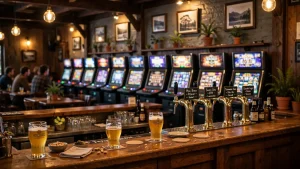
That distinction is easy to miss when the app behaves like any other phone app. Some services may open through a browser or a shortcut rather than a conventional app-store download. You may also see references to an API, the software interface that lets systems communicate. Neither the delivery method nor that technical label changes the legal position: the Interactive Gambling Act 2001 prohibits operators from offering real-money online pokie games to people in Australia. The offence is the operator’s, not the resident player’s.
Payment buttons can create a similar impression of legitimacy. A specialist affiliate review describes services aimed at Australians accepting Visa, Mastercard, bank transfers and, increasingly, Bitcoin or Ethereum. That is a report about payment options, not evidence that a service is lawful here. Being able to deposit does not settle whether the operator may offer the game.
Before installing anything, check what the app asks you to do, who operates it, and whether it is asking for payment details or personal information. Don’t treat an app-store presence, a familiar brand, or a working deposit screen as a legal endorsement. And don’t download a file from an unfamiliar page just because it promises a “best” pokie app. “Best” is marketing; it tells you nothing about whether real-money play is permitted.
The cost is not necessarily the download. If an app leads to real-money play, the ongoing cost comes from the bets you choose to place. Set a loss limit before playing, and stop when you reach it. A jackpot banner on a small screen is still an advertisement, not a reason to spend more.
If you are using a free-play mode, treat it as practice with the layout only. Demo results are not indicative of real-money outcomes. I’ve made the mistake of reading a smooth demo run as a sign that the paid version would behave the same way. It doesn’t tell you that.
Keep the distinction plain: an app can make access easier, and payment options can make deposits possible. Neither makes real-money online pokies legally available to Australian residents. A tap is not approval.
New Pokie Names and the Games Behind Them
A fresh title can catch your eye, but a new name does not tell you whether the game will suit you. I’ve been drawn in by bright artwork and a name that sounded like a whole adventure, then found that the name was doing more work than the game. Treat the title as a label, not a recommendation.
Recognisable names can help you find a game you remember, but they can also blur together. Lightning Link and Dragon Link, for instance, share a word without being the same title. Buffalo, Chilli and Book of Dead each suggest a different theme, yet a theme alone says little about what you will see once you start playing. If you are trying to track down a particular pokie, check the full title rather than relying on one familiar word.
That matters when a provider releases several games with similar artwork, recurring characters or a shared series name. A sequel may look familiar without being an exact repeat of the earlier game. I now pause long enough to read the title shown on the game itself, rather than assuming a thumbnail or a half-remembered name has led me to the one I meant. Small check. Fewer wrong turns.
For a new release, look for a clear game description and identify who made it. Then check the version available where you are playing: the same title can appear in different settings, so a name alone is not the whole story. If the information is thin or the title seems to be attached to a string of grand claims, I take that as a reason to slow down—not as proof that the game is special.

Names like Mega Moolah or Queen of your own Nile may be easy to remember, but memorability is not evidence of better play. Nor does a familiar title make a game a safe choice for your budget. When I’m curious about something new, I decide what I can afford to lose before I begin, and I don’t let the artwork make that decision for me. A catchy name stays catchy. That’s all.
RTP and a Few Habits That Keep Expectations Real
RTP is a long-run measure: it describes the share of all money wagered on a pokie that is returned to players across a very large number of spins. It is not a forecast of what you will get back in a session. I used to see a high figure and read it like a quiet promise. It isn’t one.
The version matters, too. Some providers let operators select from a range of RTP settings for the same game, so the figure shown in a review or on a game’s general information page may not match the version available where you’re playing. Check the specific pokie machine RTP at the chosen casino, rather than relying on a figure attached to the title elsewhere.
Even a high RTP does not ensure short-term wins. Your individual session can end well below the long-run return, or above it; the figure does not tell you what will happen next. Treat it as background information, not a target or a reason to keep playing until the numbers appear to “even out.” They owe you nothing.
My most useful pokie machine tips are plain: decide on a loss limit before you start, and stop when you reach it. Don’t raise it because a game looks due to pay, or because you want to chase a session back into the black. RTP can help you compare the stated settings of different versions, but it cannot make a short session predictable. Keep that distinction clear. It saves a lot of wishful thinking.
What is the best pokie to play at Crown Perth?
There is no single best machine for everyone. Crown Perth does not publish RTP figures for individual machines, so check the machine’s displayed rules and paytable; most machines operate in the 87% to 92% RTP range.
Can I play pokies for free before betting real money?
Yes, free pokie games or simulators can be played without staking money for a cash prize. That is different from real-money online pokies, which operators are not permitted to offer to Australian residents.
What law governs online gambling in Australia?
The Interactive Gambling Act 2001 governs online gambling services such as real-money online pokies. It makes it an offence for operators to offer those games to people in Australia.
Is there a strategy to win at pokies?
No strategy can predict or control the outcome of a spin: each one is random and independent of previous results. You can compare paytables and volatility, but neither changes the odds of a particular spin.
How much money do I need to play pokies?
At Crown Perth, minimum bets typically range from $0.20 to $2.00 per spin, depending on the machine. You can check the minimum bet displayed on the machine before playing.