
Check the room, not just the venue
A practical guide to verifying room availability, travel details, safer-gambling rules and the limits of online listings and payment claims.
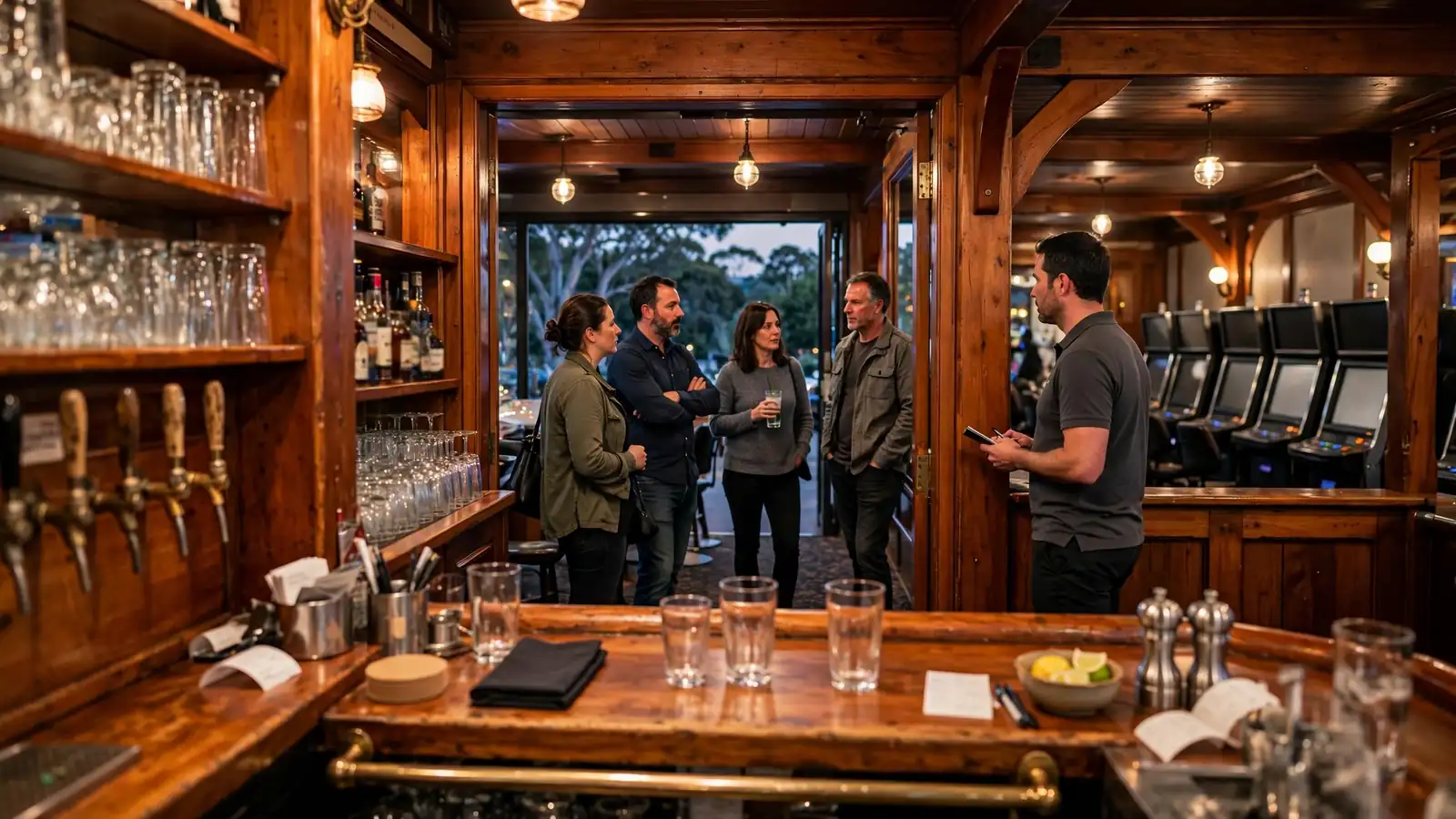
Checking Whether a Pokies Room Is Actually Open
A venue can appear open while its pokies room is not. That distinction is easy to miss when you are checking from home: a map listing may show the venue’s general trading status, while a search result may repeat information that has not been updated. Neither necessarily confirms that the machine room is operating at the moment you plan to visit.
I have learned to treat an online listing as a starting point, not the final answer. “Open now” sounds definite, but it may refer to a bar, dining area or the venue overall. If the pokies room is what matters, ask about that room specifically. A quick call to the venue is often more useful than trying to infer its availability from a broad opening-hours label.
Ask about the room, not just the venue
Keep the question plain: is the pokies room open now, and is it expected to be open when you arrive? If you are planning an early or late visit, say so rather than relying on a general schedule. A venue’s hours and a machine room’s availability are not interchangeable, and a listing may not explain the difference.
If staff answer that the venue is open, clarify whether that means the machine room is operating too. If they cannot confirm, you have a more honest basis for deciding than a map symbol or a result preview. You can also ask whether anything may affect access that day. There is no need to guess at the reason if the venue has not given one.
This is especially useful when a listing looks old, gives only broad hours or conflicts with another page. Rather than choosing the most convenient answer, look for a direct update from the venue. A recent post can help, but if it does not clearly refer to the pokies room, it still may not settle the question.
Check again before setting out
Opening information can change. A result you saw earlier may not reflect the situation later, and a page that says “open” may have been prepared for the venue as a whole. If the trip depends on the room being available, check close to the time you intend to go. That is more practical than treating an old search result as a promise.
When you contact the venue, make sure you have the right place. Similar names and broad location labels can muddy the answer, especially when you are comparing several results. Confirm the venue’s identity before relying on what you are told. If you use a website or social page, check that it belongs to the venue rather than a directory repeating its details.
There is a difference between “the venue is open” and “the pokies are available.” It sounds obvious, but I have made the mistake of reading the first as the second. A minute spent clarifying can save a wasted trip.
If nobody can give you a clear answer, do not fill the gap with an assumption. You can try again later or choose another plan. The point is not to find a clever way to decode a listing; it is to avoid mistaking incomplete information for confirmation.
What staffing information can tell you
There is also a staffing condition relevant to machine operation. A report published by regionriverina.com.au says that, from 1 July, venues with more than 20 gaming machines are required to have a dedicated responsible gambling officer (RGO) on duty while those machines are operating. This describes a requirement that applies during operation; it does not tell you whether a particular Adelaide room is open at a particular time.
That distinction matters. A rule about staffing is not a venue schedule, and it should not be used to infer that machines are running. Nor does a general opening-hours page confirm that the required arrangements are in place at a specific venue. For current availability, ask the venue directly.
If the room is operating, the staffing requirement is part of the setting in which it operates. It is not a guarantee of a particular experience or an invitation to stay longer. I keep the practical question separate: can the venue confirm that the room is available, now or when I plan to arrive?
Keep the decision simple
For an Adelaide visit, the reliable check is specific and current: confirm the venue, ask whether its pokies room is operating, and check again if your plans or timing change. Don’t assume an early or late opening from a search result, and don’t treat the venue’s general status as proof that its machine room is open.
A clear answer is useful. A vague answer is not confirmation. If the information remains uncertain, you can decide whether the trip is worth making without pretending you know more than you do. That small pause has saved me from turning an optimistic listing into a pointless outing.
What “Best Paying” Can—and Can’t—Tell You
If you’re looking for pokies in Adelaide in 2026, check the available operator details before deciding where to play. This list gives you a concise reference to the licensing and payment information provided for each option.
-
House of Pokies
- License
- international iGaming licence – jurisdiction not named in the source
- Payout speed
- PayID 1-24 hours
- Min. deposit
- A$30 (PayID from A$10)
You’ll find PayID payouts listed at 1–24 hours, with a minimum deposit of A$30 or A$10 when using PayID. Its source describes the licence as international but does not name the jurisdiction.
-
7Bit Casino
- License
- Curacao, operated by Dama N.V.
You can note that 7Bit Casino is licensed in Curacao and operated by Dama N.V.
-
Rollero Casino
- License
- Curacao Gaming Control Board OGL/2023/176/0095 (Hollycorn N.V.)
You can check its stated Curacao Gaming Control Board licence, OGL/2023/176/0095, and operator, Hollycorn N.V.
-
LevelUp Casino
- License
- Curacao eGaming OGL/2023/174/0082 (Dama N.V.)
- Min. deposit
- A$15
You can note LevelUp Casino’s Curacao eGaming licence, OGL/2023/174/0082, and its operator, Dama N.V. The listed minimum deposit is A$15.
-
Golden Pokies
- License
- Curacao
The available detail for Golden Pokies is its Curacao licence, giving you a basic licensing fact to consider.
-
WinSpirit Casino
- License
- Curacao eGaming OGL/2024/923/0383 (Antillephone N.V.)
- Min. deposit
- A$30
You can check WinSpirit Casino’s Curacao eGaming licence, OGL/2024/923/0383, issued to Antillephone N.V. Its listed minimum deposit is A$30.
-
Vegaz Casino
- License
- Curacao OGL/2024/1335/0780
- Min. deposit
- EUR 20
You can note Vegaz Casino’s Curacao licence, OGL/2024/1335/0780, and its listed minimum deposit of EUR 20.
-
Playfina Casino
- License
- Curacao eGaming (Hollycorn N.V., since 2017)
- Min. deposit
- A$20-30 (depends on the offer)
You can check Playfina Casino’s Curacao eGaming licensing through Hollycorn N.V., with the source noting this relationship since 2017. The minimum deposit is listed as A$20–30, depending on the offer.
-
Uptown Pokies
- License
- Curacao (operating since 2017)
- Min. deposit
- A$20
You can note that Uptown Pokies is listed as operating since 2017, with a Curacao licence and a minimum deposit of A$20.
-
Wild Tokyo
- License
- Curacao
- Payout speed
- crypto 30-60 minutes, fiat 1-5 days
- Min. deposit
- A$10
You’ll find a listed minimum deposit of A$10. The stated payout speeds are 30–60 minutes for crypto and 1–5 days for fiat; the source also lists a Curacao licence.
“Best paying” sounds like a clean comparison: find the pokie with the biggest return and you’ve found the smart choice. I used to read claims like that as if they could tell me what would happen during a visit. They can’t. A game’s advertised or published return is not a promise about your session, and a familiar title does not necessarily tell you which return setting a venue uses.
RTP, or return to player, is a percentage describing how much a game is designed to return across play over time. It can help compare stated settings, but it does not work like a forecast for an individual. You might play briefly and leave with less, more, or nothing back. The figure does not say when a return will happen, or how a particular visit will go.
There is another wrinkle: a specialist review reports that some providers give casinos a choice of RTP settings for the same pokie. That means a title’s return percentage may differ between casinos, even when the game looks and plays the same. If a comparison names a game but not the setting used at the venue, it leaves out the detail that makes the comparison meaningful.
So a game’s reputation for paying well is not enough to tell you what is installed in an Adelaide venue, let alone how it will behave while you are there. A claim about one setting should not automatically be carried over to every casino or every machine showing the same title. Same name, potentially different setting.
And even knowing the setting does not make the next outcome predictable. Each spin is generated independently by the game’s Random Number Generator. In plain terms, the result of one spin does not tell you what the next one will be. A run of losses is not evidence that a win is due; a win does not mean another is coming. I’ve made the mistake of treating a streak as a clue. It wasn’t.
That is why “best paying” can be useful only in a limited way. If you can verify the return setting for the specific game at the specific venue, you can understand one part of its design. You still cannot turn that information into a reliable prediction of what you will collect on a visit. If the setting is not stated, a ranking based on the game name alone may be comparing unlike versions—or repeating a reputation without showing what it rests on.
Do
- Verify the specific return setting for the game at the venue
- Separate theoretical design from predicted session results
Don't
- Assume a title's reputation guarantees a win
- Treat a run of losses as evidence that a win is due
For anyone weighing up pokies in Adelaide, the practical question is less “Which title is famous for paying?” and more “What exactly is this claim based on?” Is it about the same game version and the same setting? Does it identify where that setting applies? If those details are absent, treat the label as a description someone is making, not as evidence that one machine will treat you better.
I know how tempting it is to search for a sure thing, especially when a venue has rows of familiar games and every title seems to have a story attached. But there is no way to infer a session’s outcome from a title’s reputation or from the previous spin. That uncertainty is part of the deal, not a puzzle you can solve by watching closely.
If I compare games now, I separate design information from a promise about results. A stated return setting can describe the game’s theoretical behaviour over time; it cannot tell me what will happen in the minutes I spend playing. And if nobody can confirm the setting for the machine in front of me, the “best” label has even less to stand on.
No crystal ball.
Getting to a Venue from the Airport or Nearby
If you’re landing in Adelaide and hoping to find pokies nearby, separate “near” into two practical questions: where the venue is, and whether getting there fits your plans. A map result can help you identify a destination, but a pin alone does not tell you how straightforward the trip will be. Check the venue’s own address, then compare it with your starting point and the route you intend to take.
I’ve made the mistake of treating a search result as a plan. It wasn’t. A venue name can look close on a screen while the actual journey depends on where you are, how you’re travelling, and whether the place is convenient at that time. Check the route using your current location rather than relying on a broad label such as “near the airport” or “near the CBD”. If you’re already in North Adelaide or another nearby area, search from there instead of assuming that the closest result to the city centre will suit you.
The same goes for looking for pokies inside the airport. A phrase like that may bring up nearby businesses or general listings, but it does not establish that a venue is located within the airport itself. Check the address and destination details before setting off. If you’re meeting someone or arranging a ride, share the specific destination rather than saying only that you’re going somewhere near the airport.
For a trip into or around the CBD, think about the whole outing, not just the apparent distance. Confirm where you need to arrive, allow for the route you’ll actually use, and check details directly with the venue before leaving. I’d rather spend a moment checking the destination than discover I’ve planned around a place that isn’t where I thought it was. Simple, but easy to skip.
“Close by” is also personal. If you’re walking, carrying luggage, travelling with someone else, or watching the time, the nearest pin may not be the most practical choice. Use the route information that applies to your circumstances and make sure the destination is clear before you commit to the trip. Don’t let a short label do the thinking for you.
- Confirm the venue's exact address
- Check the route from your actual starting location
- Verify if you have valid identification to prove you are 18+
- Contact the venue to confirm the pokies room is operating
There is one eligibility point worth keeping straightforward: in Australia, you must be at least 18 to take part in gambling, including playing pokies. If you’re arranging a visit with other people, that threshold applies to anyone planning to gamble, not just the person who picked the venue. Keep identification handy if you may need to confirm your age.
Once you have a destination in mind, verify its address and your route from wherever you’ll actually be starting. That small check is more useful than guessing which place is “closest” from a broad search. The trip should make sense before you go.
What Venue Rules Say About Safer Gambling
When I think about a venue’s safer-gambling standards, I look past the posters and pay attention to what staff are expected to do when someone appears to be struggling. A sign can point you towards help, but it cannot notice a person becoming distressed or step in on its own.
A report by regionriverina.com.au described changes requiring venues to keep a gambling incident register. The register is intended to capture occurrences where a patron’s behaviour suggests they may be at risk of gambling harm or already affected by it. That makes the rule more than a paperwork exercise: it gives the venue a record of incidents to respond to, rather than treating each one as if it happened in isolation.

The same report described a one-month grace period for venues to remove signage and introduce responsible gambling officers. It also reported that venues with more than 20 gaming machines would need a dedicated RGO on duty while those machines are operating. That is a venue staffing obligation, not proof that a particular venue has met it. If you want to understand how a place handles a concern, you can ask who is on duty and how to raise it.
Sign placement matters too. Signage directing patrons to gaming lounges should be removed if it is within eyeshot of an ATM or EFTPOS terminal. Signs directing patrons to ATMs should be removed if they are within eyesight of gaming machines. The point is to avoid prompts that steer someone between gambling and access to cash. A venue may have plenty of responsible-gambling messaging elsewhere; placement still counts.
I used to treat a wall of notices as evidence that a venue had the situation covered. That was an easy assumption. It tells you what the venue displays, not whether staff recognise a concern, record an incident, or know what to do next. The practical question is whether there is a clear route to speak with someone, and whether staff can explain how they handle a gambling-related concern.
If you are comparing Adelaide pokies venues, these rules are a more grounded thing to ask about than a vague claim that one is the “best” venue. You do not need to turn it into an interrogation. Ask how to contact the RGO, whether the venue records gambling-related incidents, and how staff respond when a patron seems distressed. A straightforward answer is useful; a slogan is not.
No poster can make a decision for you. If you notice your own play getting harder to control, stepping away and asking staff for help is a reasonable move. You are not obliged to explain everything at once. Start with the concern in front of you. That’s enough.
Online Deposits: The Risks Behind the Convenience
A deposit button can make a gambling transaction look much like any other online purchase. The costs and conditions may be quite different. If you have been looking at offers for online pokies, including “no deposit” bonuses, read the payment and withdrawal terms before treating the headline as money you can freely use. A bonus is not cash in your pocket.
Banks can also interrupt a payment. A specialist review reports that Australian banks and card companies are increasingly blocking transactions to known gambling sites; that does not mean every payment will be blocked, but it is a reason not to assume a deposit will go through. The same review warns that a credit or debit card gambling transaction may be processed as a cash advance. In that case, a fee of 3–5% and interest from the transaction date may apply. Check your card terms or ask your issuer rather than finding out from the statement.
Read the bonus maths
The key phrase is “wagering requirement”. It describes how much qualifying betting must take place before bonus-related funds can be withdrawn. One specialist review recommends looking for a turnover multiplier of 35x or less and calls anything above 40x punishing. Those are that review’s assessments, not a promise about any particular offer.

The calculation depends on what the multiplier applies to. If a $500 bonus carries a 40x requirement, the review’s example works out to $20,000 in required bets. If the terms apply 35x to a $500 deposit plus a $500 bonus, the total becomes $35,000. That is turnover, not a fee, and meeting it does not guarantee a win. I used to notice the bonus amount first and the small print last. Bad order.
Check which games count, whether the deposit is included in the calculation, and whether there is a deadline or a maximum cash-out. A specialist review notes that some free-spin offers cap winnings that can be withdrawn. The offer can look generous while the conditions narrow what you can actually take out.
Withdrawal terms matter too
A displayed balance is not necessarily money available immediately. A specialist review reports that some casinos set weekly or monthly withdrawal caps of $5,000–$10,000; in its example, paying a $50,000 jackpot under such a cap could take years. These figures describe reported terms, not a universal rule. Find the withdrawal limit and schedule in the operator’s conditions before depositing.
Expect identity checks before a first withdrawal. Be ready to provide proof of identity and address; a site may also request a selfie holding your ID. Make sure the name and details on your account match your documents, and understand how those documents will be handled. If the conditions are unclear, or the payment rules keep changing, pause. Convenience is not the same as protection.
Online Pokies and the Australian Legal Reality
The phrase “online pokies in Adelaide” can make an offshore site sound like a local service you can rely on from home. It isn’t. The legal distinction is about who provides the gambling service and whether it has the required Australian licence—not where a website says it is based or whether it accepts Australian customers.
Under the Interactive Gambling Act 2001, companies cannot lawfully provide real-money online pokies to people in Australia without a domestic licence. No Australian online casino licences have been issued, so there is no locally licensed online casino to compare with a venue in Adelaide. A site using local-sounding language, displaying Australian dollars or taking a payment does not change that.
That’s the bit I’d want clear before trusting a “best paying” claim. It can be tempting to treat a polished website as a local alternative to pokies in Adelaide, or to assume a site serving people near Adelaide Central has the same standing as a local venue. Those are separate things. A website’s availability or claims do not establish that it is licensed here.
The law targets the operators providing prohibited services, rather than making an individual player liable simply for playing on an offshore site. But that distinction is not a consumer safety net. If an offshore casino refuses to pay winnings, an Australian player has no legal recourse in Australia to make it pay. “Fast withdrawals” is just a promise on a page if you have no practical route to enforce it here. Hard lesson.
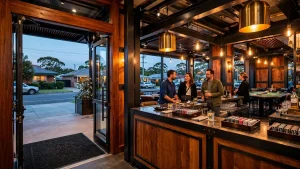
BetStop is also easy to misunderstand. It applies to Australian-licensed operators; it does not bind offshore gambling sites. Since Australia has no licensed online casino, registering with BetStop should not be treated as a way to block yourself from every offshore pokies website. If you use self-exclusion tools, check exactly which services they cover rather than assuming the protection travels across borders.
So whether you’re looking for online play from Adelaide or comparing it with a local venue, separate three questions: what the site claims, what Australian law permits operators to provide, and what options you would have if something went wrong. A payment method, a local-looking address or a familiar game title answers none of those questions by itself.
I wouldn’t call an offshore site “the local online casino” just because it takes a deposit from someone in South Australia. The important point is the gap between being able to reach a website and having Australian legal protection if there’s a dispute. That gap remains even when the branding feels close to home.
Why “24-Hour Pokies” Needs a Reality Check
“Open all day” sounds like a simple promise, but it is not a useful description of every Adelaide venue. If you are looking for pokies late at night or before sunrise, treat round-the-clock wording as something to verify, not as a timetable. A venue’s own current opening-hours information is more useful than assuming that a broad label means the machines are available whenever you arrive.
I’ve learned not to plan a night around a phrase that sounds definitive. Opening hours can be about the venue generally, while access to a particular area may be a separate matter. Check the hours that apply to the visit you have in mind, and contact the venue if the wording leaves you unsure. That is less exciting than finding a guaranteed all-night option. It is also less likely to leave you standing outside.
A search for 24-hour pokies in Adelaide can blur together two different things: a place being open and its pokies operating. Don’t treat one as proof of the other. Even a venue that is open late may not offer machine access at every hour. The practical detail is the operating time, not the headline.
There is also a staffing condition connected to machine operation. A report by regionriverina.com.au says that, from 1 July, venues with more than 20 gaming machines are required to have a dedicated Responsible gambling officer (RGO) present while those machines are running. That is a requirement tied to operation; it does not mean a venue must keep its machines running around the clock, or that any Adelaide venue does so.
So, when you see a claim about all-night access, look for actual hours rather than relying on the wording alone. If the information does not clearly say when the pokies are operating, get clarification before making the trip. “Open now” can answer whether a venue is open at that moment, but it does not necessarily settle whether machine play is available then.
There is no magic in the label. A clear schedule beats a confident-sounding phrase, and a quick check can save you a wasted trip. I’d rather spend a moment confirming the hours than assume “24-hour” means what I want it to mean. That distinction matters.
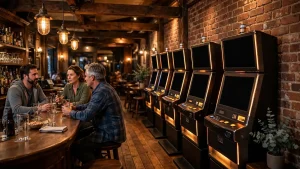
Searching for Crown: What This Guide Can Verify
A Crown name in a venue description does not tell you which pokies are on the floor, what settings they use, or when a particular room is operating. I’ve learnt not to treat a familiar brand as a shortcut to those details. A name can start your investigation; it cannot answer every practical question for you.
The useful point to check is the game setting. A specialist review reports that some providers let casinos choose between different RTP settings for the same pokie. RTP, or return to player, describes a theoretical return across extended play; it does not forecast what will happen during your visit. So a title you recognise may not have identical settings at every casino.
That distinction matters when you’re comparing a machine by reputation alone. Seeing the same game name somewhere else does not establish that its setting matches the one at the venue you’re considering. If the setting is not clearly stated, don’t fill the gap with a guess. Ask the venue whether it can confirm the setting, or check the game information available on the machine. If you can’t establish it, treat the figure as unknown.
I used to assume a familiar title meant a familiar experience. It doesn’t. And even a stated RTP is not a promise of a particular session result.
The same caution applies to talk of a “maximum cash payout”. That phrase can sound like a firm comparison, but it needs a clear definition: does it describe a single win, a machine feature, or a venue’s payment process? Without a specific, reliable statement explaining what the figure covers, it is not a sound basis for choosing a room. A large number without context is just decoration.
Understanding RTP
Return to Player (RTP) is a percentage describing how much a game is designed to return across play over time. It is a theoretical figure and does not forecast the outcome of an individual session or a specific visit.
If you are considering a Crown venue, keep the checks separate: confirm the venue and room details directly, then look for information about the particular game and its setting. Don’t assume that details attached to one Crown property apply to another, or that a machine selection stays unchanged. I’d rather make one plain call than build a night around a listing that might be stale.
No magic label. A name is not a setting.
CBD Clubs and the Limits of Venue-Level Information
A club’s name or CBD address doesn’t tell you what its pokies room is like. I’ve learned not to treat a venue listing as a machine guide: it may identify a place, but it doesn’t establish how many machines are there or which games you’ll find. A claim that one club has the “best pokies” needs more than a confident label.
That matters if you’re comparing Adelaide clubs. Machine counts and game selections are venue-specific details; a broad description of a club can’t stand in for either. If a particular room or feature matters to you, ask the venue directly rather than relying on a directory or an old comment. A little checking beats arriving with the wrong picture in your head.
There is also a concrete operational point for larger venues. A report by regionriverina.com.au says venues with more than 20 gaming machines will have to keep a gambling incident register. The register is for recording occurrences, including situations where a patron’s behaviour suggests they may be at risk of, or affected by, gambling harm. That is a requirement described for venues above the threshold, not evidence about the machine count or practices of any particular Adelaide club.
For someone looking into self-exclusion, the important distinction is between a general safeguard and the process at an individual venue. Self-exclusion is a responsible-gambling tool, but don’t assume that a club’s public listing explains how to start it, what areas it covers, or what support is available. Ask the venue for its current process before making a visit or trying to use the room.
I’d keep the comparison simple: confirm the venue itself, check the details that matter to you with staff, and don’t let a “best” label do the checking for you. A club can be easy to find online without its room details being clear. That’s not a verdict on the place; it’s just a reason to verify the practical bits first.
Cashless Payments: What PayID Does—and Doesn’t—Prove
“Cashless” can mean different things: paying without notes, moving money between accounts, or using a venue’s own system. PayID belongs to the bank-transfer part. It lets you send money using an email address, mobile number or Australian Business Number instead of entering the recipient’s account details. The service runs through the New Payments Platform (NPP), which major Australian banks support and which protects transfers with end-to-end encryption.
That tells you how a transfer can be addressed and carried. It does not tell you whether a particular Adelaide venue accepts PayID, whether its pokies use a cashless system, or what rules apply to that system. I wouldn’t read a payment logo as proof of anything beyond the payment method being offered.
More importantly, PayID support does not establish that a gambling service is licensed, that its games are fair, or that its return settings are transparent. Those are separate questions. A familiar bank-transfer method can make a payment feel reassuring; that feeling is not evidence.
The same distinction matters if you’re comparing Adelaide with Newcastle. Those are different locations, so make sure you’re checking the place you actually intend to visit rather than treating the two names as interchangeable. A payment method does not identify a venue or confirm its facilities.
If you’re considering a transfer connected with gambling, pause and check who the recipient is and what the payment is for before sending anything. PayID is a transfer mechanism, not a recommendation or a verdict. Useful distinction.
Are online pokies legal for Australian players?
Yes, you can legally play on offshore sites that accept Australian players, but no Australian-licensed online casino exists. Australian law prohibits companies from offering real-money online pokies to Australians without a domestic licence, and there is no legal recourse in Australia if an offshore casino refuses to pay.
What is the legal age for online gambling in Australia?
You must be 18 or older to gamble online in Australia.
Do PayID deposits qualify for bonuses?
Yes, PayID is treated like any other qualifying deposit method at the recommended sites.
What does “wagering requirement” actually mean?
It is the amount you must bet before bonus winnings can be withdrawn, expressed as a multiplier. For example, a $500 bonus with a 40x requirement means you must place $20,000 in bets.