
Check the venue before you make the trip
A practical guide to confirming opening details and understanding what venue listings can—and cannot—tell you.
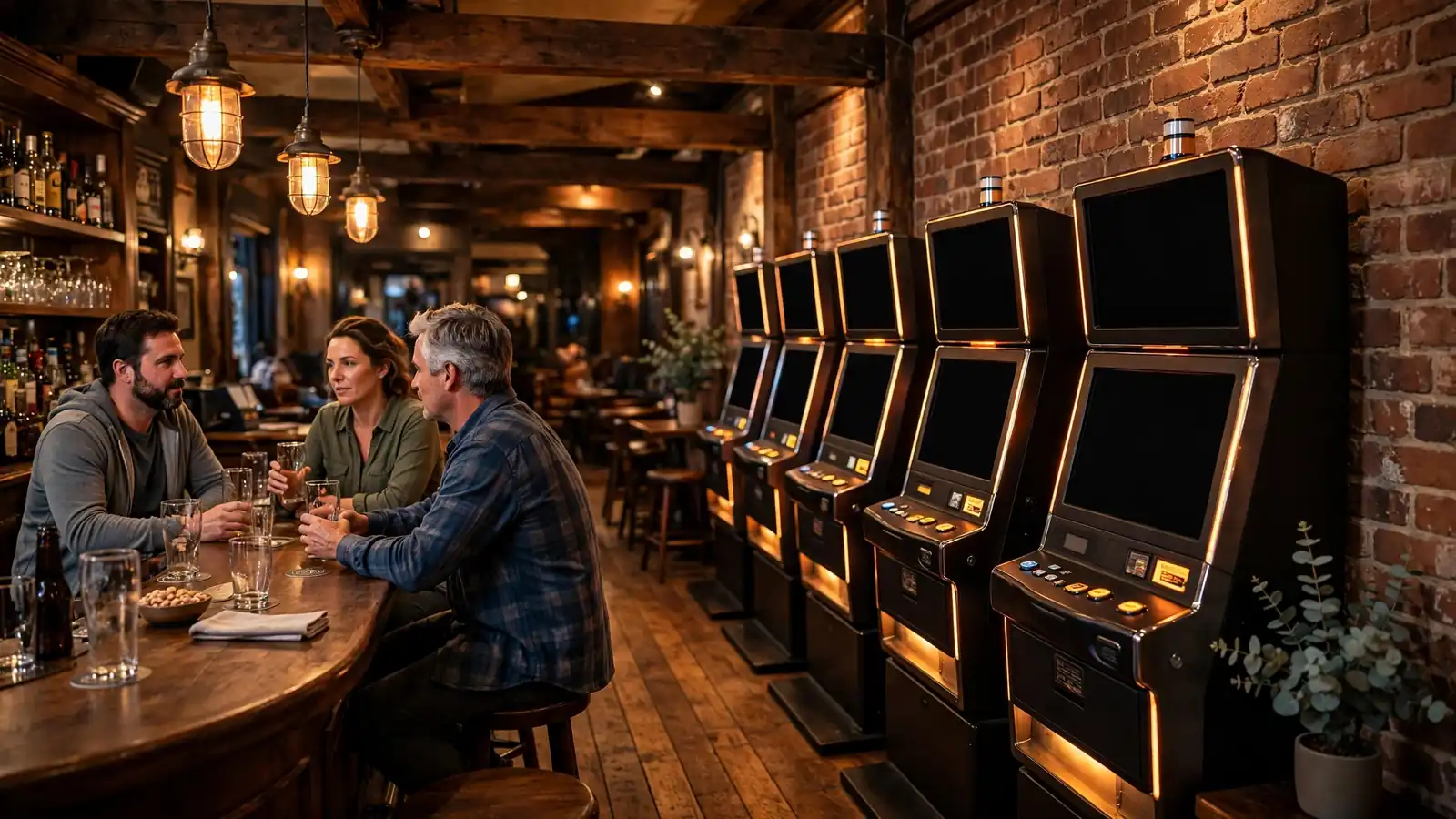
Checking Whether a Perth Venue Is Open Tonight
Before you set off for a pokie venue in Perth, confirm that it is open tonight—not just that a page labels it “open now”. That label can be stale, based on hours entered long ago, or too broad to tell you whether the part of the venue you want to visit is operating. A green status marker is a lead, not confirmation.
I’ve learned the annoying way that a quick glance at a map listing can leave you making a wasted trip. It may show a venue as open without making clear whether the information has been checked that day. A public holiday, a private function or a change to the venue’s schedule can make a routine-looking listing less useful than it seems. The practical question is not what the listing says in general; it is whether someone can confirm access tonight.
Start with the venue’s own current information. Look for its official website or social media account and check that the opening details apply to the date you plan to go. Pay attention to notices about changes, rather than relying on a standard weekly-hours panel alone. If the page has no recent update, or the wording is unclear, treat that as uncertainty—not as proof that the doors will be open.
Then contact the venue directly. A phone call is often the clearest way to ask whether it is open tonight and whether the pokie area is available to visitors. Keep the question specific. “Are you open?” might get an answer about the broader premises, while you need to know whether you can actually access the area you came for. If nobody answers, try another official contact method if one is provided. No reply is not a yes.
Check the details that can turn an otherwise useful answer into a wasted journey. Confirm the date, the time you expect to arrive, and whether entry is open to visitors at that point. If you are unsure about a condition of entry, ask before leaving rather than assuming it will be fine when you get there. A quick confirmation can save the longer frustration of arriving and finding that the information you relied on did not cover your situation.
Be careful with third-party listings, too. They can be handy for finding contact details or spotting a possible schedule, but they are not the same as hearing directly from the venue. Even a listing marked “open now” may not explain when its information was last checked or which facilities its status refers to. Read it as a starting point. If it conflicts with the venue’s own notice, or there is no way to tell which is current, call and settle it before travelling.
For an early or late visit, take the same approach rather than assuming those hours are covered by a general listing. Ask whether the venue will be open at the time you intend to arrive, not merely whether it opens that day. If your plans depend on arriving at a particular hour, say so plainly. A schedule that looks suitable at a glance may not answer that exact question.
Do
- Check official websites or social media
- Call the venue to confirm pokie area access
- Verify the specific date and arrival time
- Match the venue address against a map pin
Don't
- Rely on "open now" map labels
- Assume standard weekly hours are current
- Trust third-party listings as final confirmation
- Guess the route based on broad distance claims
Keep a small fallback plan. If you cannot confirm the venue’s status, decide whether you are willing to travel without confirmation or whether you would rather wait until you can check. I used to treat uncertainty as a minor detail and assume I could sort it out on arrival. That is a poor bargain when the trip itself takes time. Better to pause than to turn a hopeful guess into an evening spent going somewhere for nothing.
If you do get a clear answer, note who provided it and when. That does not make circumstances impossible to change, but it gives you a more useful basis for deciding than an undated badge. If plans shift, check again; a confirmation for one arrival time does not automatically settle another. And if the venue’s information remains contradictory, do not let the confidence of a map label make the decision for you.
The short version: check the venue’s own current notice, ask directly about access to the pokie area at your intended arrival time, and do not treat “open now” as a promise. It takes a little effort. Less than a wasted trip.
What “Best Paying” Can—and Can’t—Tell You
Choosing pokies in Perth for 2026 means weighing the details that matter to you before you play. Use this list as a reference to check each operator’s stated licensing and any available payment or deposit information.
-
House of Pokies
- License
- international iGaming licence – jurisdiction not named in the source
- Payout speed
- PayID 1-24 hours
- Min. deposit
- A$30 (PayID from A$10)
You can use PayID to deposit from A$10, with a stated minimum deposit of A$30 otherwise. PayID payouts are listed as taking 1–24 hours; the source describes the licence as international but does not name its jurisdiction.
-
7Bit Casino
- License
- Curacao, operated by Dama N.V.
You can note that 7Bit Casino is licensed in Curacao and operated by Dama N.V.
-
Rollero Casino
- License
- Curacao Gaming Control Board OGL/2023/176/0095 (Hollycorn N.V.)
You can check Rollero Casino’s stated Curacao Gaming Control Board licence, OGL/2023/176/0095, held by Hollycorn N.V.
-
LevelUp Casino
- License
- Curacao eGaming OGL/2023/174/0082 (Dama N.V.)
- Min. deposit
- A$15
You can make a minimum deposit of A$15. LevelUp Casino is listed under Curacao eGaming licence OGL/2023/174/0082, operated by Dama N.V.
-
Golden Pokies
- License
- Curacao
You can note that Golden Pokies is listed as holding a Curacao licence.
-
WinSpirit Casino
- License
- Curacao eGaming OGL/2024/923/0383 (Antillephone N.V.)
- Min. deposit
- A$30
You can make a minimum deposit of A$30. WinSpirit Casino is listed under Curacao eGaming licence OGL/2024/923/0383, held by Antillephone N.V.
-
Vegaz Casino
- License
- Curacao OGL/2024/1335/0780
- Min. deposit
- EUR 20
You can note Vegaz Casino’s stated Curacao licence, OGL/2024/1335/0780, and its minimum deposit of EUR 20.
-
Playfina Casino
- License
- Curacao eGaming (Hollycorn N.V., since 2017)
- Min. deposit
- A$20-30 (depends on the offer)
You can expect the minimum deposit to depend on the offer, with the stated range at A$20–30. Playfina Casino is listed as operating under Curacao eGaming through Hollycorn N.V. since 2017.
-
Uptown Pokies
- License
- Curacao (operating since 2017)
- Min. deposit
- A$20
You can note that Uptown Pokies has operated since 2017, is listed as Curacao-licensed, and has a minimum deposit of A$20.
-
Wild Tokyo
- License
- Curacao
- Payout speed
- crypto 30-60 minutes, fiat 1-5 days
- Min. deposit
- A$10
You can deposit from A$10. Wild Tokyo lists crypto payouts at 30–60 minutes and fiat payouts at 1–5 days, and is listed as Curacao-licensed.
“Best paying” sounds like a clear verdict. I used to read it as a promise about what would happen if I sat down and played. It isn’t. At most, the label may point to a stated return setting; it cannot tell you what your own session will pay.
There’s a detail easy to miss: a specialist review reports that some game providers let casinos choose between different return-to-player (RTP) settings for the same pokie. So two versions of one game can be configured with different return percentages. Knowing a title, or seeing it described as a high-paying option, doesn’t tell you which setting is in use at a particular place.
That matters when you’re comparing claims about Perth pokies. A description might refer to a game’s possible setting, or repeat a figure from somewhere else, without showing that it matches the version you’d actually play. Unless the setting is clearly identified and tied to the particular game setup, “best paying” leaves out the detail that would make the claim useful. The label alone won’t settle it.
And even a confirmed RTP setting is not a forecast for one person’s visit. RTP describes a return rate associated with a game setting, not a promise that a certain amount will come back to you. It doesn’t say what you’ll leave with after a short session, or when a win will happen. I’ve made the mistake of treating a percentage as if it were a personal prediction. It isn’t.
Each spin is generated independently by a Random Number Generator. In plain terms, the result of one spin does not tell you what the next spin will do. A run of losses doesn’t make a win due, and a recent win doesn’t mean another is waiting. The machine isn’t keeping a running balance that owes you a particular outcome. Annoying, but important.
That’s why the phrase “best paying pokies in Perth” needs more than a confident headline behind it. Ask what the claim actually refers to: a named game, a particular RTP setting, or just a broad description? Is the setting connected to the version available at the venue you have in mind? If those details aren’t clear, you’re looking at a label, not evidence of what that particular pokie will return.
The same caution applies when someone calls a pokie “high RTP”. It may sound like a useful comparison, but without a confirmed setting and context, the phrase can create more certainty than it deserves. And even when the setting is known, it still cannot predict an individual sequence of spins.
I wouldn’t choose a pokie because a page calls it the best paying one. I’d treat the wording as a claim to inspect, not a reason to expect a result. That distinction won’t make a spin less random, but it can stop an advertising phrase from turning into a belief that the machine is about to pay. No magic label.
Perth Venues and the Machine-Reporting Gap
A venue can have plenty of pokies and still tell you very little about what is available on each machine. That distinction matters when you are trying to decide whether one Perth venue is a better choice than another. A venue name, a broad description or a photo of a gaming room cannot establish which games are installed, what settings they use, or whether those details apply to the machines you would actually find there.
“Best” sounds like a clear verdict. In practice, it can hide a choice of criteria: range of games, number of machines, facilities, location, or something else entirely. Unless a comparison explains what it measured and how the information was checked, the label does not tell you much. A confident ranking is not the same as machine-level evidence.
I would want to know whether a claim refers to the whole venue or to particular machines, and when the details were last confirmed. A list of game titles alone would not settle the question. Nor would a general statement about a venue’s selection show that every machine has the same configuration. The useful details are specific; the promotional language often is not.
That is the gap behind venue comparisons. Public descriptions may speak broadly about a gaming room, while the information a player wants concerns individual machines and their settings. Without a clear basis for connecting those two things, there is no sound way to say that one venue offers better pokies than another. I would rather leave the comparison unresolved than turn a vague claim into a recommendation.
It is also easy to confuse a large selection with a better one. More choice does not, by itself, tell you how a particular game is configured or what a session will return. A machine’s outcome is not something a venue label can promise. Each spin is an independent random event, so even precise information about a game cannot predict what will happen in your next session.
If a venue makes a specific claim, look at what it actually describes. Does it identify the game and the relevant setting? Does it distinguish a particular machine from the venue as a whole? Is the information current, and is there a transparent basis for it? If those answers are absent, treat the claim as a broad description rather than a comparison you can rely on.
That is not the same as saying every venue is alike. It means the available detail has to support the conclusion. A review of a room, a mention of popular games or a striking headline may help describe someone’s impression, but it cannot independently establish machine settings. I have learned not to fill that gap with guesswork. It is an easy way to mistake confidence for proof.
The same caution applies if a page calls somewhere the best pokies venue in Perth. The phrase may be an opinion, a marketing line or a ranking based on criteria that are not relevant to you. Unless the basis is clear, it cannot settle a venue-to-venue comparison. No magic label.
So, when weighing up Perth venues, separate what is plainly described from what is actually demonstrated. A venue description can tell you what its publisher wants you to notice; it does not automatically answer machine-level questions. Keep the distinction in view, and you are less likely to treat an unsupported comparison as a reliable guide.
Near the Airport, CBD or Somewhere Else?
A venue described as “near Perth Airport” could still be an awkward trip from the terminal. The same goes for “close to the CBD”: that phrase gives you a general idea, not a usable address or a door-to-door travel time. I’ve learned to treat location labels as a starting point, not a reason to set off.
Start with the exact venue name and its street address. Check that the address belongs to the venue itself, rather than a nearby shopping area, hotel or suburb with a similar name. Then put that address into a map and look at the route from where you’ll actually begin. A pin that looks close on a broad map can mean something quite different once roads, access points and the final walk are involved.
The starting point matters. “Perth Airport” might mean a terminal, a car park or somewhere in the surrounding area. “Perth Central” might refer to a general central location rather than one precise place. And “near me” depends on where your phone thinks you are when you check. If you’re still at home, that result may not help with the trip you have in mind.
I once took a vague “nearby” label too literally and spent more time sorting out the route than I had planned. The useful check is simple: match the venue’s own address against the map pin, then read the route rather than guessing from the distance on screen. If the listing gives only a suburb or landmark, keep looking for the full address before making plans.

The same caution applies to names that sound like they identify a specific spot. A reference to North Perth, a park or an airport does not, by itself, tell you which venue is meant or how close it is. There can be more than one place with a similar name, and a broad area can cover a lot of ground. Don’t join a vague label to a venue in your head and assume the connection is confirmed.
For a location-based shortlist, write down the exact addresses first. Compare each route from the same starting point and check whether the map is showing a drive, public transport journey or walk. Those are different trips. If the address on the venue’s own page and the map listing do not match, pause and confirm the location directly before travelling.
That’s less exciting than a neat “closest to the airport” claim, but it’s more useful. I wouldn’t trust a distance claim unless I could connect it to a named venue, a precise address and my actual starting point. “Close by” is just a phrase until those pieces line up.
Crown Perth: What This Guide Can Verify
Crown Perth is a specific venue, so broad claims about Perth pokies cannot tell you what is available there. I won’t label a particular pokie, room or machine feature as a Crown fact without something that directly confirms it. A familiar venue name can make a claim sound settled. It isn’t.
That matters if you’re trying to choose where to play, or looking for a “best pokies room”. That phrase is a judgement, not a measurable feature by itself. It could mean a room someone finds comfortable, a particular mix of machines, or simply a recommendation repeated online. Unless the person making the claim explains what they checked and when, you’re left weighing an opinion.
The same caution applies to claims about which pokies Crown Perth has. A game mentioned in an old post or a third-party listing may not establish what is currently on the floor. Even a genuine past visit only tells you what that visitor saw at that time. If a particular game matters to your trip, ask Crown Perth directly whether it is currently available. I’d do that before travelling rather than build a plan around a name I saw online.
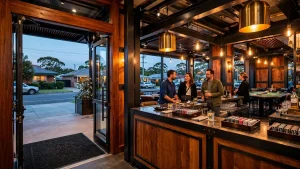
Machine figures need the same care. A claim about a pokie’s return percentage is not automatically a Crown-specific figure: some providers allow different settings for the same game at different venues. And no published percentage predicts the result of your next spin; each spin is random and independent. A number without a clear connection to the particular machine and venue can create confidence without giving you a useful answer.
Be cautious with talk of maximum cash payouts, too. A headline amount alone doesn’t explain what applies to a particular machine, how a payout is handled, or whether the claim refers to Crown Perth at all. I wouldn’t treat a forum post, promotional wording or a result from another venue as proof of a Crown-specific payout rule. If that detail affects your decision, ask the venue and get the answer in terms you can understand before playing.
There’s a practical distinction here: a venue-wide statement, a claim about one pokie, and a claim about one machine are not interchangeable. “Crown has this game” would not, by itself, establish that every room has it. Nor would an account of one machine establish a general rule across the venue. Small wording changes can hide a big gap.
My own mistake used to be taking a confident-sounding claim as a checked detail. It saved me no time. For Crown Perth, keep the standard simple: look for information that names the venue and the exact detail you care about, and confirm it with the venue when the decision matters. If the answer stays vague, treat the claim as unconfirmed. No guesswork dressed up as a recommendation.
Online Pokies and Deposits: The Legal Catch
The promise of playing real-money pokies online from Perth runs into a basic legal problem. Under the Interactive Gambling Act 2001, companies cannot provide those games to people in Australia without a domestic licence. No Australian online casino licence has been issued, so there is no locally licensed online casino to point to.
That distinction matters. The law is directed at the operators, not at individual players, and the player is not the person it makes liable for an operator’s breach. But that does not make an offshore site a safe substitute for a local venue. If one refuses to pay winnings, Australian players have no legal recourse here to make it honour the claim. The terms on a screen do not fix that.
I learnt to treat words such as “trusted” as advertising, not protection. A site may display a payment method or make claims about its games, but neither establishes that it is licensed in Australia, that its games are fair, or what return percentage a pokie uses. And a bonus is not a way around the legal position. A no-deposit offer is still an inducement to play on a service that has no Australian casino licence.
PayID is worth understanding as a payment tool, not as a badge of approval. It is an alias connected to Australia’s New Payments Platform, letting someone send a bank transfer using an email address, mobile number or ABN rather than the recipient’s account details. The NPP is supported by all major banks and uses end-to-end encryption. To use PayID for a real-money gambling deposit, it must first be linked to a bank account.
That describes how a transfer works. It does not certify the recipient, confirm a game’s fairness, or reveal its RTP. A familiar-looking payment option can make a transaction feel ordinary; it cannot create local protection where none exists. I have made that mistake with other “easy” payment claims. Different thing.
Be cautious about giving an offshore operator personal information as well as money. Before any first withdrawal, check what identity and address documents it requires and how it says they will be handled. A request for documents does not give you a remedy if the operator later withholds a payout. If you are not comfortable sharing them, stop before depositing.
BetStop is not a workaround for this gap: it applies to Australian-licensed operators and does not bind offshore sites. That limit is important if you are considering self-exclusion; do not assume a registration will block access to an offshore account.
For me, the practical takeaway is blunt: online real-money pokies are not offered through an Australian-licensed casino, and an offshore operator can leave you without a local path to recover withheld winnings. PayID may move funds, but it cannot change either fact. If you want to play, an in-person venue and an online account are not the same legal or consumer-protection situation.
“24-Hour” Claims Need a Check
“24-hour” sounds definite, but it can blur two different things: a venue being open and its pokies being available to play. One doesn’t automatically prove the other. I’ve learned not to treat a bold label as a full description of what I’ll find when I get there.
Read the wording closely. Does it say the venue itself stays open around the clock, or does it make a broader claim about pokies? Is the information attached to a particular venue, or is it a general description with no clear connection? If those details aren’t clear, don’t fill in the gaps yourself. That’s where a short claim starts doing more work than it deserves.
I’d also check when the hours were last updated. A page can linger after details change, and a snippet can strip away the context that made the original wording less absolute. If you’re planning around a claim of round-the-clock play, contact the venue directly and ask specifically about access to the pokies at the time you intend to visit. Ask plainly. Get a plain answer.
That’s different from checking whether one place is open tonight. The issue here is what an all-hours claim actually promises, and whether it applies to the venue, the machines, or both. A venue may describe its own operating hours without saying that every area or service is available throughout them. Don’t read more into the phrase than it states.
I used to see a confident label and treat it as settled. Bad shortcut. Now I look for the exact wording, the venue it refers to, and a current answer from the venue before making a special trip. “Open” is not always the same as “pokies available”; vague wording won’t make it so.
A practical rule: if the claim doesn’t identify the place and spell out what is available, treat it as a prompt to check—not a guarantee that you can play whenever you arrive. And if the answer is still unclear, make your plans without relying on the claim. No guesswork needed.
Pokies in Perth’s CBD and Clubs
A CBD address and a club setting can sound like a useful shortcut when you’re deciding where to play. I’ve learned not to treat either as a recommendation. “Best” is doing a lot of work in that phrase: it might mean a location suits someone’s plans, but it does not establish anything about the pokies or what they will return.
Naming a venue anyway would turn a guess into advice. That’s not a useful shortcut.
The same goes for a list of CBD venues. Before relying on any claim, look for details that can be checked directly with the venue, and be wary of a page that calls a club “the best” without explaining what that means. A club’s location does not tell you its pokie selection, and a machine’s presence does not predict the result of your next spin. Each spin is an independent random event.
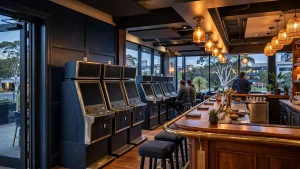
If self-exclusion is part of your decision, treat it as a practical support tool rather than a promise that every gambling service will honour it. Self-exclusion is among the standard responsible-gambling tools, alongside deposit, loss and session-time limits. BetStop is limited to Australian-licensed operators; it does not bind offshore sites. Check the scope of any exclusion option with the service or venue before relying on it.
I’ve made the mistake of reading a confident label as proof. It isn’t. For CBD clubs, separate what you can confirm—such as a venue’s own current information—from claims about machines or “best” play that have no clear basis. If the details aren’t clear, don’t fill the gaps with a guess or travel on the strength of a ranking. Keep your spending and time boundaries in mind, and use an exclusion option if you need one. A club setting doesn’t change the randomness of a pokie, and a CBD location doesn’t make a recommendation reliable.
No magic address.
Perth Is in Western Australia: The Rules That Matter
Perth is in Western Australia, so a page about pokies there should not quietly borrow claims about South Australian venues or rules. State location matters when you are checking local venue details; it does not change the national legal framework for online gambling.
The legal age for gambling in Australia is 18, including for online pokies. That age limit is not a sign that every way of playing is lawful. Under the Interactive Gambling Act 2001, companies cannot provide real-money online casino games to people in Australia without a domestic licence, and none has been issued. The law targets operators, not individual players, but that distinction does not make an offshore service safe or locally regulated.
The Australian Communications and Media Authority (ACMA) is the main domestic regulator enforcing the Act. It can block access to illegal offshore gambling sites, and internet service providers must follow its blocklist. So if a site loads for you, that alone tells you nothing about whether it is lawful, dependable or likely to pay.
I have learned not to treat a familiar payment logo or polished page as proof of protection. There is no Australian-licensed online casino, and a player who is refused a withdrawal by an offshore casino has no legal recourse in Australia. That is the part the bold banner tends to leave out.
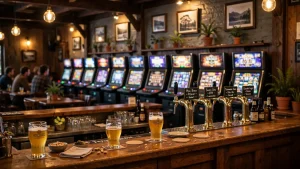
BetStop is another point people can misunderstand: it applies to Australian-licensed operators and does not bind offshore sites. It cannot make an offshore casino observe an exclusion request.
For a Perth visit, keep the distinction clear: the national age rule applies across Australia, while venue-specific details need to be checked locally. A result mentioning South Australia does not establish anything about a Perth venue. And “Australian” in a website’s branding is not the same as Australian licensing.
Cashless Pokies and the Newcastle Search
“Cashless” can mean a few different things, so I’d separate paying a venue from transferring money between bank accounts. PayID is the latter: it uses an email address, mobile number or ABN as an alias for a transfer through the New Payments Platform. To use it for an online real-money gambling deposit, you would first link it to a bank account. That does not make PayID a way to pay a pokie machine.
Nor does seeing PayID offered tell you whether a gambling site is licensed, whether a game is fair or what its return setting is. Those are separate issues. I’ve learned not to treat a familiar payment logo as a quality check. It isn’t one.
For cashless pokies in Perth, the useful distinction is between a bank transfer and the payment arrangements at a venue’s machines. PayID explains the first; it does not tell you whether a particular venue has cashless machines or how those machines accept payment. Don’t assume one from the other.
The Newcastle wording can also muddle two places into one request. Perth and Newcastle are separate locations; a phrase connecting them does not establish that a Perth venue has a Newcastle link, or that a particular machine is available in both places. I’d treat any such claim as something to check directly, not as a recommendation.
One more catch: BetStop applies to Australian-licensed operators, not offshore sites. It cannot block you from using an offshore gambling service. That matters if a payment discussion drifts from bank transfers into online play. PayID is a transfer method, not a safeguard.
Keep the categories separate: bank-transfer details are not machine-payment details, and a location phrase is not proof of a venue connection. Less confusing that way.
What is the legal age for online gambling in Australia?
You must be at least 18 years old to gamble online in Australia.
Are online pokies legal for Australian players?
You can legally play on offshore sites that accept Australian players, but companies cannot offer real-money online pokies to Australians without a domestic licence, and none have been issued. There is no Australian-licensed online casino, and you have no legal recourse in Australia if an offshore casino refuses to pay your winnings.
How do I know if an online casino is safe to play at?
There is no Australian-licensed online casino, and you have no legal recourse in Australia if an offshore casino refuses to pay your winnings. PayID uses end-to-end encryption, but that does not guarantee that a casino itself is safe.
What does “wagering requirement” actually mean?
It is the amount you must bet before you can withdraw bonus winnings, usually calculated as a multiplier. For example, a $500 bonus with a 40x requirement means you must place $20,000 in bets.
What is the cost-benefit calculation of casino promotions?
Compare the promotion’s potential value with the betting required to meet its wagering condition. For example, a $500 bonus at 40x requires $20,000 in bets; if the requirement applies to a $500 deposit plus a $500 bonus at 35x, it requires $35,000 in bets.