
Check Card Acceptance Before You Deposit
Card logos and general payment lists may not reflect the options available in an individual Australian casino cashier.
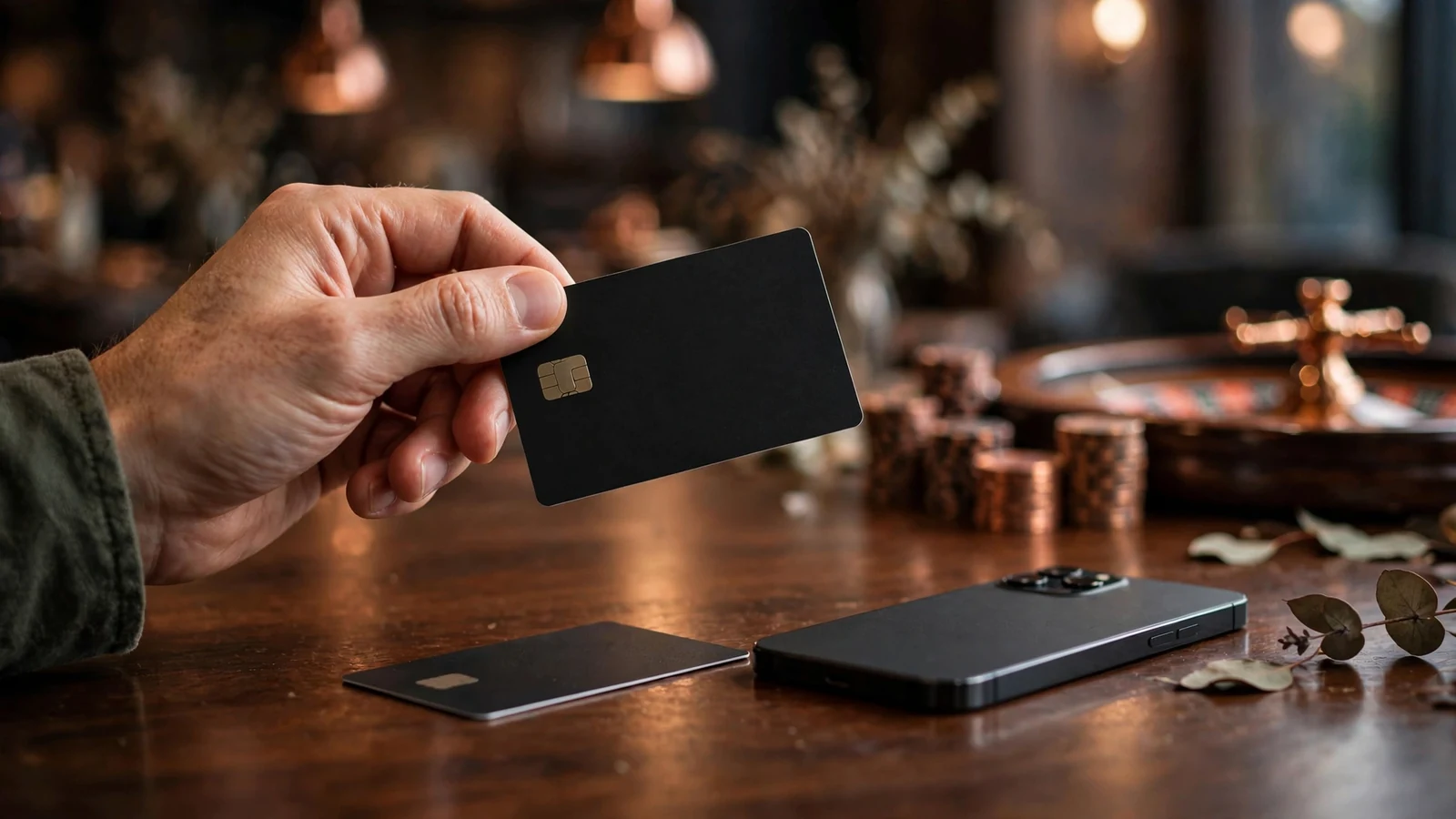
Which Cards Are Actually Accepted?
A card logo on a casino page is not a promise that the card will work for every Australian customer. Payment options can differ from one operator to another, and a method shown in a general list may not be available in the cashier for a particular account. I’d treat “accepts credit cards” as a claim to verify, not a guarantee.
American Express is the point that needs the closest check. A specialist review reports that some online casinos accept Amex deposits, while others do not. That is a limited, time-sensitive description of particular operators, not a dependable statement about the whole market. Payment arrangements can change, so an old review or a banner on a landing page may not match what a customer sees when checking the operator’s current payment information.
Visa may be accepted more widely than Amex at Australian-facing online casinos, according to a specialist review. That comparison still doesn’t mean Visa will be available everywhere, or that a particular Visa card will be accepted in every situation. Card acceptance depends on the option the operator makes available and the card issuer’s own rules. A card brand alone can’t settle the question.
It helps to separate three claims that often get blurred together: an operator accepts cards, it accepts a particular card network, and it accepts your particular card. The first can be true while the second is not; the second can be true while the third still fails. “Credit card accepted” is broad wording. It does not tell you whether Amex is included.
I’ve learned not to read payment badges as the final word. They’re easy to scan, but the useful detail is whether the cashier itself lists the card method for the account in question. Before relying on any statement about acceptance, check the operator’s own current payment information and compare it with what is actually displayed there. If Amex is absent, don’t assume that a general mention of cards includes it.

There’s a more basic boundary for Australian readers, too. Real-money online casino services are illegal for operators to provide to people in Australia under the Interactive Gambling Act 2001. A discussion of card acceptance describes claims made about offshore services; it is not an endorsement or a suggestion to use them. Australian consumer law does not protect players who use offshore casinos. That matters more than a payment logo.
So, if you are trying to work out whether an online casino takes a credit card, narrow the question to the named card network and the operator’s current cashier information. For Amex, the careful answer is that some specialist reviews report acceptance at some services, but others do not accept it. For Visa, a specialist review suggests broader acceptance, but that is not a universal rule. Neither statement establishes that any particular service is lawful to use from Australia.
The practical takeaway is modest: card acceptance is not uniform, and Amex should not be assumed to be supported just because a site mentions cards. Nor should a listed method be treated as confirmation that your card will be approved. The payment information can tell you what the operator says it offers; it cannot make an offshore casino lawful in Australia or provide the protections that Australian consumer law withholds from offshore casino use.
No blanket answer.
What Happens When You Make a Card Deposit
An Amex option appearing in a cashier describes a payment route, not a promise that every casino offers it or that every attempted payment will go through. Australian law prohibits operators from supplying real-money online casino games to people in Australia, and Australian consumer law does not protect players who use offshore casinos.
Where an Amex option is available, the deposit process is direct. You select Amex in the cashier, enter the card details, specify the amount in Australian dollars and submit the payment. That is the basic sequence. There is no separate card-deposit ritual to learn, but the cashier’s instructions and the amount shown before submission matter: the transaction you authorise is the one you should check carefully.
Amex Deposit Process
-
1
Verify Method
Check that the cashier explicitly lists Amex, rather than just a general card symbol.
-
2
Enter Details
Select the Amex option and provide the requested card information in the cashier.
-
3
Specify Amount
Enter the deposit amount in AUD and review all information for accuracy.
-
4
Submit Payment
Authorise the transaction by clicking the submission button for instant processing.
From the cashier to submission
Start by checking that the payment method shown is actually Amex. A general card symbol or a list of card brands is not the same thing as a clear Amex option. If it is listed, choose it and enter the requested card details in the cashier. Then enter the deposit amount in AUD and review the information before submitting.
I’ve learned not to treat the final button as a harmless click. It authorises a payment attempt. Pause long enough to confirm that the selected method and the amount are right. If the cashier’s wording is unclear, or the payment screen does not match what you expected, do not guess your way through it. A deposit should not be submitted just because the next button is there.
Once submitted, the Amex deposit is processed instantly when the transaction is accepted. That describes the processing of the deposit; it does not mean every payment attempt will succeed, nor does it establish that the money is available for every other purpose on the site. The method has to be offered in the cashier, and the transaction still has to be accepted.
“Instant” sounds reassuring. It is a timing description, not a safety endorsement.
What the sequence does—and does not—tell you
The steps are simple enough to describe, but simplicity can make a payment feel more routine than it is. You are still authorising a gambling-related transaction. Before submitting, make sure you understand what you are paying and that the amount displayed is the amount you intend to send. If you are unsure, stop rather than treating a completed payment screen as a reason to continue.

Nor does seeing Amex in a cashier settle whether using the service is lawful for the operator. Under the Interactive Gambling Act 2001, operators are prohibited from providing real-money online casino games to people physically located in Australia. The Australian Communications and Media Authority is responsible for enforcing that law. The legal restriction concerns the operator; it does not mean Australian consumer law will protect you if you choose to use an offshore casino. It will not.
That distinction is easy to miss when a payment screen looks ordinary. A familiar card brand and a straightforward checkout do not turn an offshore casino into a locally protected service. I would not read a smooth cashier flow as evidence of local approval or consumer recourse.
Keep the decision separate from the mechanics
The payment sequence answers only how an Amex deposit is entered when the method is available: select it, provide the card details, enter an AUD amount, then submit. Processing is instant when accepted. Those details do not establish whether a particular operator is lawful, whether a player has consumer-law protection, or whether the service is suitable to use.
If you encounter an Amex option, treat it as payment functionality—not as an endorsement. The fact that a transaction can be submitted does not change the legal position for operators serving people in Australia, and it does not create Australian consumer protections for offshore casino use. That is the part a polished cashier cannot tell you.
A quick checkout can make the decision feel small. It isn’t.
The Card Costs and Limits You Can Miss
A card can look like a simple way to move money, but the amount shown at checkout is not always the whole cost. With Amex, the final figure can depend on the casino’s own terms, the currency used for the transaction and the card provider’s rules. Those details matter more than a broad claim that a casino credit card payment is “free”.
A specialist review describes Amex deposits as generally fee-free, while also noting that charges depend on the individual casino and that withdrawals may carry a fee. Treat that as a description of a particular operator’s terms, not a guarantee for every online casino. A separate specialist review reports that a casino may add a 1.5% surcharge to an Amex transfer. That is a possible charge, not a standard rate across operators. The cashier’s terms and the card statement are where the actual cost becomes clear.
The price may have two parts
There can be a difference between a fee imposed by the casino and one connected with currency conversion. A specialist review cites a 3% conversion fee for Amex cards. That figure should not be read as an automatic charge on every Australian-dollar transaction: conversion costs matter when a payment is processed in another currency, and the details depend on the card provider and the transaction.

It is easy to focus on the displayed deposit amount and miss the currency behind it. If the casino prices a transaction in a currency other than AUD, conversion can affect what appears on the card account. The operator may also apply its own surcharge. These are separate possibilities, so seeing no casino fee does not necessarily tell you what the card provider will charge.
The reverse is true, too: a conversion fee mentioned in a review does not establish that every Amex payment will incur it. I’ve learned not to treat a single tidy number as the whole bill. Small print matters.
Limits are not a promise of spending power
A specialist review reports that Amex transaction limits can be higher than those offered for Visa or Mastercard at the casinos it considered. That is not a market-wide rule, and a higher stated ceiling does not mean a casino will approve a payment of that size. Individual casino limits can vary, and the card provider may also impose its own restrictions.
The important distinction is between a limit displayed by the casino and the amount your card can actually process. A casino may set its own minimum or maximum transaction amounts, while the card issuer’s rules apply separately. Those controls can change, and a limit shown in one place may not describe every payment route or account.
This is why comparing credit card casinos on one headline limit can be misleading. The limit may apply to a particular transaction type, while the fees may be listed elsewhere in the terms. A low charge does not tell you whether a limit suits your circumstances; a high limit does not make a transaction cost-free.
Do
- Check the specific currency of the transaction
- Identify who collects each surcharge or fee
- Verify the transaction type for listed limits
Don't
- Rely on broad claims of "no fees"
- Treat a single review figure as a universal rule
- Assume a high limit implies a cost-free transaction
Check the terms, not the sales wording
Before relying on any stated figure, look for the currency, the transaction type and who collects the charge. Is the amount an operator surcharge, a card conversion cost or a limit set by the casino? Is it for a deposit or another kind of transaction? If those details are unclear, a claim such as “no fees” says less than it seems to.
A specialist review may be useful as a pointer, but operator terms and card-provider conditions can change. The figures above are reported examples, not a promise about what a particular payment will cost today. I would not assume that one casino’s conditions apply to another, or that a fee description covers every account and transaction.
There is also a bigger issue than the arithmetic. Australian consumer law does not protect players using offshore casinos. A low surcharge or a generous limit cannot make that protection appear, and it should not be mistaken for evidence that a service is safe or locally regulated. The Interactive Gambling Act 2001 prohibits operators from providing real-money online casino games to people in Australia.
So the practical lesson is not “find the biggest limit”. It is that fees and limits can come from different parties, and a figure quoted in a review may describe only one operator’s terms at one point in time. Read the conditions closely, and do not treat a card-cost comparison as an endorsement of using an offshore casino.

When You’d Rather Not Use a Card
In Australia, tapping a card is so routine that it barely feels like a payment choice. Contactless credit and debit cards are accepted almost everywhere, and mobile wallets such as Google Pay and Apple Pay are too. You can leave home without much cash and still pay for ordinary things with a tap or a phone.
That habit carries over when you’re deciding how to handle money online. A card may feel like the obvious option because it is already in your wallet. But “obvious” is not the same as necessary. I’ve caught myself treating the familiar button as the default before stopping to think about whether I wanted that particular transaction tied to my card at all.
Australians are also used to switching between cards, mobile wallets and services connected to bank accounts, including PayPal. That flexibility is part of everyday life: the method you use can depend on the shop, the device in your hand or the way you prefer to manage a payment. There’s no reason to assume that a card has to be involved every time you pay online.
It helps to separate the general habit from the specific service. A tap working at a café, supermarket or public transport terminal doesn’t tell you what an online gambling operator accepts, or whether the service is lawful for Australians. Those are separate questions. Everyday acceptance is broad; it is not a blanket endorsement of every place that asks for payment details.
I used to read a familiar payment logo as a kind of reassurance. It wasn’t. A payment method can be common across Australia and still be a poor fit for a particular transaction. If you’re considering an online casino that takes card deposits, pause before entering anything: decide whether you want to use a card, and look at the wider circumstances rather than letting a one-click cashier make the choice for you. Familiarity can make a decision feel smaller than it is.
Mobile wallets can feel even more effortless because the card details are already stored on a device. That convenience is useful in everyday shopping, but it can also remove the little pause that comes with reaching for a physical card and typing its details. I’ve found that a moment to check what I’m authorising is worth more than shaving a few taps off the process. Small pause. Better habit.
The same distinction matters when you think about money coming back. A payment method you use to pay for things day to day is not automatically available for receiving funds from an online service. Don’t assume that because a card or wallet is familiar in shops, it will work the same way in a casino cashier. The payment route and the service’s own rules matter.
So if you’d rather not use a card, that preference isn’t unusual or out of step with how people pay in Australia. Cards, phone wallets and bank-linked services all sit alongside one another in ordinary life. You can choose based on what you’re comfortable with, rather than treating the card option as the natural answer just because it’s easy to tap.
And if the question is whether to play at all, that deserves its own thought. Payment convenience doesn’t make a service suitable, safe or lawful. Don’t let a familiar checkout do the deciding for you.
What “Top” Really Means When You Can’t Verify a Ranking
If you’re looking for casino sites that accept credit cards in Australia in 2026, use this list as a starting point and check each site’s current payment options before depositing. The details below highlight what is known about each operator, but do not confirm credit-card acceptance.
-
House of Pokies
- License
- international iGaming licence – jurisdiction not named in the source
- Payout speed
- PayID 1-24 hours
- Min. deposit
- A$30 (PayID from A$10)
You can note its international iGaming licence, though the source does not name the jurisdiction. The listed PayID payout speed is 1–24 hours, and the minimum deposit is A$30, or A$10 via PayID.
-
7Bit Casino
- License
- Curacao, operated by Dama N.V.
You can use its Curaçao licensing and operator details as a starting point for your checks: 7Bit Casino is operated by Dama N.V.
-
Rollero Casino
- License
- Curacao Gaming Control Board OGL/2023/176/0095 (Hollycorn N.V.)
You can check its specific licence details: Rollero Casino is licensed by the Curaçao Gaming Control Board under OGL/2023/176/0095, with Hollycorn N.V.
-
LevelUp Casino
- License
- Curacao eGaming OGL/2023/174/0082 (Dama N.V.)
- Min. deposit
- A$15
You can note that LevelUp Casino is licensed under Curaçao eGaming OGL/2023/174/0082 and operated by Dama N.V. Its minimum deposit is A$15.
-
Golden Pokies
- License
- Curacao
The available detail for Golden Pokies is its Curaçao licence; check the site for current payment methods and other terms.
-
WinSpirit Casino
- License
- Curacao eGaming OGL/2024/923/0383 (Antillephone N.V.)
- Min. deposit
- A$30
You can note WinSpirit Casino’s Curaçao eGaming licence, OGL/2024/923/0383, held by Antillephone N.V. Its minimum deposit is A$30.
-
Vegaz Casino
- License
- Curacao OGL/2024/1335/0780
- Min. deposit
- EUR 20
Vegaz Casino’s listed licence is Curaçao OGL/2024/1335/0780. Its minimum deposit is EUR 20.
-
Playfina Casino
- License
- Curacao eGaming (Hollycorn N.V., since 2017)
- Min. deposit
- A$20-30 (depends on the offer)
You can note that Playfina Casino has a Curaçao eGaming licence associated with Hollycorn N.V. since 2017. Its minimum deposit is A$20–30, depending on the offer.
-
Uptown Pokies
- License
- Curacao (operating since 2017)
- Min. deposit
- A$20
Uptown Pokies is listed as Curaçao-licensed and operating since 2017. Its minimum deposit is A$20.
-
Wild Tokyo
- License
- Curacao
- Payout speed
- crypto 30-60 minutes, fiat 1-5 days
- Min. deposit
- A$10
You can note Wild Tokyo’s Curaçao licence and A$10 minimum deposit. Its listed payout speed is 30–60 minutes for crypto and 1–5 days for fiat.
A “top” label looks like a verdict. Often, it is just a heading. I’ve learned not to treat a polished ranking as proof that one credit-card casino is better than another. To make that claim responsibly, you would need a clear way to compare the same things across operators and evidence that the details are current. Without that, a numbered order can create confidence it has not earned.
The phrase “best credit-card casino” can hide several different questions. Does the site accept the card you have? Can you complete its account checks? Are its terms clear? Those are separate issues, and a ranking that bundles them together may not tell you which one it actually measured. A high position on a page does not answer them for your circumstances.
There is also a difference between a list of names and a verified comparison. An operator might appear in a review because the reviewer describes it as suitable for card users. That does not establish that it is objectively among the leading options, or that its payment arrangements still match the description. I would want to see the basis for the ranking and how recently the relevant details were checked before putting weight on it. Otherwise, “top” is decoration.
Account checks matter too. Before handling financial transactions, an online casino may ask customers to complete identity-verification steps, often described as Know Your Customer checks. That can affect whether an account is ready for transactions, but it does not make a ranking more reliable. A page that mentions card access while skipping over verification requirements gives only part of the picture.
The more honest answer is that a ranking needs evidence about its criteria, its method and the currency of the information—not confident adjectives or a tidy first-place badge.
That is less satisfying than a quick recommendation. It is also less likely to send you chasing a label that means different things on different pages. A ranking can be a starting point for scrutiny, but it is not proof of quality, suitability or a particular outcome. “Top” is a claim. Ask what supports it.
Real-Money Play and the Australian Legal Reality
I’d separate two questions that often get blurred together: whether an Australian player is specifically criminalised for using an offshore casino, and whether that casino is allowed to offer its service here. The Interactive Gambling Act 2001 targets the operator side: providing real-money online casino games to people in Australia is prohibited. That includes casino-style games such as poker and table games, not just one narrow category.
The Act does not explicitly make an individual player’s use of an offshore site a criminal offence. That distinction is not an endorsement or a sign that the service is lawful. The legal restriction is on operators providing the service to people in Australia, and enforcement can affect access to offshore sites. The Australian Communications and Media Authority (ACMA) is responsible for enforcing the Act.

The penalties underline where the law places its weight. A breach can attract a maximum daily penalty of $360,000 for an individual operator and $1.8 million per day for a company. Those figures concern people or businesses violating the law, not a stated player penalty for using an offshore casino.
There is another practical point that is easy to miss when a site looks polished or has terms written for Australians: Australian consumer law does not protect you when you use an offshore casino. If a dispute arises over an account or funds, you cannot assume the protections and routes for resolving complaints that apply to Australian consumer services will be available. A familiar-looking website does not change that.
I’ve learned not to treat access to a website as proof that its service is authorised. A page can load, accept account details or display Australian currency without changing the law that applies to the operator. Nor does a reference to a foreign licence make the service lawful to provide to people in Australia.
So, if you are weighing real-money casino play from Australia, the key point is not whether an offshore operator appears willing to take a payment. The operator’s provision of online casino games to people here is prohibited, ACMA is the enforcement body, and Australian consumer law does not protect players using offshore casinos. That is the legal context to understand before treating any offer as an ordinary local service.
Can Winnings Go Back to Your Card?
A card working for a deposit does not mean it will work for a payout. That’s the part I’d check before treating Amex as a complete way to move money in and out. A specialist review reports that some casinos may not return winnings to American Express, and that an extra withdrawal fee may apply. Those are operator-specific conditions, not a promise about every cashier.
There may also be a same-card requirement. For an Amex withdrawal, you need to have made an earlier deposit using Amex. So if you paid in through another method, don’t assume you can nominate your Amex card when you cash out. The cashier’s available options and the operator’s withdrawal rules determine what you can request.
Timing needs the same careful reading. A specialist review puts Amex casino withdrawals at up to five days to clear. Treat that as a reported timeframe, not a guarantee: a processing estimate does not tell you when a particular request will be approved or appear in your account. Keep the distinction clear. “Processed” can describe the operator handling the request; it does not necessarily mean the funds are already available to spend.
Before relying on a card payout, look in the cashier’s withdrawal area and read the relevant payment terms. Check whether Amex is listed for withdrawals, whether a prior Amex deposit is required, and whether a fee is attached. If the option is absent, or the terms are unclear, ask the operator to confirm the available withdrawal route before depositing. That small check can save you from assuming the way in is also the way out.

For Australian residents, there is a further point beyond payment mechanics: using an offshore casino does not come with Australian consumer-law protection for that casino service. A card payout may be described in an operator’s terms, but that is not the same as having local consumer protections if something goes wrong.
The short version: an Amex deposit alone does not establish that an Amex cash-out is available. Verify the withdrawal rules first, and don’t treat a reported processing window as a firm arrival date.
Why a Card Payment Might Be Declined
A declined Amex payment does not always mean the card details are wrong. The block can come from either side of the transaction: the card issuer or the website trying to process it. I used to assume a rejection was a simple checkout glitch. That was too tidy an explanation.
Australian banks can stop gambling-related charges on an Amex card before they reach the website. In that case, the casino’s cashier may show a failure even though the restriction sits with the bank that issued the card. A card can work for ordinary purchases and still be refused for this category of transaction. The issuer decides what it will authorise.
Why was my Amex declined?
Declines can occur if your Australian bank stops gambling-related charges before they reach the website, or if Amex specifically prevents payments to a particular website.
There can also be a website-specific block. A specialist review has reported that Amex may prevent payments to a particular website, so a card that works elsewhere might not work there. That is a report about a possible cause, not a guarantee that Amex currently blocks any given site. Payment rules can change, and a message on the screen may not tell you which party said no.
If an attempt fails, pause before submitting it repeatedly. Check that the card details and billing information you entered match the card, then ask the issuer whether it declined the charge. If the issuer says it did not block the payment, the website’s support team may be able to explain what its cashier recorded. I would not read a generic error as proof that the card itself is faulty.
That distinction matters when you are trying to understand whether an online casino accepting credit card payments has rejected the card, or whether the issuer stopped it first. The phrase “payment error” is not much of an explanation. Find out which side declined it.
If the Casino Doesn’t Take Your Card
If a payment page does not offer a card option, other routes may appear, but their trade-offs are not interchangeable. I’ve learned not to treat a different button as a simple workaround: the payment method can change how quickly funds move and what fees may be involved.
A specialist review describes cryptocurrency payments such as Bitcoin and Ethereum as offering instant deposits and withdrawals, with limited or no fees. That is a description of the payment route, not a promise that every site supports it or that every transaction will be cost-free. The value received can also depend on the terms shown by the service handling the payment. Read those terms before making any decision.
Bank transfers can be a slower, more expensive route. A specialist review notes that they may involve longer waiting times and higher fees, though the precise terms depend on the parties handling the transfer. “No card” does not automatically mean “no cost”. The cashier’s stated conditions matter.

I would compare only what is actually displayed: the payment method, its stated processing conditions and any listed charges. If those details are unclear, don’t assume a transfer will arrive instantly or that a cryptocurrency payment has no cost. And payment availability is not an endorsement of a gambling service or a recommendation to use one.
Using an Amex Gift Card Is Deposit-Only
An Amex gift card is not the same as a regular credit card, even if a payment page treats it as an American Express card. At an online casino that accepts Amex, the gift card may be usable to fund a deposit. It cannot be used to receive winnings.
That distinction is easy to miss when you’re focused on getting a payment accepted. “Works with Amex” describes a possible way to pay in; it does not mean every Amex product works, or that money can be sent back to the same card. A gift card has a one-way role here.
So if you’re considering an online casino using a credit card, don’t assume an Amex gift card gives you the same options as a standard card. The stated use is limited to deposits. It is not a withdrawal method, and treating it as one could leave you needing another route if funds are due back to you.
I’d separate the two questions before making any payment decision: can the gift card be used for a deposit, and how would any withdrawal be handled? For an Amex gift card, the first may be possible at a casino that accepts American Express; the second is not. Keep that limit clear. A payment card is not a cash-out plan.
This is a narrow payment detail, not an endorsement of using an offshore casino or a suggestion to deposit. In Australia, real-money online casino services are prohibited for operators, and consumer law does not protect people using offshore casinos.
How do you check if casino sites accept Amex deposits?
Check the operator’s current cashier and confirm that American Express is listed as a deposit method for your account. A general card logo or mention of cards does not confirm Amex is accepted.
Can I use Amex to withdraw winnings from an Australian online casino?
Some casinos do not allow withdrawals to Amex, and those that do may require you to have deposited with Amex first. Withdrawals can take up to five days to clear, and a fee may apply.
Are there fees for using Amex at online casinos?
Amex deposits typically have no fee, but a casino may charge a 1.5% surcharge, and a 3% currency conversion fee may apply. Withdrawal fees can also depend on the casino.
Which online casinos accept American Express for deposits?
Jackpot City Casino, Spin Palace, Ruby Fortune, Ignition Casino, Joe Fortune and PlayAmo are listed as operators supporting Amex deposits. Check the current cashier, as payment options can change.
How safe is my money when using American Express at online casinos?
Australian consumer law does not protect players who use offshore casinos, and seeing Amex in a cashier does not make an offshore service lawful to use from Australia. The Interactive Gambling Act 2001 prohibits operators from offering online casino games to Australian residents.
Are there any limits on how much I can deposit or withdraw using American Express?
Yes. Each casino sets its own Amex deposit and withdrawal limits, and they can vary; check the limits shown in the operator’s current cashier.
What should I do if my American Express deposit is declined?
Amex or your Australian bank may block gambling-related payments to a particular website. Check whether the payment method is available in the cashier and whether your card issuer blocks the transaction.