
Check Osko support before treating it as a payment option
Everyday payment habits do not establish whether a specific casino offers Osko or makes it available to every customer.

How Australian Players Fit Osko into a Wider Payment Mix
In Australia, paying by card or phone is ordinary enough that it can be easy to assume the same options will appear everywhere online. Contactless credit and debit cards are accepted almost everywhere in the country, as are mobile wallets such as Google Pay and Apple Pay. People are also used to moving between cards, mobile wallets and services connected to banks, including PayPal.
That broad comfort with different ways to pay is useful context, but it is not proof that a particular online cashier offers every method a customer knows. I’ve made that leap before: seeing a payment brand widely used in everyday life and assuming it would be available wherever I wanted to pay. Those are separate questions.
Osko belongs in that distinction. A person looking for an Australian casino that accepts Osko is asking about a specific option at a specific operator, not simply whether Australians use varied payment methods. General payment habits cannot establish that an online casino supports Osko, or that the option would be available to every customer.

The same applies in reverse. Seeing cards or mobile wallets accepted broadly around Australia does not tell you what an online cashier offers. Familiarity is not confirmation. It is easy to blur those points when payment pages use reassuring language such as “flexible” or “easy”—words that may describe a general preference, not a confirmed method.
I’d keep the questions separate: what payment methods Australians commonly use, and what a particular service actually lists for its customers. The first gives you the wider setting. The second needs specific, current information from the service itself. One does not answer the other.
So, when Osko comes up alongside Australian casino payments, it is worth treating the name as a request for a concrete detail rather than as evidence of availability. Cards, phone wallets and bank-linked services are part of the local payment mix. That does not turn a general pattern into confirmation about Osko. A small distinction, but an important one.
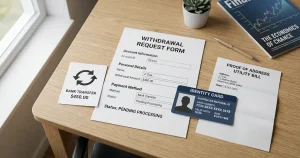
Online Casino Payments: What the Available Evidence Actually Shows
A search for Australian online pokies that take Osko sounds like it should lead to a straightforward answer: a list of sites and a payment label beside each one. I would be wary of that format. A page can repeat a payment claim without showing that it applies to Australian customers, or that the method is available for the transaction you have in mind. A mention of Osko is not the same as a confirmed option in a cashier.
That distinction matters here. So I can’t give you a dependable list of Australian sites, new or otherwise, and label them Osko casinos. Naming operators on that basis would turn an uncertain claim into a recommendation. It would look neat. It wouldn’t be solid.
A payment label is not proof of acceptance
Payment descriptions can blur several different things: what a site advertises, what its cashier displays, and what a customer can actually use. A method might appear in a general payment guide without being available to Australian residents. It might be described as supported without explaining whether the claim applies to deposits, withdrawals, or both. Those are not interchangeable details.
I’ve learned not to treat a glossy payment badge as the whole story. If you’re assessing a claim, the relevant information would need to be clear and current on the operator’s own terms and cashier, including whether the method is offered to customers in Australia. Even then, a cashier option would answer only the payment question; it would not make the service lawful or protect you from the risks of using it.
There is another hurdle before money moves. Online casinos commonly require customers to pass identity checks before they can carry out financial transactions. That means a payment claim alone does not tell you whether an account will be approved or what conditions apply. “Easy access” is marketing language; identity checks are part of the process.
The Australian context changes the answer
There is a more basic reason not to treat a list of offshore sites as a shopping guide. Under Australia’s Interactive Gambling Act 2001, operators cannot lawfully provide real-money online casino games to people physically located in Australia. Casino-style games such as poker, blackjack, roulette and pokies fall within that restriction. The Australian Communications and Media Authority is responsible for enforcing the law.
That legal setting makes phrases such as “best Australian Osko casino” particularly misleading. They can imply that there is a local, approved service to compare, when the relevant legal restriction is on operators providing these games to people in Australia. Offshore availability or a payment claim does not change that. Nor does an overseas licence provide Australian consumer-law protection to someone using an offshore casino.
I’m not going to turn an uncertain payment label into a list of places to play. A ranking would suggest that the named services had been checked and were suitable for Australian customers.
What you can take from the payment question
Search results, copied descriptions and payment logos are not enough to settle it. And even a clear statement from an operator about a payment method would not answer the separate question of whether that operator may offer real-money casino games to someone in Australia.
If a page promises “new” or “best” Osko pokies, look at what the promise actually rests on. Is it a current statement from the operator? Does it specify Australian customers? Does it distinguish a payment method from the games and services being offered? If those points are blurred, the label does not give you a reliable basis for action. No shortcut there.

I know the temptation: a familiar payment name can make an unfamiliar site feel more ordinary. That was the sort of detail I used to overvalue. It tells you something about a payment claim, at most; it does not settle legality, account checks, or consumer protection. For Australian residents, the legal restriction comes first. The method comes second.
Osko Deposits and the $10 Question
A small minimum can sound like a low-risk way to test a payment method. But the amount shown beside a deposit option is only useful if the operator is legally able to offer the service and the payment route is genuinely available. A figure in a headline, search result or promotional claim does not establish either point.
That matters for Osko. I can’t responsibly describe an Osko deposit as an available option for Australian online casino play, or say that a particular minimum applies. The same goes for claims about a “best” site for this kind of deposit: naming or recommending an operator would turn an unconfirmed payment claim into a steer toward a service that cannot legally be provided to people in Australia.
Why the minimum is not the first question
When you see a stated minimum, it is easy to focus on whether your intended deposit meets it. I used to treat the number as the main detail and leave the fine print for later. That was backwards. A minimum tells you little about whether a payment will be accepted, what the payment is for, or whether the underlying service may legally be offered here.
For an online casino deposit, the more basic issue is the Australian legal setting. The Interactive Gambling Act 2001 makes it illegal for operators to provide real-money online casino games to people physically in Australia. That covers casino-style services such as poker and table games as well as other forms of online casino gambling. The restriction is on operators; it does not mean an Australian player is criminally liable merely for using an offshore site. Still, that distinction is no reason to treat a deposit as an ordinary purchase.
A deposit also involves handing over payment details and potentially personal information. Online casinos commonly ask customers to complete identity checks before carrying out financial transactions. That means a payment question can become an account and identity question too. A low entry amount does not remove those considerations.
Don’t confuse a payment label with a deposit option
Osko is a payment service associated with bank-linked transfers, but that general description does not establish that an online casino cashier supports it. A logo, a search result, or a page that uses the word “Osko” is not enough to show that a deposit can actually be made through the service. Nor does a reference to bank transfers prove that Osko is included.
I would not enter bank details or send money on the strength of a vague label. More importantly, I would not use payment instructions to try to access an online casino service that Australian law prohibits operators from providing. That isn’t a judgement about how careful someone is with a transaction. It is the basic context the deposit claim leaves out.

There is a difference between asking whether a payment system exists in Australia and whether it can be used to fund online casino play here. The first does not answer the second. An operator’s wording may describe a general payment capability, while leaving unclear whether it applies to Australian customers, to casino deposits, or to a particular account. The word “supported” can sound settled when the practical meaning is not.
The real cost of treating a small deposit as a test
A small payment can still expose you to the same uncertainties as a larger one: whether the recipient is legitimate, what personal information is requested, and what recourse is available if something goes wrong. Australian consumer law does not protect players who use offshore casinos. That leaves a person with less protection than they might assume from seeing familiar payment language or a polished cashier page.
So the deposit question is not simply whether a site accepts Osko, or whether its minimum suits you. It is whether the operator is permitted to offer that gambling service to Australians at all. A payment route cannot make an unlawful service lawful. And a modest amount is still money at risk.
I know the appeal of treating a small deposit as a harmless trial. But “just testing it” is still a financial transaction, and a quoted minimum is not proof of a safe or lawful way to proceed. The sensible answer is not to infer availability from a payment name or a deposit figure. No shortcut there.
Do
- Check for explicit, current instructions in the operator's cashier
- Distinguish between payment methods and game availability
Don't
- Infer availability from a payment name or a deposit figure
- Treat a small deposit as a harmless way to test a service
What to Check Before You Try to Pay with Osko
A casino payment page can use broad labels such as “bank transfer” without making clear whether Osko is supported. Those terms are not interchangeable proof. If a cashier does not name Osko and explain the payment route, don’t assume that selecting a bank option will let you pay that way.
I’ve learned not to treat a familiar payment logo or a sentence on a promotional page as enough. The useful detail is the operator’s own current cashier information: does it identify Osko as a method, set out how the payment is handled, and state any conditions? If those details are vague or inconsistent, there is no sound basis for treating Osko as an available payment method.
That distinction matters. “Pay by Osko” can sound like a simple button, but a claim about a service is not the same as a clear cashier option. Nor does a general reference to bank-linked payments establish that Osko is accepted. Check the wording before entering financial details or starting a transfer; don’t rely on a third-party description to fill gaps in the payment instructions.
There is also a bigger issue than the cashier. Australian law prohibits operators from providing real-money online casino games to people in Australia. An apparent payment route does not change that legal position or make an offshore casino service a safe or protected choice. Australian consumer law does not protect players who use offshore casinos.

So, if you are weighing whether to use Osko for a casino payment, the sensible test is narrow: look for explicit, current instructions in the cashier, and don’t infer acceptance from generic bank-transfer language. If the information is unclear, stop there. No guesswork.
Casino Games and Osko Are Separate Questions
A payment label and a game catalogue answer different questions. Seeing Osko mentioned in a payment context would not, by itself, show what games a service offers. Nor would a game listing establish that Osko can be used with it. Those are separate claims, and I would not treat one as proof of the other.
The distinction matters because “casino payment” can sound as if the method belongs to the game itself. In practice, payment arrangements concern moving money to or from an account; game availability concerns what an operator offers. A cashier reference, even if genuine, does not tell you whether a particular game is available, and a game title does not confirm a payment option. Two checks, not one.
I’ve learned not to fill in those gaps with a confident-sounding label. “Osko games” is a neat phrase, but it can blur together a payment method, an operator’s services and the games themselves. Unless an operator clearly confirms both its payment arrangements and its offerings, the phrase does not establish either one. And a claim about one service should not be carried over to another.
There is also an important Australian context: the Interactive Gambling Act 2001 prohibits operators from providing real-money online casino-style games to people physically located in Australia. Payment wording does not change that rule or turn a prohibited service into a lawful one. The Australian Communications and Media Authority is responsible for enforcing the Act.
So when you come across a reference linking Osko with casino games, keep the questions distinct: what is being claimed about payment, and what is being claimed about the service? Don’t read a payment mention as proof of a game offering, or a game description as proof that Osko is supported. A label is not confirmation.
Withdrawals: What Can—and Can’t—Be Confirmed
“Instant” sounds like a clear promise. With a payout, it is not. The word can refer to different points in a process: when a request is submitted, when an operator approves it, or when money reaches an account. Unless the claim says which point it means, you cannot tell what the timing actually covers.
That distinction matters when you see Osko mentioned alongside casino withdrawals. A payment label alone does not establish that a payout can be sent that way, or how long it would take. I’ve learned not to treat a slick cashier label as a timetable. Those are separate claims.
A withdrawal also involves more than choosing a method. Online casinos typically require customers to complete a Know Your Customer assessment before financial transactions. That requirement can form part of the process before a payment is handled, but it does not tell you how quickly any particular payout would be reviewed or released. Nor does a completed assessment establish that Osko is available for withdrawals.

“Fast withdrawal” is another phrase worth unpacking. It may describe an operator’s handling of a request, rather than the full time until funds arrive. A real-money payout can therefore be described in broad terms without giving you enough detail to judge its timing. The useful distinction is between approval and receipt—not a reassuring adjective.
What an “instant” claim leaves open
A timing statement is meaningful only when it identifies what is being timed and what conditions apply. For instance, does the clock start when you submit a request, or after any required review? Does the statement describe the operator’s own processing, or the entire journey to the recipient account? Without those details, “instant” does not give you a dependable arrival time.
It also cannot establish that the payment route works in both directions. A method used to pay in is not automatically a method used to receive winnings. The ability to request a payout, the operator’s approval of it, and the route used to send it are distinct matters. Mixing them together makes a short claim sound more certain than it is.
I would be wary of any wording that turns those separate steps into a guaranteed outcome. “Instant” is not a substitute for clear terms. Neither is “same day” or “rapid” when the conditions and the event being measured are unclear. No timetable for an Osko casino payout can be inferred just from the name of a payment service.
No-deposit wording does not settle payout timing
A phrase pairing a no-deposit offer with an instant withdrawal can sound like a promise that money is readily available. It does not, by itself, explain whether a withdrawal is permitted, what conditions attach to it, or how a payment would be processed. The offer language and the payout claim need to be assessed separately.
I’m not going to dress that up as a recommendation. Online casino-style games are prohibited interactive gambling services when provided to people in Australia. A claim about quick payouts does not change that legal position or make an offshore service safe to use. Australian consumer law does not protect players who use offshore casinos.
That is the part glossy wording tends to skip. A fast-sounding payment claim is not consumer protection, and it is not proof that funds will arrive on a particular schedule. Keep the claim in its lane.
For an Australian reader, the most accurate takeaway is narrow: “instant Osko withdrawal” is a timing claim, not evidence that an Osko payout is available or guaranteed. Without clear, applicable terms, there is no sound basis for treating the wording as a reliable payout estimate. That is less exciting than a promise. It is also more honest.

Osko Withdrawal Claims and Casino Verification
A claim that a casino pays through Osko is not the same as verified withdrawal support. I treat those as two separate things: someone can mention a payment brand, but that alone does not establish that an operator’s cashier offers it for withdrawals or that it works for Australian customers.
The detail that matters is whether the operator itself clearly identifies Osko as an available withdrawal method, and whether its terms explain how that option applies. A general statement about “bank payments” does not identify Osko. Nor does a reference to fast transfers prove that Osko is the route used. The wording needs to connect the named method specifically to withdrawals.
I learned to be wary of confident labels. “Osko withdrawal” can sound settled; sometimes it is only a headline or a broad payment claim. If the cashier, payment terms and withdrawal rules do not line up, you have no solid basis for treating the method as supported. And a deposit option, if one is displayed, would not by itself prove that withdrawals use the same route.
Verification and Law
Online casinos typically require a Know Your Customer (KYC) assessment before financial transactions. Regardless of the payment method, the Interactive Gambling Act 2001 prohibits providing these services to people in Australia.
There is another issue that gets lost in payment claims: Australian law. The Interactive Gambling Act 2001 prohibits operators from providing real-money online casino games to people in Australia. The Australian Communications and Media Authority enforces that law. A payment label does not change the legal status of the service or make an offshore casino an authorised local option.
I would not treat a polished page or a familiar payment name as a green light. Look for an explicit, current statement in the operator’s own withdrawal information, not just a third-party description, and read the conditions attached to it. If the wording is vague, the claim is vague. That is not verification.
For Australians, there is also a practical limit beyond the payment method: consumer law does not protect players who use offshore casinos. So even a clearly described withdrawal route should not be mistaken for a safeguard or an endorsement. Payment claims are only claims. The legal picture still matters.
What “Best Osko Casino” Can Honestly Mean Here
If you’re looking for casino sites that accept Osko in Australia in 2026, check the available payment details carefully: the information here identifies PayID for one operator but does not confirm Osko acceptance. The notes below highlight the specific licensing, deposit or payout details available for each site.
-
House of Pokies
- License
- international iGaming licence – jurisdiction not named in the source
- Payout speed
- PayID 1-24 hours
- Min. deposit
- A$30 (PayID from A$10)
House of Pokies lists PayID payouts of 1–24 hours and a minimum deposit of A$30, with PayID deposits from A$10. Its international iGaming licence jurisdiction is not named.
-
7Bit Casino
- License
- Curacao, operated by Dama N.V.
7Bit Casino is operated by Dama N.V. and lists a Curacao licence.
-
Rollero Casino
- License
- Curacao Gaming Control Board OGL/2023/176/0095 (Hollycorn N.V.)
Rollero Casino lists Curacao Gaming Control Board licence OGL/2023/176/0095 and is operated by Hollycorn N.V.
-
LevelUp Casino
- License
- Curacao eGaming OGL/2023/174/0082 (Dama N.V.)
- Min. deposit
- A$15
LevelUp Casino is operated by Dama N.V. under Curacao eGaming licence OGL/2023/174/0082. Its minimum deposit is A$15.
-
Golden Pokies
- License
- Curacao
Golden Pokies lists a Curacao licence; no further operator details are provided here.
-
WinSpirit Casino
- License
- Curacao eGaming OGL/2024/923/0383 (Antillephone N.V.)
- Min. deposit
- A$30
WinSpirit Casino is operated by Antillephone N.V. under Curacao eGaming licence OGL/2024/923/0383. Its minimum deposit is A$30.
-
Vegaz Casino
- License
- Curacao OGL/2024/1335/0780
- Min. deposit
- EUR 20
Vegaz Casino lists Curacao licence OGL/2024/1335/0780. Its minimum deposit is EUR 20.
-
Playfina Casino
- License
- Curacao eGaming (Hollycorn N.V., since 2017)
- Min. deposit
- A$20-30 (depends on the offer)
Playfina Casino has a Curacao eGaming licence and has been operated by Hollycorn N.V. since 2017. Its minimum deposit is A$20–30, depending on the offer.
-
Uptown Pokies
- License
- Curacao (operating since 2017)
- Min. deposit
- A$20
Uptown Pokies lists a Curacao licence and has operated since 2017. Its minimum deposit is A$20.
-
Wild Tokyo
- License
- Curacao
- Payout speed
- crypto 30-60 minutes, fiat 1-5 days
- Min. deposit
- A$10
Wild Tokyo lists a Curacao licence and a minimum deposit of A$10. Its stated payout times are 30–60 minutes for crypto and 1–5 days for fiat.
“Best” sounds like a verdict. It suggests someone has compared real options and can point you to a site that accepts Osko. I’ve learned not to treat a neat label as proof: a payment logo, a bonus banner or a confident sentence can make a claim look settled when the cashier may tell a different story.
I can’t recommend an Osko casino site or provide a list of sites on that basis. Naming one anyway would turn a guess into advice, and that is exactly the sort of shortcut that can cost you time or money. A ranking would not fix it. It would just arrange unsupported claims from first to last.
That matters when a page promises the “best Osko casino Australia” or a “top” website. Those words can imply that the options have been checked against the same criteria. Without confirmed Osko support, there is no fair way to compare them for this purpose. A polished table can still be empty of useful proof.
Bonuses do not change that. An “Osko bonus” may sound like a payment-specific offer, but the phrase alone does not establish that Osko is accepted, that a promotion is available, or what its terms are. I’d want the operator’s own cashier and promotion terms to line up before treating any such claim as actionable. Marketing language is not a payment receipt.

Nor does adding games to the promise make it stronger. A claim about an Osko casino’s games does not confirm the payment method, and a payment claim does not confirm which games are available. Those are separate things. Best kept separate.
When I’m deciding whether to trust a recommendation, I look for a clear statement from the operator about the payment method, plus terms that explain how it works. If those details are vague or absent, I don’t fill in the blanks with a ranking or a bonus headline. I move on. No clever workaround.
There is also a wider issue behind the word “best”: online casinos offering real-money games to people in Australia are prohibited under the Interactive Gambling Act 2001. That makes a recommendation of an offshore casino especially inappropriate; this is not a list of services to try. And Australian consumer law does not protect players who use offshore casinos.
So “best” can only mean a standard to apply cautiously, not a name I can responsibly hand you. A genuine recommendation would need confirmed Osko acceptance and a lawful basis for offering the service to Australian residents. A catchy label proves neither.
Casino Sites, Australian Law, and the Limits of This Guide
A payment method does not change the legal status of the service it is used to pay for. So whether a site mentions Osko, a card or another way to move money, the first issue for someone in Australia is not the cashier label: it is whether the operator may offer online casino gambling here.
The Interactive Gambling Act 2001 prohibits operators from providing real-money online casino games to people physically in Australia. The restriction covers casino-style services, rather than turning on the name of a payment option. A claim that a site accepts Osko therefore cannot be treated as proof that the site is permitted to serve Australian residents.
I used to read a familiar payment logo as a kind of reassurance. It isn’t. A payment route and the legality of the gambling service are separate questions. One does not settle the other.
The Australian Communications and Media Authority, generally referred to as ACMA, oversees enforcement of the Act. That is relevant context when assessing claims aimed at Australian customers: the law places the prohibition on operators offering the service. It does not explicitly make an individual player’s use of an offshore site a criminal offence. Those are distinct points, and collapsing them into “it’s legal” or “you’ll be prosecuted” would give a misleading picture.
There is another practical limit worth keeping in view. Australian consumer law does not protect players who use offshore casinos. That leaves a gap between the protection a person might expect from a local consumer transaction and what is available when dealing with an offshore gambling operator. A payment option cannot fill that gap, and a polished website cannot make it disappear.
This matters especially when a page describes a site as “Australian” because it accepts Australian dollars or names a payment method familiar to local users. Those details do not establish that the operator is authorised to offer online casino games in Australia, nor do they provide consumer-law protection. I would not treat them as a substitute for understanding the legal setting.
The wording around Osko can also blur two separate claims. “You can pay this way” is a statement about a transaction; “this service can lawfully offer casino gambling here” is a statement about the operator and the law. Neither claim proves the other. And a page that lists payment methods should not be read as a recommendation to use the underlying service.

For Australian readers, the sensible boundary is clear: information about payment terminology is not an endorsement of offshore gambling. I can explain the legal distinction without pointing you toward an operator or presenting a casino as a safe or approved choice. The law governs the offer of the service; the payment label does not rewrite it.
Online Slots and Osko: No Verified Link to Rely On
The idea of paying with Osko and then choosing an online slot can sound like one simple transaction. It isn’t. Osko is a payment service; a game is a separate offering. Seeing the two mentioned together does not show that a particular game accepts a particular payment method.
I’ve learned to distrust neat labels like “Osko slots”. They can blur the difference between a cashier’s payment options and the games a site makes available. Neither label, by itself, confirms the other. And I can’t responsibly name any slot as connected to Osko.
There is a more important Australian context, too. Under the Interactive Gambling Act 2001, operators cannot provide real-money online casino games, including slots, to people in Australia. The Australian Communications and Media Authority enforces that law. So a payment claim should not be read as an invitation or assurance that a real-money slot service is lawful or available to you.
That distinction matters when a page makes a payment method sound like a feature of a game. It may be describing a cashier option, using a broad label, or simply making a claim. None of those tells you that Osko is accepted for a specific slot.
I used to treat a familiar payment name as a shortcut to knowing what a site offered. It wasn’t. Keep the two questions separate: what a payment claim actually says, and what the law permits operators to provide in Australia. No shortcut.
How do you check if casino sites accept Amex deposits?
Check the casino’s current cashier and payment terms for American Express as a deposit option for customers in Australia. A payment logo or general claim alone does not confirm that you can use it.
What are the deposit and withdrawal limits at the best Amex casinos?
Limits are set by each casino and can differ between deposits and withdrawals. Check the operator’s cashier or payment terms for the limits that apply to your account.
What are the fees involved with American Express payments?
Amex gambling transactions are generally free, but a casino may add a surcharge, and currency conversion can incur a fee. Withdrawals may also carry a fee, depending on the operator.
Are there any fees for depositing with American Express?
Amex deposits typically have no fee, but some casinos may add a surcharge. Currency conversion fees may also apply.
Can I withdraw winnings directly to my American Express card?
Some casinos allow Amex withdrawals, but not all do, and you generally need to have deposited with Amex first. Withdrawals can take up to five days to clear and may incur a fee.
Which online casinos accept American Express for deposits?
Jackpot City Casino, Spin Palace, Ruby Fortune, Ignition Casino, Joe Fortune, and PlayAmo are listed as accepting Amex deposits for Australian players. However, Australian law prohibits operators from offering online casino games to people in Australia, and a payment option does not change that.
How can I know if an online casino will accept American Express?
Look for American Express in the operator’s current cashier or payment terms, and check that the option applies to Australian customers and deposits. Your bank may block gambling transactions, and a deposit option does not establish that the casino may legally offer its games in Australia.