
Check the operator before you pay in Bitcoin
Bitcoin changes the payment method, not the legal status of casino games offered to people in Australia.

The legal line sits with the operator, not the Bitcoin
When I first looked into an online casino that took Bitcoin, I treated the payment method as if it might change the legal picture. It doesn’t. Australian law is concerned with the service being offered to people in Australia, not whether the balance is held in dollars or BTC.
The main law here is the Interactive Gambling Act 2001. Its focus, for online casino-style gambling, is the operator: offering covered games to people in Australia is prohibited. That includes familiar games such as pokies, poker, blackjack and roulette. Calling a site a “Bitcoin casino” does not put those games in a different legal category.
That distinction matters. A casino might describe itself as offshore-licensed, accept cryptocurrency, or make its games available on a mobile phone. None of those details amounts to Australian approval. Australia does not issue a domestic licence for online casino games, and an overseas licence does not authorise an operator to provide prohibited casino services to people located here. Different label. Same issue.
The law does not explicitly name Bitcoin or cryptocurrency. That silence is not a special permission for crypto gambling. The relevant question is still what the operator is providing and to whom. If it offers online casino games to Australian residents, changing the deposit method does not remove the operator’s obligations under the Act.
I find it useful to separate that from the position of an individual player. The prohibition is directed at the entity providing the service; it is not a rule that makes an Australian player criminally liable simply for playing at an offshore casino. There are no specific laws prohibiting individuals in Australia from using offshore crypto gambling sites. That does not turn the site into a locally licensed casino, and it is not a guarantee that every practical problem a player might face will be resolved in their favour.

So when someone searches for a Bitcoin casino in Australia, two separate ideas can get tangled together: whether a website accepts BTC, and whether its casino service is authorised for people in Australia. One says something about payment. The other is a legal question about the operator and the games it offers. They are not interchangeable.
The same applies if the site calls its product a live Bitcoin casino, a mobile casino, or a Bitcoin pokie site. Those descriptions may tell you what sort of experience the operator is advertising, but they do not alter the basic legal line. Online casino-style games remain the issue; the device and currency do not rewrite the rules.
That line can sound oddly uneven: the operator faces the prohibition, while the player is not explicitly barred from playing. It is still important not to read the player’s position as government endorsement. A service being reachable, or a player being able to create an account, does not establish that the operator may lawfully offer casino games to Australians. Access is not approval.
I also wouldn’t take “licensed” on a site’s own page as shorthand for “licensed in Australia”. The country has no domestic online casino licence for these games. An operator may refer to a licence from somewhere else, but that is not an Australian authorisation to serve residents here. The legal question is not settled by the word appearing in a footer.
For me, that is the useful starting point before looking at any payment claims. Bitcoin may be the method shown at the cashier, but the legal framework is about the operator’s provision of the gambling service. If a site offers real-money online casino games to Australians, the fact that deposits are made in BTC does not make the offer lawful.
Keep those two positions distinct: the Act targets operators that provide prohibited casino services to people in Australia; it does not explicitly make an individual player’s act of playing at an offshore casino a criminal offence. Neither point should be mistaken for a local licence or a sign that an offshore operator is approved here.
The currency is beside the point.
What “accepts Bitcoin” means for Australian players
If you’re looking for casinos that accept Bitcoin in Australia in 2026, check each site’s current payment options and terms before depositing. The details below offer a concise reference point based on the available operator information.
-
House of Pokies
- License
- international iGaming licence – jurisdiction not named in the source
- Payout speed
- PayID 1-24 hours
- Min. deposit
- A$30 (PayID from A$10)
House of Pokies lists an international iGaming licence, though the jurisdiction is not named in the available information. You can also note its stated PayID payout speed of 1–24 hours and minimum deposit of A$30, or A$10 for PayID.
-
7Bit Casino
- License
- Curacao, operated by Dama N.V.
7Bit Casino is listed as licensed in Curacao and operated by Dama N.V. The available details provide a licensing and operator reference for you to consider.
-
Rollero Casino
- License
- Curacao Gaming Control Board OGL/2023/176/0095 (Hollycorn N.V.)
Rollero Casino lists a Curacao Gaming Control Board licence, OGL/2023/176/0095, and Hollycorn N.V. as its operator. These are the main verifiable details available for your consideration.
-
LevelUp Casino
- License
- Curacao eGaming OGL/2023/174/0082 (Dama N.V.)
- Min. deposit
- A$15
LevelUp Casino lists Curacao eGaming licence OGL/2023/174/0082, with Dama N.V. as operator. Its stated minimum deposit is A$15.
-
Golden Pokies
- License
- Curacao
Golden Pokies is listed as licensed in Curacao. No further operator details are available here, so you’ll need to check the casino directly for payment and other terms.
-
WinSpirit Casino
- License
- Curacao eGaming OGL/2024/923/0383 (Antillephone N.V.)
- Min. deposit
- A$30
WinSpirit Casino lists Curacao eGaming licence OGL/2024/923/0383, issued to Antillephone N.V. Its stated minimum deposit is A$30.
-
Vegaz Casino
- License
- Curacao OGL/2024/1335/0780
- Min. deposit
- EUR 20
Vegaz Casino lists Curacao licence OGL/2024/1335/0780. The minimum deposit provided is EUR 20.
-
Playfina Casino
- License
- Curacao eGaming (Hollycorn N.V., since 2017)
- Min. deposit
- A$20-30 (depends on the offer)
Playfina Casino is listed as licensed by Curacao eGaming and operated by Hollycorn N.V. since 2017. Its minimum deposit is stated as A$20–30, depending on the offer.
-
Uptown Pokies
- License
- Curacao (operating since 2017)
- Min. deposit
- A$20
Uptown Pokies is listed as Curacao-licensed and operating since 2017. Its stated minimum deposit is A$20.
-
Wild Tokyo
- License
- Curacao
- Payout speed
- crypto 30-60 minutes, fiat 1-5 days
- Min. deposit
- A$10
Wild Tokyo is listed as licensed in Curacao. The available payout information states 30–60 minutes for crypto and 1–5 days for fiat, with a minimum deposit of A$10.
When a casino says it “accepts Bitcoin”, that tells you something about its payment setup: it claims to let customers use BTC. It does not tell you that the casino is approved to serve people in Australia, or that Australian rules treat the site differently because the payment is in cryptocurrency.
I used to read the payment logo as a kind of green light. It isn’t. Bitcoin is simply the method the operator says it supports. The Interactive Gambling Act 2001 does not specifically name Bitcoin or other cryptocurrencies, but that silence is not an approval of online casino services.
There is no specific Australian law that prohibits an individual from using an offshore crypto gambling site. That is different from saying the site is authorised here. Crypto casinos do not hold Australian licences and sit outside the country’s regulatory framework. A foreign licence, if a site has one, is not an Australian licence.
So “available to Australians” can mean little more than the website loads, registration appears possible, or the operator accepts a BTC deposit. None of those details establishes local approval. Access and authorisation are separate things.
That distinction matters when you see phrases such as “Bitcoin casino for Australia” or “casino with BTC”. They can describe a payment option or an intended audience, not a legal status. A polished Australian-dollar display or a local-looking page does not change what the operator is permitted to offer.
There’s another limit to the claim: “accepts Bitcoin” does not necessarily mean every part of the account works in BTC. The phrase alone says nothing about whether the operator supports Bitcoin for withdrawals, how it handles an account, or what conditions apply. Those details have to be checked separately; the payment badge cannot answer them for you.
The practical reading is narrow: the site claims to accept BTC. Don’t stretch that into “licensed here”, “endorsed here” or “safe because it uses crypto”. I’ve made that leap before. Bad shortcut.
If you are checking an offshore casino, keep the operator’s location and regulatory status distinct from its payment menu. Australian players are not specifically barred from using offshore crypto gambling sites, but that does not bring those casinos under Australian regulation. Bitcoin changes the payment rail, not the meaning of a licence.

That is the useful test for any claim: ask what exactly is being accepted, and by whom. A casino may accept Bitcoin as a technical matter while remaining an offshore service without Australian licensing. Those two statements can both be true. Don’t let the first one stand in for the second.
How I’d judge a Bitcoin casino without trusting the sales pitch
I don’t start with a “best” label. That word tells me what the page wants me to believe, not whether the site is accessible, what its rules say, or who is actually running it. For an Australian reader, those checks matter more than a polished banner or a promise of easy Bitcoin payments.
First, check whether the site is accessible without workarounds. Try the ordinary site address from your usual connection. If it does not load, don’t treat a VPN as a clever fix: using one to get around geo-restrictions can breach the platform’s terms and put an account or winnings at risk. Access can change, too. The Australian Communications and Media Authority focuses on blocking unlicensed offshore gambling sites and has banned operators from Australia and blocked their sites. A page appearing in a list or search result is not proof that Australians can access it, or that it is approved here.
That is the first filter. No workaround.
- Verify the site loads without using a VPN
- Identify the operator's legal name and jurisdiction
- Read the operator's terms for Australian residency exclusions
- Check account rules for closure and verification
- Confirm the platform supports Bitcoin for withdrawals
Next, find out who is behind the site. Look for the operator’s legal name, the jurisdiction it says it operates from, and the regulator it says oversees it. Then read the operator’s own terms rather than relying on a badge, a review snippet or a logo in the footer. A foreign regulatory claim is not Australian approval, and a Bitcoin payment option does not change that. If the company behind the site is hard to identify, or the terms name a different entity from the one presented on the main page, I would stop and work out the discrepancy before considering anything else.
I also check whether the operator’s stated rules match the experience it advertises. A claim about Australian access should be treated cautiously if the site’s own terms exclude Australia or reserve the right to restrict service by location. That is not a minor footnote; it tells you the sales page and the contract may be describing different things.
Read the account terms before creating an account. I look for the rules that would matter if I wanted to leave, not just the wording that encourages me to arrive. Check what the site says about account closure, verification, restricted locations and withdrawal requests. Don’t assume that a wallet address is all you will ever be asked for: identity documents may be required before a withdrawal is processed. If the rules are vague, difficult to find, or contradict the claims on the front page, that is useful information in itself.

For a Bitcoin-funded account, I’d also verify that the platform supports Bitcoin for withdrawals, not merely deposits. Those are separate claims. The payment page and account terms should make clear what the operator accepts and what it will send back. Don’t deposit first and hope the details work themselves out later.
Treat “latest” and “best” as advertising, not evidence. A new-looking site is not automatically trustworthy, and a long list of games does not answer basic questions about access, ownership or terms. I’d rather see clear, consistent rules than a flashy design. If the site leans heavily on urgency, bonus language or vague claims of being “trusted”, I slow down and look for verifiable details behind the wording.
One last check is personal rather than technical: if you are registered with BetStop or a state-based self-exclusion program, you must also self-exclude directly at each offshore platform. Don’t assume one registration carries across to a separate site.
I don’t use a checklist to turn an offshore casino into a safe or approved option. It is a way to notice problems before handing over money. If the operator, access rules or account terms remain unclear, walking away is the cleanest decision.
Live casino claims deserve an extra check
A live dealer page can look more convincing than a row of digital games. There is a presenter, a camera feed, cards on a table and a Bitcoin button beside the cashier. But those details answer different questions. The stream may show that a game is being broadcast, and the payment button may show that BTC is listed as an option. Neither tells you whether the service is available to someone in Australia or authorised to serve them.
I used to treat a polished live lobby as a kind of proof: if the tables loaded and the payment page worked, surely the operator had sorted out the rest. That was a bad shortcut. A site’s ability to accept a deposit is not evidence of Australian approval. Crypto casinos aren’t licensed in Australia, so a Bitcoin option does not put an operator inside the country’s regulatory framework.
The word “live” is doing a lot of sales work, too. It describes the format, not the status of the service. A live dealer game can be streamed smoothly while the operator remains offshore and outside Australia’s framework. A live chat agent, local currency display or page written for Australian visitors does not change that. Those things can make a site feel familiar without establishing that it is authorised for Australian players.
I now separate the claim into parts instead of letting the page bundle them together. Is there a live dealer stream? Is Bitcoin shown as a payment method? Is the service actually available to Australians? Has the operator shown a credible basis for serving people here? Each is a separate claim, and one does not prove the next.
A “best live casino accepting Bitcoin” label is especially easy to misread. “Best” is a verdict, not a regulatory category. It may mean that a writer likes the lobby, the table selection or the payment menu; it does not certify that Australians are permitted to use the service. If the page does not explain what its recommendation is based on, I treat the superlative as sales copy. The same goes for claims about a leading Bitcoin casino site or the best online casino with Bitcoin: a prominent BTC logo can be real and still tell you very little about the operator’s standing.

I’d also be wary of a pitch that slides from live tables to a no-deposit offer. That is a promotion, not evidence of access or approval. Keep those ideas apart. A bonus headline can pull your attention toward the amount on screen while the more important question—whether the service is available and authorised for Australians—gets buried. I would not use an offer as a reason to overlook that gap.
The practical check is not to test the claim by sending money or opening an account. Read the operator’s own terms for any clear statement about who it serves and where; then look for information about the entity behind the site and what its stated regulatory position actually covers. A foreign licence, if one is claimed, is not an Australian licence. Nor should a page’s general assurance that it is “international” be mistaken for permission to offer live casino games here.
If access is restricted or the terms exclude Australian residents, don’t try to get around that with a VPN or a borrowed location. That can breach the site’s terms and put an account or winnings at risk. A page that loads is not a green light. Neither is a working Bitcoin cashier.
I still find the live format persuasive when it is presented well. That is exactly why I slow down when the page makes everything look settled. The stream, the payment option and the operator’s status are separate things. Check them separately. No shortcuts.
Bitcoin bonuses: read the conditions before you deposit
A Bitcoin casino deposit bonus can look generous until you open the terms. I’ve learned not to treat the headline as the offer: the conditions decide whether a bonus is usable, whether winnings can be withdrawn, and whether a BTC deposit qualifies at all.
Do
- Check if BTC deposits are eligible for the specific promotion
- Review wagering requirements and contributing games
- Verify maximum cashout limits on bonus winnings
- Clarify identity document requirements before payout
Don't
- Assume a headline offer applies to all payment methods
- Treat a "free" label as a guarantee of immediate withdrawal
- Overlook the price risk of BTC while meeting wagering terms
- Use a bonus as a reason to ignore licensing gaps
Start with payment-method eligibility. Some promotions exclude cryptocurrency deposits, or apply different rules when you fund an account with Bitcoin. Look for the exact wording on eligible deposits and bonus activation. If it is unclear whether BTC counts, ask the operator before depositing and keep a record of the reply. Don’t assume that a promotion shown on the site applies to every payment option.
Then read the wagering requirement closely. It sets out how much qualifying play is required before bonus-related funds or winnings can be withdrawn. Check what amount the requirement applies to, which games count, and whether play on different games contributes at different rates. A bonus may be advertised for online slots but still exclude particular games or limit how much each game contributes. If those details are buried or vague, I’d treat the offer as difficult to assess.
The cashout rules matter just as much. Check whether the promotion caps withdrawals, and whether that cap applies to bonus winnings, the bonus itself, or both. See what happens if you withdraw before meeting the conditions: the bonus or associated winnings may be removed. A large-looking balance is not the same thing as money you can cash out. Read the rules before opting in, not after a win.

“Free” needs the same scrutiny. A no-deposit Bitcoin bonus may not require an initial deposit, but that does not mean its winnings are immediately withdrawable. Check whether you must complete wagering, make a qualifying deposit later, or meet other stated conditions. If the terms do not explain how a withdrawal works, don’t rely on the word “free” to fill in the gaps.
I’d also check whether the bonus changes the account’s withdrawal conditions or requires identity documents before a payout can be processed. Keep in mind that BTC’s value can move while funds are held or while you work through promotion terms. A bonus balance denominated in cryptocurrency does not remove that price risk.
One more thing: a promotion does not change the legal position. The Interactive Gambling Act 2001 prohibits operators from providing online casino-style games to people in Australia; a foreign licence does not make that provision lawful here. If you are registered with BetStop or a state-based self-exclusion program, you must also self-exclude directly at each offshore platform.
Before accepting a promotion, I’d want clear answers to these points:
- Does a Bitcoin deposit qualify, and must I opt in?
- Which games count, and are any restricted?
- What are the wagering conditions and the maximum cashout?
- What happens to bonus funds if I withdraw early?
- Are identity documents required before withdrawal?
If the terms answer those questions plainly, you can judge the offer on its actual conditions rather than its banner. If they don’t, skip the pitch. No bonus is worth guessing.
Starting a session with Bitcoin means waiting on the network
A Bitcoin deposit begins in your wallet, not on the casino page. You select BTC as the payment method, check the amount and destination details shown, then send the payment from your wallet. The transaction is recorded on the Bitcoin blockchain, where it can be checked; seeing it there does not necessarily mean the casino has credited your balance.
That gap is where impatience gets expensive. A specialist review describes a Bitcoin confirmation as taking 10–60 minutes, depending on network congestion and the fee attached to the transaction. Treat that as a reported range, not a clock you can rely on: network conditions change, and the receiving service sets its own crediting rules. The same kind of review says some casinos wait for 1–3 confirmations before adding funds to an account. Check the payment instructions in front of you rather than assuming every site follows that pattern.
Some services may show a deposit as detected and let you start playing before the transaction is fully confirmed. That is an option reported by specialist reviewers, not a promise that every account will have immediate access. If the transaction remains pending, a balance display or an “instant” label does not make the payment final.
I wouldn’t send funds just to test how quickly a site responds. First, compare the address on the casino screen with the destination in your wallet, character by character where practical. A crypto transfer sent to the wrong address can be irreversible, leaving no ordinary bank process to pull it back. Check the required network too; choosing a different network from the one the recipient specifies can mean permanent loss.
Bitcoin’s price can also move while your deposit is pending or held in an account. The amount shown in dollars may change even though the number of BTC sent has not. Network fees fluctuate as well, so look at the fee your wallet is proposing before approving the transfer. I’d rather pause and understand the screen than tap through because a page says “instant.” Fast wording. Slow consequences.

Keep the transaction record from your wallet, including its transaction ID. It can help you verify whether the payment was broadcast and give support a precise reference if the balance does not update. But a blockchain record confirms movement between addresses; it does not by itself establish that the service is safe, authorised, or required to credit your account on your preferred timetable.
Casino games do not become legal because you pay in BTC
I used to treat the payment option as the important part: if a site took Bitcoin, I’d assume its games belonged to some separate crypto category. They don’t. Bitcoin is only how money moves. It does not change what the service is offering.
Under Australia’s Interactive Gambling Act 2001, operators are prohibited from providing real-money online casino-style games to people in Australia. That includes pokies, poker, blackjack and roulette. A Bitcoin payment doesn’t turn those games into something outside the Act, and calling them “crypto games” doesn’t alter the underlying service.
The distinction is between the operator’s conduct and the player’s position. The Act’s prohibition is directed at the entity supplying the service; an Australian player is not made criminally liable simply for playing at an offshore-licensed casino. That does not mean the operator has Australian approval. Australia does not issue a domestic licence for online casino games, and a licence from another country is not an Australian licence. Real-money casino games offered to people here remain prohibited for the operator under Australian law.
That wording matters because “licensed” can sound like a green light. It may describe the operator’s status somewhere else, not permission to serve Australians. Nor does a site’s Bitcoin casino game label tell you anything about whether the games may lawfully be offered here. Payment and game category are separate questions. The game is still a casino game. Same rules.
I’ve seen the marketing blur that line by putting Bitcoin beside “play now” language, as if the coin itself creates a legal workaround. It doesn’t. If you’re assessing a claim about playing casino games with Bitcoin, look past the wallet button and identify what is actually being offered: real-money slots, poker or table games are still online casino-style gambling. A Bitcoin slot game is not legally different from the same game funded another way.
The practical access picture is separate again. ACMA blocks unlicensed offshore gambling sites, so a page loading—or a payment method appearing—doesn’t establish that the service is approved or reliably available in Australia. Don’t use a VPN to get around location restrictions; doing so can breach a platform’s terms and put an account or winnings at risk.
If you’re registered with BetStop or a state-based self-exclusion program, you must also self-exclude directly with each offshore platform. A payment method does not carry that restriction across for you. No shortcut.
Bitcoin is not the only crypto payment option
Bitcoin is the name most people recognise, but it is not automatically the best fit for every deposit. When I compare crypto payment methods, I look past the coin logo and ask what the network may cost, how long a payment could take to confirm, and whether the casino supports that currency for withdrawals too. A deposit option on its own tells you very little.

Bitcoin’s confirmation time can vary with network congestion and the fee attached to the transaction. A specialist review puts one confirmation at 10–60 minutes, but that is a reported range, not a promise about what your transfer will do today. The same kind of review notes that Bitcoin may take longer to confirm than Litecoin or Ethereum. Fees also move around; a specialist review reports that Bitcoin network fees can reach AUD 10–20 at peak times. Check the live fee before sending. A small deposit can look less attractive once the network charge is included.
Ethereum has its own trade-off. During busy periods, its transaction fees can be higher than Bitcoin’s, so switching coins does not guarantee a cheaper transfer. Litecoin is often described as having lower network fees than either Bitcoin or Ethereum, and as being accepted across many crypto casinos. Those are useful points to compare, not a reason to assume every site supports it or that a particular payment will be cheaper at the moment you send it.
The coin’s market price matters as well. If BTC or another cryptocurrency changes value while your funds are sitting in an account, the amount you later convert to Australian dollars may be different from what you expected. A displayed balance is not insulated from price movement. That can affect a deposit’s practical value or the value of winnings you hold in crypto.
And there is no undo button. Crypto transactions are irreversible; sending funds to the wrong address or choosing an unsupported network can mean a permanent loss. Before transferring, confirm the currency and network the platform requires, and check that it supports withdrawals in that same currency. Do not assume that accepting Bitcoin means it accepts every Bitcoin-related network or token.
Bitcoin (BTC)
Confirmation times vary (10–60 mins) and network fees can reach AUD 10–20 at peak times.
Ethereum (ETH)
Can experience higher transaction fees than Bitcoin during busy periods.
Litecoin (LTC)
Often described as having lower network fees than both Bitcoin and Ethereum.
I learned to treat “instant” as a label to verify, not a payment feature I can count on. Compare the fee at the time, consider confirmation delays, and keep price movement in mind. The coin is only one part of the cost.
Depositing and withdrawing BTC: check every address
A Bitcoin deposit starts in your own wallet: select BTC at the casino, copy the deposit address it provides, then send funds from your wallet. I treat that address as a one-use instruction, not something to grab from an old message or a previous deposit. Check every character before confirming. Bitcoin transactions cannot be reversed, so a typo or a transfer to the wrong address can mean a permanent loss.
Check the network as carefully as the address. If the payment page specifies a particular network, your wallet must send on that same network; don’t assume that any option labelled “crypto” will work. The same goes in reverse: before depositing, confirm that the casino supports BTC withdrawals to a wallet you control. A site taking Bitcoin does not by itself mean it will pay out in Bitcoin.
For a withdrawal, you request payment and provide your personal wallet address. The casino may need to process the request before sending it, and identity documents must be provided before a withdrawal can be processed. That can make the casino’s own review the slow part, separate from the blockchain transfer. A specialist review has reported casino-side processing delays of 12–48 hours, while another reported that a Bitcoin payout reached a personal wallet within an hour after processing. Those are reports, not a promise about what your account will experience. Delays happen.
Keep in mind that BTC’s value can change while funds are at the casino or in transit, so the amount’s value in Australian dollars may shift. And if you are registered with BetStop or a state-based self-exclusion program, you must self-exclude directly with each offshore platform too. Don’t use a VPN to get around access restrictions; that can breach the platform’s terms and put your account or funds at risk.
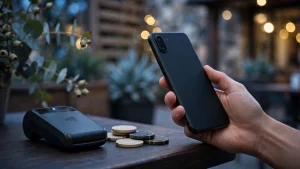
Small checks, big stakes.
Bitcoin slots and the tax detail people miss
When I look at Bitcoin pokies, I separate two things that are easy to blur: the gambling result and what happens to the BTC afterwards. They are not the same tax event.
The ATO generally treats recreational gambling winnings as windfalls rather than income, so those winnings are generally not taxable for recreational players. That applies to the game result; it does not mean every later transaction involving the Bitcoin is automatically tax-free.
The ATO treats cryptocurrency as an asset for capital gains tax purposes. If you buy BTC, use it to gamble, withdraw BTC and later sell that Bitcoin for more than its relevant cost, the price gain may have CGT consequences. That is about the change in the Bitcoin’s value, not a tax on the pokies win itself.
I used to mentally file the whole chain under “gambling money” and move on. That misses the point: the ATO can view the gambling result and a later disposal of an asset differently. A win could be a recreational windfall, while a gain from selling the BTC could still be relevant for CGT.
Keep your own record of what you bought, deposited, withdrew and later sold, including the BTC values involved. It helps you distinguish the game outcome from any later change in value. Don’t assume that a casino balance or a withdrawal figure tells the whole tax story; the Bitcoin price can move between those steps.
“Bitcoin slots” describes how a session is funded, not a special tax category. The same distinction matters whether you call them BTC slots or Bitcoin pokies: recreational gambling winnings are generally not taxable, while a later profit on selling BTC may be subject to CGT. If your circumstances are more complicated than recreational play, get advice based on your own tax position. The label on the payment method does not settle it.
Are Bitcoin and crypto casinos legal in Australia?
No Australian licence is issued for online casino games, and operators are prohibited from offering covered casino games to people in Australia. The prohibition targets the operator; an individual player is not explicitly made criminally liable simply for playing at an offshore casino.
Do I pay tax on Bitcoin casino winnings in Australia?
Generally, no: gambling winnings are treated as windfalls and recreational players’ winnings are not usually taxed. However, if you later sell Bitcoin for more than it cost you, that price gain may be subject to capital gains tax.
How fast are withdrawals at Australian Bitcoin casinos?
Casino processing may take 12–48 hours before a Bitcoin payout is sent. After processing, it typically reaches your wallet within an hour, though a confirmation can take 10–60 minutes depending on network congestion and the fee paid.
Are winnings from Bitcoin casinos taxable in Australia?
Generally, recreational gambling winnings are not taxable in Australia. If you later sell Bitcoin at a profit, the increase in its value may be subject to capital gains tax.
Which cryptocurrency should I use at an Australian Bitcoin casino?
Litecoin may be a practical choice: it is widely accepted at crypto casinos and usually has lower network fees than Bitcoin or Ethereum. Bitcoin fees can reach AUD 10–20 during peak periods, while Ethereum fees can rise during busy periods.