
Check the payment claim before you rely on it
A familiar wallet logo does not confirm site support, transaction coverage, withdrawal options or game availability.
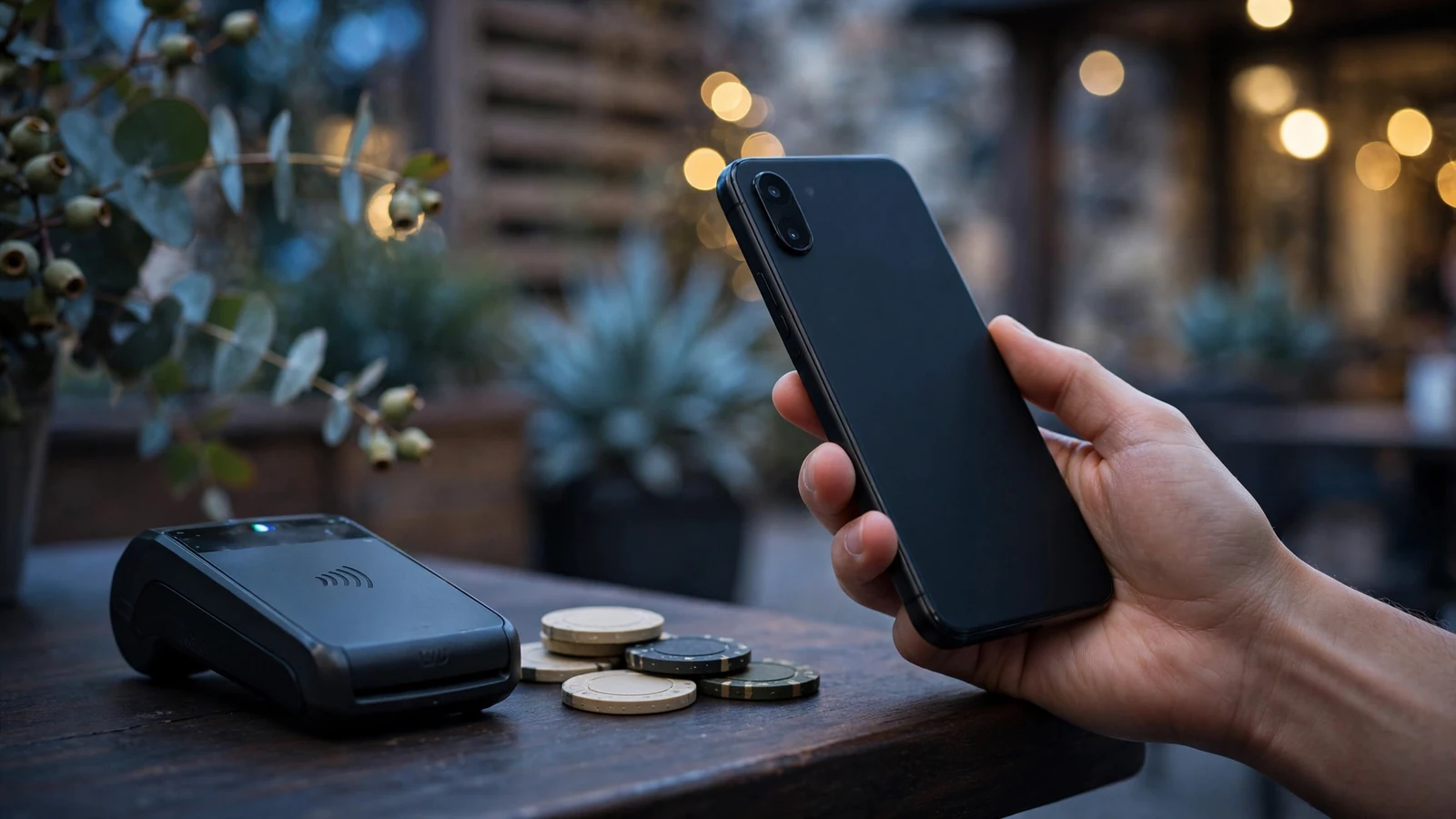
What “Accepts Google Pay” Actually Tells You
Google Pay feels familiar in Australia because mobile wallets are accepted in everyday shopping almost everywhere. Contactless credit and debit cards are accepted almost everywhere too. It is easy to carry that experience over to an online payment page and assume the same option will be waiting there.
That assumption is the part I would stop short of making. A payment method being common in shops says something about ordinary consumer habits; it does not establish that a particular website accepts it. “Accepts Google Pay” is a claim about one service’s payment arrangements, not a general property of Australian businesses, and certainly not something you can infer from the Google Pay logo being familiar.
I have learned to separate those ideas the annoying way: seeing a payment option around you can make a claim sound plausible before you have evidence for it. Plausible is not confirmed.
The phrase itself can also hide several different meanings. It might be used to suggest that Google Pay is supported somewhere on a site, or that it works for a particular kind of transaction. Those are not identical claims. A logo, a passing mention, or a broad line about “mobile payments” does not necessarily tell you what action is supported, or whether the option is available to a person in Australia. The wording needs to be specific enough to answer the question being asked.
That distinction matters especially when a page uses “Australian” as a broad label. It may describe the intended audience, the currency, or a site’s marketing language. None of those details, by themselves, prove that a particular payment option is available. A country label is not a cashier screen. And a familiar wallet is not confirmation.
I would also keep the scope narrow here: this is about understanding a payment-acceptance claim, not recommending a gambling service or directing you to one. There is a legal reason for that distinction. Under the Interactive Gambling Act 2001, it is illegal for operators to provide real-money online casino games to people physically located in Australia. The Australian Communications and Media Authority is responsible for enforcing that law. Australian consumer law does not protect players who use offshore casinos.

So a page describing a site as an Australian online casino does not make the service locally authorised, safe, or lawful for an operator to provide to people in Australia. Nor does a payment logo change the legal position. The payment question and the legal question are separate, and it would be misleading to treat a familiar checkout option as reassurance about either.
When I see a statement that a site accepts Google Pay, I read it as a claim that needs clear, current, site-specific support. The wording should identify the payment method plainly rather than grouping it with mobile wallets in general. It should also make clear which service and which customer context it refers to. Without that, the reader is left filling gaps with assumptions drawn from everyday shopping.
There is a useful difference between “Google Pay is common in Australia” and “this particular gambling website supports Google Pay for Australian users.” The first is a general observation about daily payments. The second is a precise claim about a specific service. One does not prove the other. I would not turn a national habit into evidence about an individual website.

This is why I avoid reading payment badges as a complete answer. A badge can be a starting point for understanding what a page claims, but it cannot by itself establish how that claim applies. If the wording is vague, or if it slides from “mobile payments” to Google Pay without explaining the connection, the uncertainty remains. The honest reading is simply that the claim has not been made clear.
Nothing about this means Google Pay is unusual in Australia. It is widely used in everyday life, alongside contactless cards. It means only that everyday familiarity cannot verify acceptance by a specific online gambling service. Those are different settings, with different providers and different conditions.
The distinction sounds small until money is involved. Then a loose phrase can invite a confident assumption that the evidence does not support. I would rather treat “accepts Google Pay” as a claim to examine than as a promise or an endorsement. Familiar method. Separate question.
Deposits: Check the Cashier Before Assuming
A search for a casino deposit through Google Pay is asking a specific question: can this payment method be used to put money into an account? The answer cannot be inferred from the fact that Google Pay is familiar, or that a site displays a wallet logo somewhere on a page. Deposit acceptance is a claim about a particular service and its current cashier. It needs to be stated there, not guessed from how people pay for groceries or transport.
I’m wary of a neat payment badge. “Google Pay accepted” sounds settled; in practice, it can leave important details unclear. Does it apply to deposits, or is the label being used loosely? Is it available to customers in Australia? Does the method appear as an actual choice in the cashier? Those distinctions matter before you treat a payment claim as usable.
The cashier is the relevant place to look for deposit information. A general page describing payment options may not tell you which methods are available to a particular customer at the point of payment. Nor does a familiar logo alone show that the deposit can be completed. If you are checking a claim, look for clear, current wording that identifies Google Pay specifically as a deposit method, rather than assuming a wallet mentioned elsewhere covers it.

That is not a recommendation to open an account or make a payment. Real-money online casino games cannot lawfully be provided to people in Australia, and Australian consumer law does not protect players who use offshore casinos. A deposit label does not change that. It is worth keeping the legal position in view rather than treating a payment option as an endorsement or a sign that a service is suitable.
Amount-specific searches can make the question feel more precise, but a figure typed into a search does not establish a site’s minimum deposit. A minimum is a condition set by the individual service, and it can be different from the amount a person has in mind. I would not read a number in a headline, snippet or promotional line as a confirmed cashier requirement unless the terms clearly connect it to Google Pay deposits and the relevant customer location. No guesswork. A number on a page is not automatically a payment rule.
The same care applies to processing time. A deposit might be described as quick in promotional language, but that does not tell you what happens with Google Pay at a particular cashier. “Instant” can sound like a useful promise; without a clear method-specific statement, it is only a word. Don’t turn assumptions about mobile wallets in everyday shopping into a claim about gambling deposits.
Australian consumers are comfortable moving between cards, mobile wallets and bank-linked services such as PayPal. That flexibility makes a wallet seem like an obvious option, but everyday familiarity is not evidence that a specific online service accepts it. The payment experience depends on the service’s own arrangements. A wallet working at a shop says nothing decisive about whether it appears in a casino cashier.
Do
- Look for Google Pay specifically as a deposit method in the cashier
- Check for clear and current wording regarding your customer location
- Verify if the method appears as an actual choice at the point of payment
Don't
- Assume Google Pay is accepted because it is common in shops
- Rely on a general payment badge or logo
- Guess deposit rules based on search snippet numbers
If you encounter a deposit claim, read its wording closely. Does it name Google Pay, say that the method is for deposits, and make clear which customers the statement covers? Is the information presented as an actual payment option rather than a generic logo? Does the cashier show the same claim? If those details do not line up, the safe conclusion is not that the method probably works; it is that the claim has not answered the practical question.
Be careful with pages that bundle several payment methods together. A row of logos can suggest broad coverage without explaining what each one does. A wallet name in a list does not by itself confirm a Google Pay deposit, just as a payment method discussed on a general information page does not establish that it is available in a particular cashier. Specific wording matters more than visual shorthand.
I know how tempting it is to focus on the amount you want to deposit and skip the fine print. That is where an assumption can turn into a payment decision. Keep the questions separate: whether Google Pay is explicitly listed for deposits, whether the stated conditions apply to you, and whether the claim is current. If any part is unclear, don’t fill the gap with what seems likely. A familiar wallet is still not proof.
Why “Best” Needs More Than a Payment Badge
If you’re looking for a casino that accepts Google Pay in Australia, check the available payment methods at the cashier before signing up, as the details provided here do not confirm Google Pay support. Use this list as a concise reference to the licensing and payment details that are available.
-
House of Pokies
- License
- international iGaming licence – jurisdiction not named in the source
- Payout speed
- PayID 1-24 hours
- Min. deposit
- A$30 (PayID from A$10)
You can consider House of Pokies if PayID is relevant to your payment options: withdrawals via PayID are listed at 1–24 hours, and the minimum deposit is A$30, or A$10 with PayID. Its international iGaming licence is listed without a named jurisdiction.
-
7Bit Casino
- License
- Curacao, operated by Dama N.V.
7Bit Casino is listed as operated by Dama N.V. under a Curacao licence.
-
Rollero Casino
- License
- Curacao Gaming Control Board OGL/2023/176/0095 (Hollycorn N.V.)
Rollero Casino is listed with Curacao Gaming Control Board licence OGL/2023/176/0095, held by Hollycorn N.V.
-
LevelUp Casino
- License
- Curacao eGaming OGL/2023/174/0082 (Dama N.V.)
- Min. deposit
- A$15
LevelUp Casino is listed under Curacao eGaming licence OGL/2023/174/0082, with Dama N.V. as operator. The stated minimum deposit is A$15.
-
Golden Pokies
- License
- Curacao
Golden Pokies is listed with a Curacao licence; no further details are provided here.
-
WinSpirit Casino
- License
- Curacao eGaming OGL/2024/923/0383 (Antillephone N.V.)
- Min. deposit
- A$30
WinSpirit Casino is listed under Curacao eGaming licence OGL/2024/923/0383, held by Antillephone N.V. Its minimum deposit is A$30.
-
Vegaz Casino
- License
- Curacao OGL/2024/1335/0780
- Min. deposit
- EUR 20
Vegaz Casino is listed with Curacao licence OGL/2024/1335/0780. The stated minimum deposit is EUR 20.
-
Playfina Casino
- License
- Curacao eGaming (Hollycorn N.V., since 2017)
- Min. deposit
- A$20-30 (depends on the offer)
Playfina Casino is listed under Curacao eGaming, with Hollycorn N.V. and operation since 2017 noted. Its minimum deposit is A$20–30, depending on the offer.
-
Uptown Pokies
- License
- Curacao (operating since 2017)
- Min. deposit
- A$20
Uptown Pokies is listed with a Curacao licence and is noted as operating since 2017. Its minimum deposit is A$20.
-
Wild Tokyo
- License
- Curacao
- Payout speed
- crypto 30-60 minutes, fiat 1-5 days
- Min. deposit
- A$10
Wild Tokyo is listed with a Curacao licence and a A$10 minimum deposit. The stated payout times are 30–60 minutes for crypto and 1–5 days for fiat.
I used to treat a familiar payment logo as a shortcut: if a site showed a method I recognised, I assumed the rest had been checked too. That was a poor way to judge anything. A payment claim, even if accurate, says nothing by itself about whether a service is safe, lawful, transparent or suitable. “Best” is doing a lot of work there.
A label such as “best Google Pay casino” can sound like a verdict backed by careful comparison. But a payment option is only one narrow detail, and it cannot carry that verdict on its own. It does not establish the quality of the site, how it handles customer information, whether its terms are clear, or whether a reader has meaningful protections if something goes wrong. Those are separate questions, not benefits that come bundled with a wallet logo.
There is another issue specific to Australia. Under the Interactive Gambling Act 2001, operators cannot provide real-money online casino games to people physically located here. That includes casino-style services such as poker, table games and pokies. Australian consumer law does not protect players who use offshore casinos. So calling an offshore casino “best” for an Australian audience would not just be an unsupported rating; it could leave out the most important context.
I’m not going to name or rank operators here. A list would make a recommendation look more solid than a payment badge can justify, and it could promote services that are prohibited from providing these games to people in Australia. The Australian Communications and Media Authority enforces the Interactive Gambling Act. That matters more than a glossy label.
A genuine quality assessment would need evidence relevant to the whole service, not merely a claim that a payment method is accepted. It would also need to distinguish what is verified from what is marketing language. Words such as “trusted,” “top-rated” and “best” can sound reassuring, but without a clear basis they are just labels. A site can claim to accept Google Pay without that claim demonstrating anything about its overall standards.
I’ve learned to slow down when a single feature is presented as the reason to choose a service. The same goes for phrases that combine a payment method with “best,” or suggest a casino is ideal because it offers a particular way to pay. They fold separate questions into one neat promise. Neat isn’t proof.
The word “instant” needs similar care. It can describe one part of a payment experience while leaving the rest undefined. It does not turn a payment claim into a rating of the service, and it does not establish that every transaction works the same way. That is a distinct matter from whether a site deserves to be called the best.
The same caution applies when the wording joins Google Pay to games or pokies. A payment method cannot establish the quality or availability of a game, and it does not change the legal position of online casino services in Australia. Those are separate claims with separate implications. A badge cannot do all that lifting.
When I see “best,” I now look for what the word is supposed to mean and what evidence supports it. If the explanation begins and ends with a payment logo, the rating has not earned much trust. A method may be familiar; a recommendation needs far more than familiarity. No shortcut here.

Withdrawal Speed Is a Separate Question
I used to treat a payment logo as if it described the whole journey: money going in, then money coming back out the same way. That assumption is too neat. A method used for a deposit does not, by itself, tell you whether it can receive a withdrawal or how long a withdrawal would take.
“Instant withdrawal” sounds precise, but it can blur several different steps. A site might use the word to describe submitting a request, approving it, or sending a payment onward. Those are not necessarily the same event as the funds appearing in an account. Without a clearly defined measure, the claim does not give you a dependable arrival time. Marketing language has a way of making the slowest part disappear.
For Google Pay, the key distinction is straightforward: a claim about accepting it does not establish that it is available for withdrawals. Nor does it establish that any withdrawal would be instant. I would not read a deposit option as proof of a matching cash-out route. Different verbs, different claim.
A withdrawal also needs to be considered on its own terms. The payment method, any conditions attached to using it, and the time involved are separate details. A general promise about speed cannot fill in those particulars. And a new service or a “no deposit” offer does not change what has to be established before you can rely on a withdrawal claim.
This is where I used to get caught by the word “best”. It can make speed sound like a settled quality, when the actual question is what the stated time measures and whether the payment route applies to withdrawals at all. If those points are unclear, “instant” is a label, not a usable timetable. Short answer: not enough.
There is another issue that sits behind any discussion of offshore casino withdrawals. Under the Interactive Gambling Act 2001, operators cannot provide real-money online casino games to people in Australia; the Australian Communications and Media Authority enforces that law. Australian consumer law does not protect people who use offshore casinos. That matters when weighing any promise about getting money back: a confident-sounding payment claim should not be mistaken for a safeguard.
I’m not suggesting that a reader should try a site to find out. The useful distinction is simply between a statement that a payment method is accepted and a separate, specific statement about withdrawals. One does not prove the other, and neither word “instant” nor a payment badge supplies the missing detail. A claim about speed is only meaningful when it tells you what stage it refers to and what route it covers. Without that, there is no solid basis for treating Google Pay withdrawals as available or immediate.
What the 2026 Search Claim Leaves Unanswered
A page or payment badge saying that a casino takes Google Pay would not, by itself, establish that the claim is accurate for people in Australia in 2026. Payment arrangements can differ between services and change over time. The wording may sound definite; the detail behind it may not be. I’ve learned not to treat a familiar logo as proof.

There is a more basic issue here than whether a wallet appears in a cashier. Under the Interactive Gambling Act 2001, operators must not provide real-money online casino games to people physically located in Australia. The law applies to operators offering those services; it does not explicitly make an individual player’s use of an offshore site a criminal offence. That distinction matters, but it is not an endorsement or a sign that an offshore service is lawful to provide in Australia.
The Australian Communications and Media Authority enforces the Act. That legal setting makes a broad claim about casino services for Australians harder to read as an ordinary product announcement. A statement about a payment option cannot settle whether the service itself may lawfully be offered to people here, or whether a named operator’s claim is current and reliable.
Nor does a payment method tell you where a service is based, what protections apply, or what happens if there is a dispute. Australian consumer law does not protect players who use offshore casinos. That is not a small-print detail to skim past after seeing a convenient way to pay. It changes the risk attached to the whole arrangement.
I used to focus on the visible part—the familiar payment symbol—and assume the less visible parts would be straightforward. That was backwards. A payment claim, even when phrased as if it covers Australian customers, does not establish a safe or lawful route to gambling services. And the fact that a player is not explicitly criminalised under the Act does not remove the operator restriction or create consumer protections that are not there.
So I would read “accepts Google Pay” as a narrow statement about a payment claim, not as confirmation that an Australian-facing casino is authorised to offer its services here. The important context is the law and the lack of Australian consumer protection for offshore play, not how familiar the wallet feels from everyday shopping. Convenient-looking, still uncertain.
A Payment Option Does Not Determine Which Games Are Available
I used to see a payment logo and treat it as a shortcut: if a site took a familiar wallet, I assumed the rest of the experience was equally straightforward. That was a bad read. A payment method describes one part of a service; it does not tell you what that service offers.
The same distinction matters when you come across a claim connecting Google Pay with casino games. Even if a site displays a payment option, that alone says nothing about its game catalogue, whether a particular game works on a phone, or whether the service is available to someone in Australia. Those are separate questions. One badge cannot answer all of them.
There is a legal point I would not brush aside. Under the Interactive Gambling Act 2001, operators cannot provide real-money online casino games to people physically in Australia. Casino-style services, including poker, table games and pokies, fall within the prohibited category. The law is about what operators may provide here, not about turning a payment method into permission to access it.

That can make phrases such as “Google Pay casino games” sound more definitive than they are. Read plainly, they join two different ideas: a way to pay and a type of entertainment. The wording does not establish that Google Pay is supported for a particular service, and it does not establish that any game is legally offered to Australians. A payment label is not a catalogue.
Mobile access is another separate matter. A site or game being designed for a phone would not prove that Google Pay works with it; nor would Google Pay support prove that a game is available on mobile. I would want each claim considered on its own, rather than letting one familiar brand stand in for the others.
I have made that shortcut before. It saved no effort; it just made the claim look tidier than it was. Keep the categories apart: payment method, games offered, device compatibility, and legal availability are not interchangeable. No shortcut there.
Slot Payment Claims Need Specific Evidence
A Google Pay label beside a casino-related offer can sound like a clear promise: use the wallet, then play. But the payment method and the games or services a site makes available are separate matters. Seeing one mentioned does not establish that it works for a particular service, or that any payment method is accepted for a particular game.
I’ve made the mistake of treating a familiar logo as the whole answer. It isn’t. A useful claim would need to say exactly what Google Pay is accepted for and under what terms. A broad reference to casino bonuses or a general payment page does not, by itself, show that Google Pay applies to a specific slot service. Fine print matters.
How to evaluate slot payment claims
To verify a claim, you should check if the site states exactly what Google Pay is accepted for and under what specific terms, rather than relying on broad references to bonuses or general payment pages.
There is a more basic issue in Australia. The Interactive Gambling Act 2001 bars operators from providing real-money online casino games to people located here; that prohibition covers pokies as well as poker and table games. The Australian Communications and Media Authority enforces the Act. So a payment label should not be read as evidence that an online pokies service is lawful or available to Australian residents.
That distinction matters even when a page uses phrases such as “Google Pay casino bonus”. A bonus mention is not proof of a payment route, and a payment route is not proof of a lawful service. I’d separate each claim rather than letting one badge stand in for all of them. No shortcuts.
I also wouldn’t treat a list described as Google Pay casinos as evidence about pokies specifically. It may refer to a site’s general cashier, while saying nothing about which services that site offers or whether a particular payment option applies to them. The wording needs to be precise; otherwise, it blurs separate questions.
For me, the practical takeaway is simple: don’t infer slot-specific acceptance from a wallet logo or bonus wording. In Australia, the legal restriction on operators providing real-money online casino games is the bigger point. A payment claim cannot change that.
Before Any Financial Transaction, Expect Verification
I used to treat a payment button as the whole story. It isn’t. Before an online casino processes a financial transaction, it will generally require the customer to complete a Know Your Customer (KYC) assessment. That is an identity-checking step tied to the account, not a sign that a particular payment method is accepted.

This matters when you are trying to work out whether a casino with Google Pay supports withdrawals. A KYC check may be part of the process before money moves, but it does not tell you whether Google Pay can be used to deposit, whether withdrawals can go back to it, or which other payment routes are available. Those are separate details. A familiar logo is not an answer.
In practice, KYC means the operator asks you to verify who you are before it handles financial activity. I have learned not to assume that creating an account means every later step is already cleared. If you are considering any transaction, read the operator’s account and verification terms first, and make sure the information you provide is accurate. Keep the distinction clear: identity checks establish who is using an account; they do not establish the cashier’s payment options.
There is also an important Australian context. The Interactive Gambling Act 2001 makes it illegal for operators to provide real-money online casino games to people physically located in Australia. The Australian Communications and Media Authority enforces that law. Australian consumer law does not protect players who use offshore casinos, so a KYC process should not be mistaken for local approval or consumer protection.
That is the useful takeaway: verification is an account requirement, not a Google Pay feature. It does not confirm Google Pay withdrawal support, and it does not make an offshore casino lawful to offer real-money casino services to people in Australia. I used to read a polished account process as reassurance. Wrong signal.
Australian Payment Habits Don’t Verify Casino Acceptance
In Australia, tapping a card or phone at the checkout is ordinary. Contactless credit and debit cards are accepted almost everywhere, and mobile wallets such as Google Pay and Apple Pay are too. People are also used to moving between cards, mobile wallets and bank-linked services such as PayPal.
That familiarity can make a payment claim feel more convincing than it is. I’ve learned not to treat “I use this every day” as proof that a particular online service accepts the same option. A wallet working at a supermarket tells you about that purchase, not about the payment arrangements of an individual website.
The distinction matters with a claim that an Australian-facing casino accepts Google Pay. Everyday use in Australia does not establish that a particular site offers it, or that the option is available to every customer. General habits and a site-specific payment arrangement are separate things. Familiarity is not confirmation.
There is also a legal context that a payment logo cannot settle. Under the Interactive Gambling Act 2001, operators cannot provide real-money online casino games to people in Australia. The Australian Communications and Media Authority enforces the law. Australian consumer law does not protect players who use offshore casinos, so an everyday payment method should not be mistaken for a sign that a service is locally authorised or protected.
That is not a claim about what any individual will see on a screen. It is a reason to keep the evidence narrow: widespread use of Google Pay by Australian consumers says nothing, by itself, about a particular gambling site’s acceptance of it. No shortcut here.
I used to lump all digital payments together because they felt interchangeable in ordinary shopping. They aren’t. A payment option’s popularity tells you about consumer habits; it does not verify how a specific merchant handles payments. Keep those two questions apart, and a familiar logo has less power to persuade you than it should.

Google Pay and Other Payment Methods: Don’t Assume They’re Interchangeable
I used to treat a familiar payment logo as a kind of shortcut: if one option appeared, surely the others would work too. That assumption doesn’t hold. Google Pay, a bank-linked service such as PayPal, and a card payment are separate methods, and acceptance of one says nothing definite about the others.
That matters when you’re trying to establish whether a casino accepts Google Pay in Australia. A cashier’s options are specific to the operator and can differ between payment methods. Seeing Visa, for instance, is not evidence that Google Pay is available; the same goes for Apple Pay or another wallet. The label “more choice” can mean only that several methods are listed, not that your preferred one is among them.
A specialist review has reported that some online casinos do not take Amex. That is a source-specific observation, not a permanent rule for the market. The same kind of review has suggested that Visa may be accepted more widely than Amex at Australian-facing casino sites. Treat that as a comparison reported by that review, not a guarantee about a particular cashier or a reason to assume Google Pay works there.
I’d keep the check narrow: look for Google Pay itself in the cashier’s current payment options, rather than inferring acceptance from another card or wallet. If it is not shown, the presence of other methods does not fill in the gap. And if it is shown, that alone does not tell you what other payment functions the operator supports.
One more distinction matters in Australia: under the Interactive Gambling Act 2001, providing real-money online casino games to people in the country is prohibited. Australian consumer law does not protect players using offshore casinos. Payment logos don’t change that legal context, and they don’t make payment methods interchangeable.
No shortcut here.
How do you check if casino sites accept Amex deposits?
Check the site's cashier for American Express as a deposit option. Some casinos do not accept Amex, and availability can vary.
What should I do if my American Express deposit is declined?
Your card issuer may be blocking gambling transactions, or Amex may block payments to that particular website. Contact your bank or Amex to check whether the transaction was blocked.
Are there any fees associated with using American Express at online casinos?
Amex deposits typically have no fee, but a casino may add a surcharge, and currency conversion can incur a fee. Withdrawal fees may also apply.
Are there fees for using Amex at online casinos?
Deposits are typically free, but a casino may charge a surcharge or withdrawal fee. Currency conversion can also incur a fee.
Are there any limits on how much I can deposit or withdraw using American Express?
Yes. Each casino sets its own Amex deposit and withdrawal limits, so check the cashier for the limits that apply to you. Amex transaction limits are usually higher than those for Visa or Mastercard.