
Separate payment claims from the legal reality
PayPal availability does not establish that an online casino may serve Australians or that every game and withdrawal qualifies.

PayPal and Online Pokies: The Australian Legal Line
When I see a phrase like “Australian online casino that accepts PayPal,” I have to separate the payment wording from the legal question underneath it. A cashier option, even if a site claims to offer one, would not make online casino games lawful to provide to people in Australia. Payment language can make a service sound ordinary. The law is the more important part.
The Interactive Gambling Act 2001 prohibits operators from offering real-money online casino games to people physically in Australia. That includes pokies and other casino-style games. The restriction is aimed at the operators providing the service; the Act does not explicitly make an individual player’s use of an offshore site a criminal offence. Those points are easy to blur together, but they are not the same thing.
That distinction is not a green light. It means the law draws a line between the operator’s conduct and the player’s position. A search for Australian online pokies with PayPal does not establish that the site is permitted to serve Australians, nor does the fact that a site is reachable or uses familiar payment language change the operator’s legal obligations. “Available” is not the same as lawful.

The Australian Communications and Media Authority, or ACMA, is responsible for enforcing the Interactive Gambling Act. Enforcement matters because offshore casino services should not be treated as if they sit inside a local system simply because an Australian can find a page or create an account. The regulatory framework prohibits operators from offering those casino games to people here, and enforcement can affect access. A website appearing in front of you is not proof that it has approval to operate in Australia.
I used to give too much weight to the surface details. A polished page, a familiar brand of payment, or a phrase like “for Australian players” can make a service feel local. That feeling is not a legal check. The governing question is whether the operator is permitted to provide the service to someone in Australia. Under the Interactive Gambling Act, offering real-money online casino games to people here is prohibited.

There is another practical point worth keeping plain: Australian consumer law does not protect players who use offshore casinos. So the absence of an explicit player offence should not be mistaken for a promise of consumer protection if something goes wrong. Those are separate issues. The law’s treatment of a player does not turn an offshore casino into a locally protected service.
This is why I would not treat “best Australian PayPal pokies” as a meaningful assurance about legality. “Best” is an advertising label; it does not answer who is legally allowed to provide the games, what protections apply, or whether access may be restricted. And “Australian” in a site’s wording does not by itself mean that the operator is Australian or authorised to offer casino games here. Wording can be persuasive. It is not a licence.
The same applies to mobile casino claims. A service being viewable on a phone, or mentioning a payment method familiar to Australians, does not alter the legal line. A mobile screen can make a site feel like a routine app or local service, but the rule concerns the provision of real-money casino games to people in Australia, not the device used to reach them.
I’m not saying that every person who encounters an offshore casino page has committed a crime. The Interactive Gambling Act does not explicitly criminalise players using offshore sites. But that narrow point should not be stretched into “it’s all fine.” The operator’s prohibition remains, ACMA enforces the Act, access may be actively restricted, and Australian consumer law does not protect someone choosing to use an offshore casino.
So if you are trying to understand whether an Australian online casino accepts PayPal, start by keeping the legal question separate from the payment claim. A payment logo or a promise of Australian access cannot make the underlying casino service lawful to offer here. I learned the hard way that reassuring labels can distract from the thing that matters. Check the legal line first. The payment claim comes later.
PayPal Deposits: What the Available Information Can—and Can’t—Tell You
A PayPal logo beside a deposit button can look like a clear answer: choose PayPal, send money, and get on with it. I used to read payment badges that way. The trouble is that a familiar name does not tell you the terms attached to a particular transaction. A logo is a label, not a breakdown of what a deposit will cost or how it will be handled.
Australians are comfortable moving between cards, mobile wallets and services linked to banks, including PayPal. That familiarity makes the method feel straightforward. But knowing how you use PayPal elsewhere does not establish the rules for a casino deposit. The payment method may be familiar; the terms of a particular offer are a separate matter.
That distinction matters when a page advertises a small minimum, a fee-free payment or rapid processing. Those details can sound precise, but precision in an advertisement is not the same as confirmation that the terms apply to your account and transaction. I’d treat such wording as a claim to check, rather than a promise to build a decision around.
A stated minimum deposit, for instance, answers only one narrow question: what amount the promotion or payment instructions say is allowed. It does not, by itself, tell you whether other conditions apply, whether the same terms appear in the cashier, or whether the payment will go through. If you see a figure attached to a PayPal deposit, read the wording around it. Don’t let the number do more work than it can.
 Casinos that accept POLi in Australia in 2026Learn why a casino’s deposit claim does not prove POLi is available, and why the evidence here confirms neither instant POLi withdrawals…
 Casinos That Accept MiFinity in Australia: What to CheckLearn why a MiFinity listing does not confirm legal availability or withdrawal support, and how the Interactive Gambling Act 2001 applies to…
Fees need the same careful reading. “No fee” may sound simple, but you need to know whose fee is being described and what transaction it covers. A statement about one charge does not automatically explain every cost connected with moving money. If a page does not spell out the relevant terms, don’t fill the gap with what you have experienced using PayPal for shopping or bills.
Processing claims can be just as slippery. Words such as “instant” or “fast” may describe one stage of a payment, while leaving other stages unclear. Unless the terms say what is being measured, the wording is not a useful basis for predicting exactly when a deposit will be available. I’ve learned not to confuse confident language with a timetable. Different things.
The practical habit is to look at the actual payment instructions before entering any details. Read what the cashier says about the selected method, the amount and any charges. Then compare that wording with the promotional claim that brought you there. If the two do not line up, pause rather than assuming the headline is the fuller version. Keep a record of what you saw if you need to ask the operator about it later.
Do
- Read the actual payment instructions in the cashier
- Compare promotional claims with the actual terms
- Keep a record of the terms you saw
Don't
- Assume a logo confirms specific deposit terms
- Use general PayPal shopping experience as a guide
- Let a bold minimum deposit figure make the decision
This is not about assuming every claim is false. It is about being precise about what a claim does and does not establish. A PayPal deposit offer may use reassuring language, but that alone cannot confirm a minimum, a fee arrangement or a processing time for your own payment. Those are separate details, and each needs clear terms behind it.
I also try not to let a small advertised amount make the whole decision for me. A low entry point can draw the eye, especially when it sits beside a payment method you already know. But the amount says nothing on its own about the rest of the transaction. Read the full wording, not just the bold number.
PayPal’s everyday familiarity in Australia is real. It helps explain why people may feel comfortable choosing it among different ways to pay. It does not turn that general comfort into proof of a specific casino’s deposit conditions. Familiar method, separate terms. That’s the line I keep in mind.
How to Read Claims About PayPal Casino Sites
“Best” is a confident word, but it does not tell you what was actually checked. A page can call a site a top choice, put it first in a ranking, or describe it as a PayPal casino without showing that PayPal is available to Australian customers. Those are different claims, and the label alone does not establish any of them.
I’ve learned to separate the sales language from the detail underneath it. A recommendation may be based on a general description, an old payment list, or a promotion, rather than a current cashier screen for someone in Australia. A polished ranking is still a ranking written by someone; it is not proof that the payment option works for you. Best-looking page, weakest evidence.

The same care applies to phrases such as “PayPal pokies site” or “casino that takes PayPal”. They can make acceptance sound straightforward, but the wording does not explain what the operator permits, whether the claim applies in Australia, or whether it has been checked recently. A site name in a list does not resolve those questions. I would treat the claim as something to examine, not as a reason to create an account or send money.
There is a more basic point here, too. Under the Interactive Gambling Act 2001, operators cannot offer real-money online casino games to people in Australia. That includes casino-style games such as pokies. The law is directed at the operators; it does not explicitly make an Australian player’s use of an offshore site a criminal offence. But that does not turn an offshore recommendation into a safe or locally protected option. Australian consumer law does not protect people using offshore casinos.
Before any financial transaction, an online casino will generally ask a customer to complete a Know Your Customer assessment. This is an identity-checking step, not a PayPal setting and not a promise about how a payment will work. In practical terms, a site may require you to provide information and have it assessed before you can transact. A promotional line about easy payments cannot tell you whether that assessment is complete, or what the operator will ask you to provide.
That distinction matters because payment marketing often bundles unrelated assurances together. “Easy to use” might refer to the sign-up process, while “instant” might be talking about something else entirely. Neither phrase explains the identity checks. Nor should you assume that seeing a payment logo means an account has cleared those checks or that a transaction is available to you.
When reading a recommendation, look for plain, specific wording rather than a badge or a superlative. Does the statement say who it applies to? Does it distinguish Australian customers from customers elsewhere? Does it explain what has been checked, instead of simply calling a site “the best”? If the answer is hidden behind vague wording, the recommendation leaves the important part unresolved. I would not fill that gap with optimism.
Be particularly cautious when a page combines a strong ranking with a call to act quickly. Urgency can make a claim feel more certain than it is. It does not change the legal position, verify payment acceptance, or remove the possibility of identity checks. A headline is not a cashier, and a ranking is not a guarantee.
So, when you see a page presenting a “best PayPal casino” choice, read the wording as a claim made by that page—not as proof of suitability for an Australian resident. Keep the legal setting in view, and do not mistake a recommendation for confirmation. The boring details matter more than the label.

PayPal Withdrawals and the Meaning of “Instant”
“Instant withdrawal” sounds simple: request a payout and see the money arrive straight away. In practice, that label can blur separate steps. A casino may review a request before releasing it, and a payment service may have its own part to play after that. The word alone does not tell you when funds will reach your PayPal account.
I’ve learned not to treat a sharp headline as a timetable. If a site claims instant PayPal withdrawals, look for the conditions attached to that promise: whether it refers to approval, the transfer being sent, or the money becoming available to use. Those are different milestones. Without a clear explanation, “instant” is more slogan than useful estimate.
What a withdrawal claim leaves out
A payout can involve checks at more than one point. The operator might first assess the request, then send the payment; the receiving service may handle it separately. A claim that focuses on just one stage can sound faster than the full process feels from your side.
That distinction matters when you’re comparing statements about instant PayPal withdrawals at Australian casinos. A promised speed is not the same as a confirmed arrival time. Nor does the word guarantee that every request follows the same path. I would read the terms around a claim rather than assume the label covers the entire journey from request to usable funds.
There is another practical snag: payment routes can have their own rules, and the route shown for a deposit does not, by itself, establish what will happen with a withdrawal. A familiar logo can make the whole process look settled. It isn’t. Check what the withdrawal information actually says, and be wary of wording that leaves the key step undefined.
Compare carefully, not by slogan
Bank transfers may involve longer waits and higher fees. That is a limited comparison, not proof that PayPal is faster or cheaper. The timing and cost of one method cannot be inferred just because another method may take longer or cost more.
I’ve made the mistake of reading a comparison as a promise. If one option is described as slower, it’s tempting to assume the alternative must be quick. That leap is not justified. A PayPal label tells you which service a claim concerns; it doesn’t establish how soon a payout will be approved or arrive.
The same caution applies to phrases like “instant PayPal pokies withdrawal” or “instant casino payout.” They may sound like precise descriptions, but unless the terms define what instant means and which part of the process it covers, they leave the important detail unresolved. Don’t turn an adjective into a deadline in your head.
If you are reviewing a withdrawal claim, focus on the wording that explains the stages and any conditions. Look for a distinction between the operator processing a request and funds reaching the destination. If those points are not spelled out, the label cannot tell you what to expect. Keep the claim in its lane.
“Instant” is not a clock.
What “Accepts PayPal” Means for Australians
Use this list as a starting point when looking for Australian casinos that accept PayPal. Check each casino’s current payment options and terms before you deposit, as the details here do not confirm PayPal availability.
-
House of Pokies
- License
- international iGaming licence – jurisdiction not named in the source
- Payout speed
- PayID 1-24 hours
- Min. deposit
- A$30 (PayID from A$10)
House of Pokies lists an international iGaming licence, though the jurisdiction is not named. Its stated PayID payout speed is 1–24 hours, and the minimum deposit is A$30, or A$10 for PayID.
-
7Bit Casino
- License
- Curacao, operated by Dama N.V.
7Bit Casino is operated by Dama N.V. and lists a Curacao licence.
-
Rollero Casino
- License
- Curacao Gaming Control Board OGL/2023/176/0095 (Hollycorn N.V.)
Rollero Casino lists Curacao Gaming Control Board licence OGL/2023/176/0095 and is operated by Hollycorn N.V.
-
LevelUp Casino
- License
- Curacao eGaming OGL/2023/174/0082 (Dama N.V.)
- Min. deposit
- A$15
LevelUp Casino is operated by Dama N.V. and lists Curacao eGaming licence OGL/2023/174/0082. Its stated minimum deposit is A$15.
-
Golden Pokies
- License
- Curacao
Golden Pokies lists a Curacao licence.
-
WinSpirit Casino
- License
- Curacao eGaming OGL/2024/923/0383 (Antillephone N.V.)
- Min. deposit
- A$30
WinSpirit Casino is operated by Antillephone N.V. and lists Curacao eGaming licence OGL/2024/923/0383. Its stated minimum deposit is A$30.
-
Vegaz Casino
- License
- Curacao OGL/2024/1335/0780
- Min. deposit
- EUR 20
Vegaz Casino lists Curacao licence OGL/2024/1335/0780. Its stated minimum deposit is EUR 20.
-
Playfina Casino
- License
- Curacao eGaming (Hollycorn N.V., since 2017)
- Min. deposit
- A$20-30 (depends on the offer)
Playfina Casino is operated by Hollycorn N.V. and has held a Curacao eGaming licence since 2017. Its minimum deposit is A$20–30, depending on the offer.
-
Uptown Pokies
- License
- Curacao (operating since 2017)
- Min. deposit
- A$20
Uptown Pokies lists a Curacao licence and has been operating since 2017. Its stated minimum deposit is A$20.
-
Wild Tokyo
- License
- Curacao
- Payout speed
- crypto 30-60 minutes, fiat 1-5 days
- Min. deposit
- A$10
Wild Tokyo lists a Curacao licence and a minimum deposit of A$10. Stated payout speeds are 30–60 minutes for crypto and 1–5 days for fiat.
When a site says it “accepts PayPal”, that sounds like a simple payment detail. For someone in Australia, it does not settle the more important question: whether the service can lawfully offer online casino gambling here. I wouldn’t treat a payment logo or a claim on a webpage as proof of that.
The Interactive Gambling Act 2001 places the restriction on operators: providing online casino games to people in Australia is prohibited. The law does not expressly make an individual player’s use of an offshore site a crime. Those are separate points, and neither turns an offshore casino into a locally authorised service.
That distinction matters when you are trying to work out what “accepts PayPal” actually tells you. It may be a statement about a payment method on a site, but it does not establish that the operator may offer casino gambling to Australians. Nor does the wording itself tell you whether the service is available to you, or what protections apply if something goes wrong. A label is not a legal status.
I can’t responsibly point to a particular casino as one that accepts PayPal for Australian play.
There is another part people can miss. Australian consumer law does not protect players who use offshore casinos. That leaves you without those local consumer protections if a dispute arises. It’s easy to focus on whether a familiar wallet appears in a cashier and overlook who is actually responsible for the service. I’ve learned not to read a payment badge as reassurance.
So, if you come across a claim that a casino takes PayPal, read it narrowly. It is not evidence that the casino is permitted to provide online gambling to people in Australia, and it is not a substitute for understanding the legal position. The key line is that the Act targets operators offering online casino games to Australians, while it does not explicitly criminalise players for using offshore sites. That distinction is worth keeping clear. It does not amount to an endorsement, or a guarantee that an offshore service is safe or protected under Australian consumer law.
The cautious answer is plain: a claim about PayPal acceptance does not answer whether an Australian resident should regard that casino as a legitimate local option. Payment wording can be persuasive. It can also leave the central question untouched. No shortcut there.
PayPal Payments and Casino Games: Don’t Assume Every Game Qualifies
A payment label and a game are two separate things. Seeing PayPal mentioned beside an online casino does not, by itself, tell you whether a particular game can be played using that payment method. It also does not tell you whether the service may lawfully offer that game to someone in Australia.
That distinction matters because a casino-wide payment claim can sound broader than it is. “PayPal accepted” describes a claim about payment options; it does not establish the rules for each game or confirm that a specific game and payment combination is available. I’ve learned not to read more into a label than it actually says. Labels are cheap.
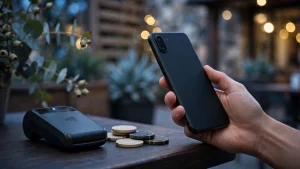
There’s a more important Australian context behind the question. The Interactive Gambling Act 2001 prohibits operators from providing real-money online casino games to people in Australia. The Australian Communications and Media Authority is responsible for enforcing the Act. So a page that pairs PayPal with casino games should not be taken as evidence that those games are lawful for Australian residents to access, or that an operator is permitted to offer them here.
This is not just a technical distinction between a cashier and a game screen. A payment method cannot change the legal status of the service. Nor does a general statement about payments establish game-by-game eligibility. Those are separate claims, and neither should be assumed from a logo, a banner, or a broad “payment options” label.
I used to treat a familiar payment name as a kind of reassurance. It isn’t. PayPal being a service people know says nothing on its own about an operator’s legal position in Australia or about which games, if any, it claims to support. Don’t let one detail stand in for the rest.
There is also a real consumer risk in looking offshore: Australian consumer law does not protect players who use offshore casinos. That can leave you with fewer options if something goes wrong. A polished page and a recognisable payment mark do not provide that protection.
So keep the questions separate: what does a payment claim actually say, what does it say about a particular game, and is the service allowed to offer real-money casino games to people in Australia? A broad payment label answers none of those questions on its own. No shortcut here.
How Australians Use Digital Payments
Australian payment habits are fairly flexible. At a shop, contactless credit and debit cards are accepted almost everywhere, and mobile wallets such as Google Pay and Apple Pay are just as familiar across everyday checkout counters. You can tap a card, use a phone, or switch to another method without making a big decision out of it.
I’ve found that familiarity can make a payment option feel more widely available than it really is. A wallet working at the supermarket tells you something about ordinary retail acceptance; it does not tell you what every online service will accept. Those are separate questions.
PayPal sits in a broader mix of ways Australians handle payments. Consumers are comfortable moving between cards, mobile wallets and services linked to banks, including PayPal. That ease of switching is part of the local picture: people may use one method in person and another online, depending on what a particular checkout offers.
It is a habit, not a guarantee. A payment method being common in Australia does not mean every merchant or platform supports it, and a familiar brand name alone cannot confirm how a specific payment will work. I used to blur those things together. They are not the same.
For anyone thinking about an Australian casino and PayPal, the national comfort with bank-linked services is only background context. It cannot establish that a particular casino accepts PayPal. Nor does broad acceptance of contactless cards or mobile wallets say anything specific about casino payment arrangements. The useful distinction is simple: Australians are used to having choices, but acceptance still depends on the service in front of you.

That is the ordinary payment landscape: cards, phone wallets and bank-linked services all have a place, and people switch between them readily. Familiarity, though, is not proof.
PayPal Casino Withdrawals: Check the Claim, Not the Label
A PayPal logo beside a cashier option can look like a clear answer. It isn’t. It does not, by itself, show that a casino will send winnings to PayPal, or say when funds would arrive. For Australian pokies, PayPal withdrawal availability and timing should not be treated as established just because a site uses the payment name.
I’ve learned to separate a payment label from the actual route money can take. A cashier may display methods for deposits without showing that the same method is available for withdrawals. The wording “PayPal withdrawals” can sound definite, but the detail that matters is whether the operator’s own terms say withdrawals to PayPal are supported for the customer’s location and account. Without that, the label leaves the central question open. No shortcut there.
There is another step that can affect financial transactions: casinos commonly ask customers to complete identity checks, often called Know Your Customer checks. That is a verification requirement, not evidence that PayPal withdrawals are offered or that they will be processed within any particular timeframe. Keep those two questions separate.
- Verify if the site specifically describes withdrawals (not just deposits)
- Confirm if the statement applies to Australian customers
- Check if the claim is in the official terms rather than promotional copy
- Complete any required identity (KYC) checks
The legal setting matters, too. Under the Interactive Gambling Act 2001, operators are prohibited from providing real-money online casino games to people in Australia. The Australian Communications and Media Authority enforces that law. Australian consumer law does not protect people using offshore casinos. That makes a polished cashier page no substitute for understanding the legal and consumer risks.
So when you see a claim about withdrawing pokies winnings through PayPal, read it narrowly. Does it specifically describe withdrawals, rather than deposits? Does it apply to Australians? Is the statement in the operator’s own terms, rather than only in promotional copy? If those points are unclear, don’t fill the gaps with assumptions about access or timing.
A payment brand is not a payout promise. Treat it as a claim to scrutinise, not proof that a withdrawal route exists.
Paying with PayPal: What You Can Verify Beforehand
I treat a “PayPal accepted” label as a claim to check, not proof that a payment will work. Australians are comfortable moving between cards, mobile wallets and bank-linked services such as PayPal. That tells you PayPal is familiar to local consumers; it does not establish that any particular casino offers it as a payment method.
So when a site says you can pay with PayPal, separate the general idea from the specific claim. Familiarity with the service is one thing. A casino actually making it available to Australian customers is another. I used to blur those together. A recognised logo can feel reassuring, but it isn’t confirmation.
The legal setting matters, too. Under the Interactive Gambling Act 2001, operators cannot provide real-money online casino games to people in Australia. The law does not explicitly criminalise players for using offshore sites, but Australian consumer law does not protect people who use offshore casinos. That leaves a big difference between seeing a payment claim and having a locally protected service.

If you encounter a PayPal reference, read it narrowly: it may show what the site claims, not what you can rely on as an Australian customer. Don’t treat PayPal’s widespread use in everyday payments as evidence of casino acceptance, or as an endorsement of the site. Those are separate questions.
I’d also avoid letting a familiar payment brand do the checking for you. A “trusted” label is just a label until the relevant details are clear, and it does not change the legal position. No shortcut there.
PayPal Casino Bonuses and the Fine Print
A “PayPal bonus” can sound like a simple deal: use PayPal and receive an extra offer. I’d treat that wording as a claim to inspect, not a promise. A payment method and a promotion are separate things; seeing them mentioned together does not establish that paying with PayPal unlocks a bonus.
Before relying on any promotional wording, look for the actual terms: who may qualify, what action is required, and what restrictions apply. If those details are absent or unclear, the headline tells you very little. I’ve learned not to fill in the blanks with the version I hope is true. Fine print matters.
There is also a more basic issue for Australians. Under the Interactive Gambling Act 2001, operators are prohibited from offering online casino games to people in Australia. The law does not explicitly criminalise players for using offshore sites, but that is not an endorsement or a guarantee of protection. Australian consumer law does not protect people who use offshore casinos.
So a casino promotion mentioning PayPal should not be read as proof that the offer is available to Australians, that PayPal qualifies, or that the activity is lawful for the operator. A bold banner is not a substitute for clear terms—or for understanding the legal position. No magic wording.
How do you check if casino sites accept Amex deposits?
Check the casino cashier’s payment options for American Express before depositing. Some casinos do not accept Amex, and a payment logo alone does not confirm that a transaction will be accepted.
Which online casinos accept American Express for deposits?
Jackpot City Casino, Spin Palace, Ruby Fortune, Ignition Casino, Joe Fortune and PlayAmo are listed as supporting Amex deposits for Australian players. Check the cashier before depositing, as payment options can differ between casinos.
Are there any limits on how much I can deposit or withdraw using American Express?
Yes. Each casino sets its own Amex deposit and withdrawal limits, so check the limits shown in that casino’s cashier.
Can I withdraw winnings directly to my American Express card?
Some casinos allow Amex withdrawals, but others do not; you generally need to have deposited with Amex first. Where available, a withdrawal may take up to five days to clear.
Are there any fees for depositing with American Express?
Amex deposits typically have no fee, but a casino may add a 1.5% surcharge, and currency conversion can incur a 3% fee. Withdrawal fees may also apply.
Can I use Amex to withdraw winnings from an Australian online casino?
Some casinos allow Amex withdrawals, but others do not; you generally need to have deposited with Amex first. Where available, a withdrawal may take up to five days to clear.
Can you use an American Express gift card at an online casino?
Yes, at casinos that accept American Express, but gift cards can be used for deposits only, not withdrawals.