
Know what the reels and features really tell you
A practical look at slot mechanics, Australian access, free play and why an RTP figure or reel count cannot predict a result.
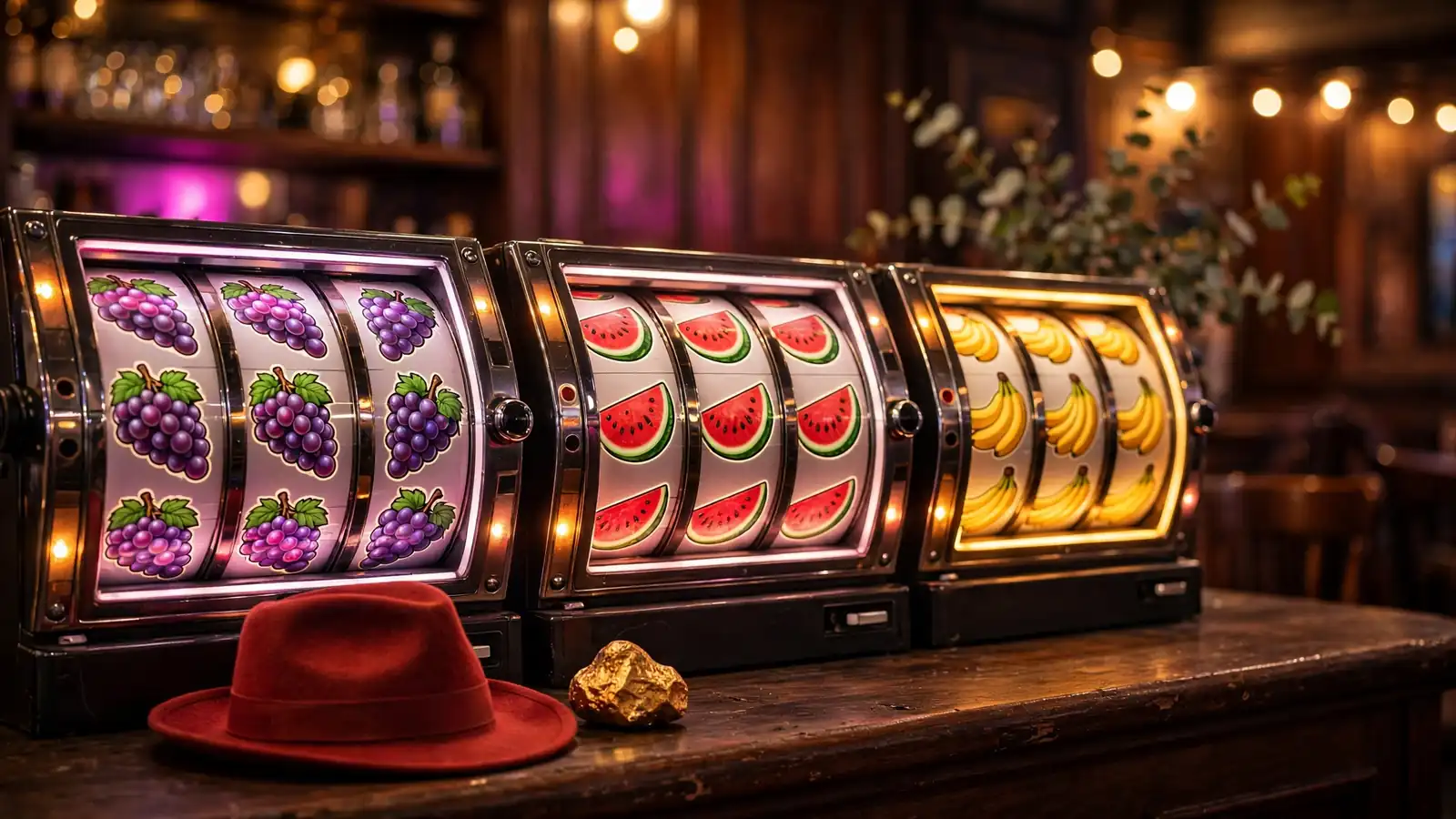
Bonus Spins Are Only One Part of Sweet Bonanza
“Bonus” can sound like a single feature, but in a slot it may refer to several different things: a trigger that starts a separate round, a prize that modifies a win, or simply a label used to describe the game. Sweet Bonanza’s free-spin feature combines a scatter trigger with multiplier bombs. Those are specific mechanics, not a guarantee of a particular result.
A specialist review describes four or more scatter symbols as awarding 10 free spins in the version it covers. That is useful for understanding the feature, but it should not be treated as a rule that must appear identically in every version. Game configurations can differ, so the relevant version’s own rules are what matter. The key idea is that scatters can start a bonus round; they are not a promise that a spin will trigger one.
During the free spins, multiplier bombs may appear. A specialist review describes their values as being added together before the resulting multiplier is applied to a winning tumble. In practical terms, the bombs affect a tumble that has already produced a win; they do not turn every tumble into a winning one. If no qualifying win occurs, the multiplier feature has no winning tumble to amplify.
Choosing a reel-slot casino is easier when you can check the available details before deciding where to play. Use this list to review the operator information provided for the Australian market.
-
House of Pokies
- License
- international iGaming licence – jurisdiction not named in the source
- Payout speed
- PayID 1-24 hours
- Min. deposit
- A$30 (PayID from A$10)
You can note that House of Pokies lists an international iGaming licence, though its jurisdiction is not named in the source. PayID deposits start at A$10, with a stated minimum deposit of A$30, and PayID payouts take 1–24 hours.
-
7Bit Casino
- License
- Curacao, operated by Dama N.V.
You can factor in that 7Bit Casino is licensed in Curacao and operated by Dama N.V.
-
Rollero Casino
- License
- Curacao Gaming Control Board OGL/2023/176/0095 (Hollycorn N.V.)
You can check Rollero Casino’s stated Curacao Gaming Control Board licence, OGL/2023/176/0095, held by Hollycorn N.V.
-
LevelUp Casino
- License
- Curacao eGaming OGL/2023/174/0082 (Dama N.V.)
- Min. deposit
- A$15
You can note that LevelUp Casino lists Curacao eGaming licence OGL/2023/174/0082, held by Dama N.V. Its stated minimum deposit is A$15.
-
Golden Pokies
- License
- Curacao
You can use Golden Pokies’ stated Curacao licence as the available point of reference.
-
WinSpirit Casino
- License
- Curacao eGaming OGL/2024/923/0383 (Antillephone N.V.)
- Min. deposit
- A$30
You can check WinSpirit Casino’s Curacao eGaming licence, OGL/2024/923/0383, held by Antillephone N.V. Its stated minimum deposit is A$30.
-
Vegaz Casino
- License
- Curacao OGL/2024/1335/0780
- Min. deposit
- EUR 20
You can note Vegaz Casino’s Curacao licence, OGL/2024/1335/0780. The stated minimum deposit is EUR 20.
-
Playfina Casino
- License
- Curacao eGaming (Hollycorn N.V., since 2017)
- Min. deposit
- A$20-30 (depends on the offer)
You can check that Playfina Casino lists a Curacao eGaming licence held by Hollycorn N.V., with the operator noted as licensed since 2017. Its stated minimum deposit is A$20–30, depending on the offer.
-
Uptown Pokies
- License
- Curacao (operating since 2017)
- Min. deposit
- A$20
You can note that Uptown Pokies lists a Curacao licence and has been operating since 2017. Its stated minimum deposit is A$20.
-
Wild Tokyo
- License
- Curacao
- Payout speed
- crypto 30-60 minutes, fiat 1-5 days
- Min. deposit
- A$10
You can note Wild Tokyo’s stated Curacao licence and A$10 minimum deposit. Its listed payout times are 30–60 minutes for crypto and 1–5 days for fiat.
That distinction is easy to lose when feature descriptions focus on the biggest possible effect. I used to read “multiplier” and picture a shortcut to a larger result. It is only one part of a chain: the bonus round must be active, a tumble must produce a win, and the multiplier must apply under the game’s rules. The feature changes how an eligible win is calculated. It does not make a win certain.
A tumble is also different from a conventional line-based win description. In a tumble mechanic, winning symbols are removed and other symbols can fall into the spaces, creating another chance for a winning combination within that sequence. A multiplier bomb matters when there is a win for it to affect. So the bonus is not simply “free spins plus extra money”; it is a set of linked rules governing spins, tumbles and any applicable multiplier.
That is what separates a named feature from the broad idea of a bonus slot. The general label might refer to free spins, a pick-and-reveal round, a wheel, a symbol collection feature or another special mode. It does not tell you which of those mechanics a particular game uses. Nor does it tell you how a trigger works, what happens during the round, or how prizes are calculated. Those details live in the game’s rules, not in the word “bonus.”

Sweet Bonanza is therefore a useful example of a particular bonus structure, not a template for every slot advertised with bonus features. Its scatter-triggered free spins and multiplier bombs can be described separately: scatters start the round, while bombs can affect a winning tumble during it. Other games may use different triggers and different ways to award or calculate feature prizes. The label alone is not enough to compare them.
I also try not to read a feature description as a forecast. A mechanic can explain what may happen when its conditions are met, but it cannot tell you when those conditions will occur or what a future round will return. The wording “extra chances” sounds reassuring; what it really means is that a defined sequence of game rules is available after a trigger. No more than that.
If you are looking at a free-play version, its purpose is to let you see how the rules and animations work, not to establish what a later session will produce. You can observe the scatter trigger and see how the multiplier calculation is presented when a tumble wins. That can make an unfamiliar feature easier to follow. It cannot show that a trigger is due, or that a particular outcome is likely to repeat.
The same caution applies to broad searches for bonus pokies or free games with bonus rounds. A phrase like “free spins” identifies a feature category, not a specific design. A seven-reel label, where one appears, would not by itself explain the bonus rules either. For Sweet Bonanza, the relevant feature details are the scatter-triggered spins and the way multiplier bombs are applied to winning tumbles, as described in the version’s rules.
Do
- Ask what starts the feature
- Ask what changes once it starts
- Keep the version caveat attached to details
Don't
- Read a feature description as a forecast
- Mistake one setup for a universal promise
- Treat promotional language as a guarantee
I find it helpful to strip the promotional language away and ask two plain questions: what starts the feature, and what changes once it starts? Here, the review-described trigger is four or more scatters, with 10 free spins awarded in that account; the review-described multiplier bombs add their values before applying to a winning tumble. Keep the version caveat attached to both details. Features can be configured differently, and a description of one setup should not be mistaken for a universal promise.
A bonus is a rule set, not a prediction.
What Seven-Reel Slots Can—and Can’t—Tell You
The phrase “seven-reel slot” sounds precise, as if it points to one settled kind of game. I’d be careful with that impression. A label can describe what someone thinks they see on the screen, but it does not, by itself, tell you how the game is built, what rules it uses or how its results are generated. Seven reels is a description to investigate, not a promise about the experience.
That distinction matters when you are comparing games. A title may look busy, with several vertical strips and plenty happening across the screen, yet appearance alone won’t establish the number of reels or explain how a win is decided. The useful details are in the game’s own rules and information. Don’t let a short label do the work of checking those.
I’ve caught myself doing the opposite: seeing a number in a description and assuming it must mean more chances, more action or some special kind of game. That assumption is easy to make and hard to justify. A reel count is not a measure of how generous a game is, and it does not tell you whether a particular spin is more likely to win. The format may be interesting to you; it is not a prediction.
What a reel label can actually tell you
At most, “seven-reel” gives you a clue about the layout being described. Even that clue needs context: wording on a page may be informal, and the game’s rules are a better guide to its actual setup than a headline or a thumbnail. If you are trying to find a seven-reel game, check the title’s own information rather than treating every result that uses similar wording as interchangeable.
The same caution applies to searches for a seven-reel casino or a collection of seven-reel games. Those phrases can sound like a defined category, but they don’t establish that every game grouped under them shares the same design or rules. Nor does the label prove that a particular game is available wherever you happen to be looking. Read what the game itself says.
That is less exciting than a neat category. More useful, though.
What the label cannot tell you
It cannot tell you what the next spin will do. Online pokies use a Random Number Generator, or RNG, to produce outcomes. Each spin is a separate random event: the result is not determined by the spin before it, and it does not set up the spin after it.
That independence is easy to forget when you are watching a run of results. A sequence can feel like it is building toward something, or like a game is “due” after a stretch without a win. I’ve had that thought myself. But a seven-reel layout does not turn a past result into a signal. The game does not owe you a particular outcome because the last few spins went one way.
The same goes for a win. It does not make the following spin more likely to win, and a loss does not make the next one more likely to recover what you spent. The reel count cannot change that basic point. Neither can a pattern you think you have spotted by watching the screen.
Separate layout from probability
A seven-reel slot machine may catch your eye because the layout looks different from what you expected. That is a fair reason to look closer. Just keep the question narrow: what are the rules, and how does the game describe its setup? Don’t turn a visual feature into a claim about better odds.
Online pokies also have theoretical return-to-player percentages. That figure describes expected performance across a very large number of spins; it is not a forecast for an individual session. The number of reels does not make a short run predictable, either. A game can have a stated theoretical return and still produce outcomes that vary from spin to spin.
When I see claims that a particular layout means “more chances,” I want to know what the rules actually say before giving the phrase any weight. “More chances” is advertising language unless it is tied to a clear explanation of the game’s mechanics. Reel count alone is not that explanation.
So, if you are weighing up a seven-reel game, treat the label as a starting point for checking the game, not as a verdict. Look at the in-game rules to understand what is on screen and how the game works. Then keep the random part separate in your mind: a past result is history, not a hint about what comes next.

The label may help you find a layout you want to inspect. It cannot read the next spin for you.
Australian Access: The Legal Reality Behind the Search
When I see a request for seven-reel pokies in Australia, I think first about what “available” means. A game appearing on a website does not mean an Australian operator is legally allowed to offer it. The label on the game tells you nothing about that distinction.
The Interactive Gambling Act 2001 prohibits operators from providing real-money online casino games, including pokies, to people in Australia. Australian-licensed operators cannot offer online pokies to local customers. That restriction is directed at the provider of the service; it does not mean an individual player is penalised simply for playing at an offshore site. Those are separate points, and mixing them up can make the legal picture sound either safer or harsher than it is.
That distinction is not an endorsement of offshore gambling. Offshore operators sit outside Australian consumer protection, and their websites can be blocked here. A specialist review describes offshore access as a route through which some Australian players encounter games such as Sweet Bonanza, but a site being reachable at a particular moment does not make its service lawful in Australia or bring it within local protections. Access is not the same as approval.
What the regulator can do
The Australian Communications and Media Authority, or ACMA, is the federal regulator responsible for enforcing the Interactive Gambling Act and monitoring compliance with federal interactive-gambling rules. It can ask Australian internet service providers to block websites that provide prohibited interactive gambling services or advertise them in Australia.
This is active enforcement, not just a line in legislation. Following enforcement action, ACMA has blocked more than 1,455 illegal gambling and affiliate websites since November 2019. A blocked domain may stop loading for an Australian user, but blocking does not turn the underlying service into a locally regulated one. Nor should a working link be read as a sign that the regulator has approved the site.
There is also a reported withdrawal figure, but the available accounts do not agree on it. One says that more than 210 illegal services have left the Australian market since ACMA began enforcing the rules in 2017; another puts the number above 190 over the same period. The figures differ, so it would be misleading to present one as settled. Both accounts describe services withdrawing, not a guarantee that every prohibited site has disappeared.
What that means for the game itself
A seven-reel description is a game-format label, not a legal category. Whether a title is presented as having seven reels, a free-play mode, or some other feature does not change the rule for real-money online casino services offered to people in Australia. The same operator restriction applies across online pokies; it is not limited to one game or reel layout.
I used to treat a site’s availability as a kind of quiet reassurance: if I could open it, I assumed somebody had checked it. That was a bad shortcut. A site can be accessible before a block takes effect, or become inaccessible after enforcement. Neither event tells you that the operator is covered by Australian consumer protections. A browser loading a page is not a licence.

The practical boundary is straightforward, even if the online landscape can look messy: Australian operators cannot legally offer online pokies to local residents, while the individual player is not penalised merely for playing on an offshore site. That does not remove the risks of dealing with a service outside local protections, and it does not make offshore access a recommendation.
So if a title is advertised as one of the best seven-reel games for Australians, separate the game claim from the legal setting around it. The game’s label cannot establish that it is lawfully offered here, and a blocked or unblocked website is not a reliable measure of legitimacy. In this market, that distinction matters more than the reel count.
Classic Reels, Free Play, and What the Facts Actually Support
“Classic” can describe a look, a sound or a familiar set of symbols. It does not, by itself, tell you how many reels a game has or whether it can be played without a stake. I’ve learned to separate those ideas instead of treating a nostalgic design as proof of a particular format.
A classic-style game might use familiar fruit or bar symbols, for instance, but that visual shorthand doesn’t establish that it has seven reels. Nor does seeing a game described as a seven-reel slot tell you that it uses traditional symbols or mechanics. The label needs to be checked against the game itself: its reel layout, rules and paytable are more useful than a broad category name.
That matters when you’re looking for classic seven-reel games online. A page or menu can use “classic” loosely, while the game’s actual screen may show a different arrangement or style. I wouldn’t treat a title, thumbnail or category tag as a reliable description on its own. Look at the game information before assuming the reels match what you have in mind.
Free access is a separate question. A game’s design does not tell you whether a free-play version is offered, and a free-play option does not prove that the game is a classic or has seven reels. Those are distinct details. If you come across a free version, check that it is the same title and configuration you intended to explore rather than relying on a similar name or image.
There’s also a useful distinction between a game with documented features and a particular format claim. Sweet Bonanza is a named game with reported free-spin and multiplier mechanics, but that does not make it evidence of a classic seven-reel title or a catalogue of classic games available to play free. One claim cannot fill in the details of another. Keep the game’s actual rules in view.
When I’ve been tempted by the word “classic,” I’ve sometimes assumed it meant a simpler game. That’s branding, not a dependable description. The practical check is basic: confirm the title, inspect the displayed layout, and read the rules that belong to that game. If those details don’t line up with what you expected, the label hasn’t told you enough.
Free play can show how a particular game presents its symbols, controls and rules, if that option is provided. It shouldn’t be mistaken for proof that a matching real-money version has the same settings everywhere. A game’s theoretical RTP is a statistical calculation based on performance across a vast number of spins, often millions; it is not a short-session result or a guarantee. Small print matters.

So, “free classic seven-reel slots” bundles several assumptions into one phrase: a specific reel count, a traditional style and an available free version. Check each part independently. Don’t let a familiar design stand in for the game’s rules, or let a free-play label imply more than it actually describes. Names can blur together. Details don’t.
Real-Money Play: Check the RTP Build Before You Bet
When you look at a pokies game for real-money play, the RTP figure can seem like a neat way to compare options. It is useful, but it is not a forecast of what will happen to your balance in a session. RTP is a theoretical calculation based on a vast number of spins, often millions. A higher percentage theoretically means a better return over time than a lower one; it does not promise that your own run will come out ahead.
I learned that distinction the hard way. I once treated a published RTP as if it were a quiet little safety net. It wasn’t. A theoretical return describes long-run performance, not a result you can claim after a particular stretch of play. The figure cannot tell you whether the next spin will win, or how a short session will go. A good-looking number is still just a statistical measure.
There is another detail that is easy to miss: the version of a game available through an operator may use a particular RTP build. A specialist review reports that the operator selects the build and that the lobby tile does not show which one is configured. Treat that as a reason to verify the game itself, not as a reason to assume every listing has the same setting.
- Open the game information panel, rules, or paytable
- Locate the specific RTP figure for the active version
- Avoid relying on search results, old reviews, or lobby tiles
Before wagering, open the game and look for its information panel, rules or paytable. The RTP is usually displayed there. Check the figure in the game you have actually opened, rather than relying on a search result, an old review, or a number on a lobby tile. If the panel does not make the configured figure clear, do not guess. I have clicked through too quickly before and then realised I had relied on a headline instead of the game information. Bad habit.
A figure of 96% or higher is a commonly suggested threshold when comparing RTPs, but it should not be mistaken for a guarantee or a promise of a particular return. The percentage is theoretical; it does not convert a single session into a predictable calculation. Nor does a higher RTP mean that a game is automatically right for you. It is one piece of information, not a verdict.
The same check applies whether you are considering a seven-reel-labelled game or another format. The label does not replace the paytable, and it does not tell you which RTP build is active. Read the game’s own information before making any wagering decision, and keep the distinction clear: the displayed figure describes expected performance across an enormous number of spins, not what your next session will pay.
That is the useful check. Not a promise.
Free Slot Games Don’t Change How Randomness Works
A free-play screen can look much like a machine-style game, but the result on it is not a clue to what comes next. The same point applies whether the layout shows a familiar reel arrangement or is described as having seven reels: the number of reels and the fact that no real money is involved do not make a spin predictive.

Each spin is generated by a Random Number Generator (RNG). It is a separate random event, independent of earlier spins and of the spins that follow. So a run of near-misses does not mean a win is “due”, and a result that looks unusually generous does not mean the next one will be similar. I used to read patterns into a screen because it felt better than admitting I couldn’t know what was coming. That was my mistake.
Free play changes the stakes, not that basic principle. A sequence of results might feel like evidence that a particular machine is warming up, cooling off, or following a rhythm. It isn’t evidence of a future outcome. The next spin does not remember the last one.
That distinction matters when you come across descriptions of free seven-reel games or a seven-reel slot machine. Those words tell you how a game is being presented, not what its results mean. They also do not establish that any particular title is available to play for free. I would check the game itself rather than assume a label proves what is offered.
There is a small, useful thing free play can show: what the interface does when a spin starts and stops, and how the displayed symbols are arranged. But a stretch of free results cannot tell you whether a later spin will repeat a symbol, form a winning combination, or produce a different result. Familiarity with the screen is not foresight.
“Hot streak” sounds like an explanation; in practice, it is a story we attach to a sequence after seeing it. The RNG keeps generating each spin independently. No streak changes that.
So if you are looking at free games with seven reels, treat each result as an isolated outcome, not a signal about the next one. The same goes for any machine-style presentation. A free session can give you a look at the experience on screen, but its results do not reveal a pattern you can use to predict what follows.
No crystal ball.
Download or No Download? Check the Game Information First
A download button can make a game feel more definite: install it, open it, and you’re set. I’ve learned not to read that much into a button or a game tile. Neither tells you, by itself, what version is being offered or what settings apply.
If you’re weighing a downloadable game against one that opens without an installation, start with the game’s own information panel. Look for its rules and paytable, where the RTP is usually shown. That figure belongs to the game configuration on offer; don’t assume a description elsewhere tells you what this particular version displays.
I used to skim those details and head straight for the spin button. “Ready to play” is not the same as “checked.” The panel is a better place to confirm what you’re looking at than a label in a lobby or a download prompt. Small distinction. Worth making.
A download also doesn’t establish that a game is free, that a particular format is available, or that it is suitable for your device. Those are separate details to confirm in the game’s own information. Don’t install anything just because its title sounds like the one you had in mind; first check that the title and rules match what you intended to open.

For a game that runs without a download, the same check applies. Open its rules or paytable and read the displayed RTP rather than assuming that the browser version shares settings with another listing. The number is a theoretical figure, not a promise about what will happen in a session.
I can’t turn the words “download” and “no download” into a recommendation. They describe different ways a game might be accessed, not proof of its configuration or results. Read the game information first, and leave it alone if you can’t establish what version you’re viewing. That’s less exciting than clicking through. Also less careless.
Playing Free: A Useful Way to Learn the Rules, Not Predict a Win
Free play can help you get comfortable with a game before deciding whether you understand it. If a particular game offers a free mode, you can look at its layout, find the rules and see how its features are described without staking real money. That’s useful groundwork. It is not a preview of what your next paid spin will do.
I used to treat a run of free spins as a kind of rehearsal. If the game seemed to pay often, I’d feel more confident about playing for real; if it went quiet, I’d wait for things to turn around. Neither reaction gave me an edge. I was reading a story into a sequence that couldn’t tell me what would happen next.
Each spin is generated by a Random Number Generator and is separate from the spins around it. The result of a free spin does not set up, improve or weaken the next result. Switching from free play to real-money play does not make the previous run predictive, either. Different stakes, same basic limit: a result already seen is not a clue to the next one.
How to use free mode
Use free play for practical groundwork: check if you can find the rules, determine if you understand the symbol and feature descriptions, and verify if the layout is clear enough to follow.
Free mode is better used for practical questions. Can you find the rules? Do you understand what the game says its symbols and features do? Is the layout clear enough that you can follow what is happening? If something is confusing, pause and read the game information rather than trying to decode a streak of wins or losses.
For anyone hoping to play seven-reel slots free, the same distinction matters: a free option, where offered, may let you learn that game’s presentation and rules. It cannot establish that a particular format is more likely to pay, or that a run of results will repeat when money is involved. Don’t let a practice session quietly become a prediction.
Free play teaches the interface. That’s all.
Online Pokies and the RTP Figure in the Paytable
When I open an online pokie, I check the game’s rules or paytable before trying to make sense of its RTP. That is where the displayed figure is usually found. It is a description of the game’s theoretical return, not a reading of what any particular run of spins will produce.
Online pokies use a Random Number Generator (RNG) to determine results. The RTP percentage is calculated over a very large number of spins; it is not a forecast for a short session. I used to see a percentage and treat it like a promise in small print. It isn’t one.
The rules screen is useful for more than finding a number. It can also explain symbols, payouts and how features operate, so it gives you a better picture of what the game is actually doing. If you are comparing games, make sure you are looking at the information for the specific game in front of you, rather than assuming a figure from another version applies.
That applies whether a game is described as a seven-reel pokie or simply appears among online games. The label alone is not the RTP. Find the figure in the game’s own rules or paytable, and read it as a long-run statistical measure rather than a session target.

Free access does not turn that percentage into a prediction, either. The display can help you understand the game’s stated mechanics, but it cannot tell you what the next result will be. I learned to separate those two things the slow way: the paytable explains the rules; it does not call the next spin.
A quick check, then: open the information panel, locate the RTP, and read the surrounding rules rather than relying on a tile or a short description. That is a clearer starting point. No crystal ball.
Seven Reels or Seven-Reel Slots? Don’t Assume the Label Means More
“Seven reels” and “seven-reel slots” can sound like two names for a specific game type. But wording alone does not establish how a particular game is built, what its features are, or whether it has any advantage. I used to read a number in a game label as a clue that it must mean something useful. Often, it was just a label.
The important distinction is between describing a format and predicting a result. Even if a game is explicitly described as having seven reels, that detail cannot tell you what the next spin will do. A slot uses a Random Number Generator, and each spin is independent of the ones before and after it. A previous win does not make another win due; a run of losses does not make one due either.
That is easy to forget when the screen is full of patterns. I have caught myself treating a near miss as a hint, then watching the next spin as if it owed me an explanation. It does not. The reels may look like a sequence, but the outcome of one spin does not set up the next.
So treat “seven-reel” as a description only when the game’s own information confirms the format. Don’t read extra meaning into the label, and don’t use it to judge what a future spin is likely to return. Separate events. That’s the bit that matters.
Are three-reel pokies legal for Australian players in 2026?
Australian-licensed operators cannot offer online pokies under the Interactive Gambling Act 2001. Individuals are not penalised for playing at offshore sites, but the ACMA blocks some sites and offshore operators are outside Australian consumer protection.
How are free spins triggered?
In Sweet Bonanza, four or more scatter symbols usually trigger 10 free spins, though the rules can differ between versions.
How is the RTP of slots calculated?
RTP is a theoretical statistical figure based on a slot’s expected performance over a very large number of spins, often millions. It is not a prediction of what you will receive in a particular session.
Why is understanding slot RTP important for players?
RTP helps you compare a slot’s theoretical return over time: a higher RTP theoretically offers a better return than a lower one. Check the game’s information panel, since the operator selects the RTP version and the lobby tile may not show it.
Do higher RTP slots guarantee bigger wins?
No. RTP is a long-term theoretical measure, and each spin is a separate random event, so a higher RTP does not guarantee a win or a bigger result.
What is the RTP number?
RTP is the slot’s theoretical return-to-player percentage over a vast number of spins. It is usually shown in the game’s rules or paytable.