
Check access and mechanics before choosing a slot
The guide separates site access from local approval and explains what demos, paytables, RTP and bonus-buy features can—and cannot—show.

Before You Pick a Casino, Check What “Available” Means in Australia
A casino site can load on your screen and still not be a locally licensed service. That distinction matters more than a polished homepage or a menu of games. In Australia, the Interactive Gambling Act 2001 prohibits operators from offering online pokies to people here. A site that takes Australian visitors is not thereby approved to provide them.
I used to treat “available” as a simple yes or no: if I could open a page, I assumed I could use it. That was a poor shortcut. A site’s visibility tells you something about access at that moment; it does not establish that the operator is licensed in Australia, that Australian protections apply, or that the service is lawful for the operator to provide.
The law’s position on players is different from its position on operators. Individuals are not penalised simply for playing at an offshore site, while operators cannot lawfully offer online pokies to Australian residents. That distinction is easy to blur when a site describes itself as welcoming Australian players. The wording is not proof of local approval.
Bonus-buy slots let you access a feature directly, but the value of doing so depends on the game and its terms. Use this list as a starting point when considering where to play bonus-buy slots in Australia in 2026.
-
House of Pokies
- License
- international iGaming licence – jurisdiction not named in the source
- Payout speed
- PayID 1-24 hours
- Min. deposit
- A$30 (PayID from A$10)
House of Pokies lists PayID payouts at 1–24 hours and a A$30 minimum deposit, with PayID deposits from A$10. Its licence is described as international, but the jurisdiction is not named.
-
7Bit Casino
- License
- Curacao, operated by Dama N.V.
7Bit Casino is operated by Dama N.V. and licensed in Curacao. These details give you a clear starting point for checking its regulatory background.
-
Rollero Casino
- License
- Curacao Gaming Control Board OGL/2023/176/0095 (Hollycorn N.V.)
Rollero Casino lists a Curacao Gaming Control Board licence, OGL/2023/176/0095, held by Hollycorn N.V. You can use those details to identify its stated licensing arrangement.
-
LevelUp Casino
- License
- Curacao eGaming OGL/2023/174/0082 (Dama N.V.)
- Min. deposit
- A$15
LevelUp Casino is licensed by Curacao eGaming under OGL/2023/174/0082, with Dama N.V. as operator. Its stated minimum deposit is A$15.
-
Golden Pokies
- License
- Curacao
Golden Pokies is listed as licensed in Curacao. That is the available licensing detail to consider when assessing the operator.
-
WinSpirit Casino
- License
- Curacao eGaming OGL/2024/923/0383 (Antillephone N.V.)
- Min. deposit
- A$30
WinSpirit Casino has a Curacao eGaming licence, OGL/2024/923/0383, held by Antillephone N.V. Its stated minimum deposit is A$30.
-
Vegaz Casino
- License
- Curacao OGL/2024/1335/0780
- Min. deposit
- EUR 20
Vegaz Casino lists a Curacao licence, OGL/2024/1335/0780. Its stated minimum deposit is EUR 20.
-
Playfina Casino
- License
- Curacao eGaming (Hollycorn N.V., since 2017)
- Min. deposit
- A$20-30 (depends on the offer)
Playfina Casino is licensed by Curacao eGaming and operated by Hollycorn N.V., with the source stating this arrangement has been in place since 2017. Its minimum deposit is A$20–30, depending on the offer.
-
Uptown Pokies
- License
- Curacao (operating since 2017)
- Min. deposit
- A$20
Uptown Pokies is listed as a Curacao-licensed operator that has been operating since 2017. Its stated minimum deposit is A$20.
-
Wild Tokyo
- License
- Curacao
- Payout speed
- crypto 30-60 minutes, fiat 1-5 days
- Min. deposit
- A$10
Wild Tokyo lists a Curacao licence and a A$10 minimum deposit. Its stated payout speeds are 30–60 minutes for crypto and 1–5 days for fiat.
Why an accessible site may disappear
The Australian Communications and Media Authority, or ACMA, is the federal body that enforces the Interactive Gambling Act and monitors compliance with federal interactive gambling laws. It can ask Australian internet service providers to block websites that provide prohibited interactive gambling services or advertise them in Australia.
Those blocks are part of an ongoing enforcement effort, not a guarantee that every prohibited site will be inaccessible at every moment. ACMA reports that, following enforcement actions since November 2019, it has blocked more than 1,455 illegal gambling and affiliate websites. A blocked domain may be difficult to reach, while another address or a site still appearing in search results can create the impression that nothing has changed. Neither circumstance is evidence of an Australian licence.
There is also a reported disagreement in the withdrawal figures. One account says more than 210 illegal services have left the Australian market since ACMA began enforcing the rules in 2017; another puts the number above 190 for the same period. The difference is worth stating plainly rather than pretending the figures match. The broader point is that enforcement has led services to withdraw, while ACMA continues to act on prohibited services.
What the word “licensed” needs to mean
When an offshore casino displays a licence from another jurisdiction, that is not an Australian licence and does not turn the operator into a locally licensed casino. Nor does a badge, an Australian flag, local currency, or a payment option prove that Australian consumer protections cover you.

A specialist market review describes offshore operators as sitting outside Australian consumer protection. That matters if something goes wrong: a familiar-looking website is not the same as a service overseen under Australia’s rules. I would not read a licence logo as a safety promise without checking which authority issued it and what that actually means for someone in Australia. Even then, a foreign licence does not change the Australian legal position.
If you are looking at a bonus-buy casino or wondering whether a site lets you buy a bonus on a slot, pause before getting drawn into the feature list. First work out what “available” means on that page: is it merely reachable, or is someone implying that it is an authorised Australian service? Those are different claims. A buy-in bonus label is a product description, not proof of local licensing or consumer protection.
A basic check before you go further
Look for the operator’s legal identity and the jurisdiction it says regulates it. Then check the claim against the regulator’s own information rather than relying on a logo or the casino’s wording. If the service is offshore, do not mistake that for local authorisation. You can also check ACMA’s information about prohibited gambling services and its enforcement activity; a site’s presence online does not cancel those rules.
The minimum age to play is 18. That does not make an offshore casino lawful for an operator to offer in Australia, and it does not supply protections that the service does not provide. Age eligibility and legal status are separate checks.
I have learned to distrust the word “available” when it is doing too much work. It can mean a page opens, a game appears in a lobby, or an operator is trying to attract Australian visitors. None of those, on its own, answers whether the service is locally licensed. The distinction is less exciting than a feature button. It matters more.
Try the Demo, Then Check the Paytable
A demo is useful for checking what is actually on the screen: the game’s rules, its paytable and the information attached to the version you have opened. It is not a promise about what a later real-money session would do. I treat it as a way to inspect the game, not as a reason to play.
That distinction matters in Australia. Real-money online casino games, including pokies, are prohibited services under the Interactive Gambling Act 2001. A demo does not change that legal position or make an offshore casino locally licensed. If you are examining a game, keep the purpose to learning how its displayed information works.
Start inside the game
A lobby tile can show a title and an image, but it cannot tell you everything about the game build behind it. Open the game’s own information panel and look for its rules and paytable. Those are the places where a slot’s RTP is generally displayed.
The label can be easy to overlook. I used to click straight past the information button because I wanted to get to the reels. That was backwards. The panel is where you can check how the game describes its symbols, features and theoretical return before making any decision about it.

An RTP figure is not a forecast for your next session. It is a statistical calculation of expected performance over a vast number of spins, often millions. A short demo run cannot reproduce that scale or prove that the displayed percentage will determine what happens next. The useful thing is narrower: you can find the figure the game shows and understand what it means.
Check the version, not just the title
A detail that can be missed is that a game title does not necessarily tell you which RTP build is open. A specialist review reports that the operator selects the RTP configuration and that the lobby tile does not reveal it. So the sensible check is in the game’s own information panel, not the thumbnail or the title alone.
If you are comparing what the lobby says with what the game says, give more weight to the in-game rules for the version currently loaded. Look for the RTP entry and read the accompanying wording rather than assuming the figure you saw elsewhere applies here. If the panel does not show a clear value, you have not verified the configuration.
That is especially relevant when looking at a bonus-buy title. The words “bonus buy” describe a feature category, not a particular RTP setting. A demo can help you locate the game’s rules and see how the game presents its information. It cannot establish that every casino offering the same title uses the same build.
No guesswork.
What the demo can establish
Use the demo to get comfortable with the layout of the information screen. Find the rules, identify where the paytable sits, and note whether the RTP is clearly shown. You can also inspect the game’s own explanations of its symbols and features, without confusing an animation or a prominent button for a full account of the rules.
Do
- Open the game's own information panel
- Locate the RTP in the in-game rules
- Verify the specific configuration loaded
Don't
- Rely on lobby tiles or thumbnails
- Assume the title guarantees the RTP
- Use a demo as a result forecast
If you open the information panel and see an RTP percentage, that tells you what is displayed for that configuration. It does not tell you when a feature will appear, what a particular spin will return, or whether a later session will resemble the demo. Those are different questions.
I find it helps to separate “I have checked the game” from “I know what will happen.” The first can be true after reading the paytable. The second cannot. A demo is a window into the game’s presentation, not a preview of a future result.
A simple check before any decision
Before depositing at an offshore casino, the required practical check is the game’s configured RTP in its in-game paytable. But do not treat that step as an endorsement of depositing or as a workaround for Australia’s rules. The law prohibits operators from providing real-money online casino games to people in Australia, and the demo itself does not alter that.
For an inspection, keep the sequence plain: open the game, find its rules or paytable, locate the displayed RTP, and make sure you are reading the configuration shown inside that game. If the figure is absent or unclear, do not fill the gap with a number from a lobby image or a different version.
That small pause is more useful than clicking through on autopilot. Check the panel first.
Sweet Bonanza: The Numbers Behind Its Bonus Round
Sweet Bonanza is often brought up when people look for a slot with a bonus round, but the headline figures need a little unpacking. They describe reported versions of the game, not a promise about every copy you might encounter. I would treat them as points to check, not as a reason to expect a particular result.

A specialist review reports an RTP of 96.51% for Sweet Bonanza. That figure is a theoretical calculation across a vast number of spins; it does not mean that a session returns that share of your stake, or that a bonus round will make up for losing spins. A particular version can show a different RTP. The number that matters for the game in front of you is the one displayed in its own information or paytable panel.
That distinction is easy to miss. I have looked at a game’s name and assumed its settings would be identical wherever it appeared. The title alone cannot confirm the configured return. Check the in-game figure before wagering, and read it as a long-run statistic—not a forecast for your next spin. No shortcut there.
The bonus trigger is another figure worth checking against the game’s rules. A specialist review describes four or more scatter symbols as awarding 10 free spins in Sweet Bonanza. That is a reported description, rather than a guarantee that every version will present the feature in precisely the same way. The rules shown in the game are the practical reference for the version you are viewing.
It also helps to separate the trigger from the outcome. Reaching a scatter requirement, where that rule applies, starts the stated feature; it does not say how much the spins will return. The award count tells you how many free spins are granted under that described rule, not whether they will produce a win or a particular payout. I would not read “10 free spins” as a value estimate. It is a feature detail, nothing more.
A specialist review gives Sweet Bonanza’s stake range as A$0.20 to A$100 per spin, while noting that the upper end varies by operator. Those figures are useful for understanding the reported range, but they are not universal settings. The version available in a particular game interface may offer different stake choices, so check the displayed options rather than assuming the review’s range applies there.
Stake size changes the amount put at risk on each spin; it does not alter the meaning of the RTP percentage. A higher stake is not a way to make the bonus more likely, and a lower one does not make a bonus round certain to arrive. Each spin remains its own random event. That is the part promotional language tends to blur.
For anyone comparing bonus-round details, the useful checklist is modest: confirm the RTP shown in the game, read the scatter rule and free-spin award, then inspect the stake options actually offered. These are separate details. A reported RTP does not verify the trigger, and a stated stake range does not confirm either the return setting or what the bonus will pay.
Sweet Bonanza’s figures can make it easier to understand what a review is describing, but they do not establish a “best” choice or predict a session. Even the exact-looking percentage belongs to a reported configuration, not every version bearing the same name. Check the game’s own rules. Then keep the numbers in perspective.
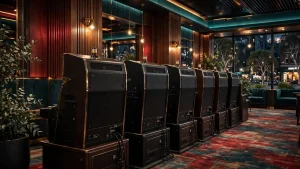
Where the Bonus Feature Fits—and What to Check First
A “buy bonus” button can sound like a shortcut: pay for a feature, skip the wait, get straight to the interesting part. I’ve learned to treat that wording as a description of a game mechanic, not a promise about what will happen next. If you’re looking for pokies with a bonus-buy option, start with the game’s own information rather than assuming the feature works the same way everywhere.
Open the game and look for its rules, help screen or information panel. That is where you can check whether a bonus-buy option is described, how the game presents it and what conditions it gives. Don’t rely on a lobby tile or a promotional label to explain the mechanics; a short label may say a feature exists without giving you enough detail to understand what selecting it does.
Then check the paytable. The RTP is generally shown in the game’s rules or paytable, so you can see the figure attached to the version in front of you. A specialist review has reported that an operator can select which RTP build to offer, and that the lobby tile does not show that configuration. In practice, that means the in-game information panel is the place to verify the displayed RTP before wagering. The same game name is not enough to establish that every version has the same settings.
A useful check is to distinguish three things: whether the game offers a buy option, what the game says that option activates, and what RTP the displayed version lists. Keep those details together. If you only spot the feature name, you have not yet checked the terms the game presents or its configuration. If the panel is unclear, don’t fill the gaps with assumptions.
- Open the game information or help screen
- Confirm the bonus-buy option is described
- Read the displayed costs and conditions
- Verify the RTP in the current version
I’ve made the mistake of treating a feature label as if it explained the whole deal. It didn’t. Read the wording on screen, including any cost or conditions the game displays, before deciding whether to use the option. A bought feature is still part of a slot’s random game; the label itself cannot tell you what outcome you’ll get.
There also isn’t a reliable universal catalogue to lean on here. A feature may be specific to a particular game or version, so identify the exact title and inspect its own help and paytable. That’s more useful than guessing from a provider’s other games or trusting a list that doesn’t show which version it describes.
Keep the check simple: open the game information, confirm the feature is actually described, read its displayed conditions, and verify the RTP in the same version before wagering. If the information you need is not clear, pause rather than treating a “buy” label as a complete explanation. No shortcut.
Free Play Is a Test Drive, Not a Preview of Your Next Win
Free play can show you what a game looks and feels like without putting real money at stake. That makes it useful for getting familiar with the screen and deciding whether you even like the pace. It does not show what your next real-money session will bring.
I used to treat a lively demo run as a kind of sign. A few good results, and I’d start imagining the same thing happening after switching to paid play. That was wishful thinking, not evidence. A run of free spins is just a run of spins; it cannot tell you whether the next one will pay, trigger a feature or do nothing worth remembering.
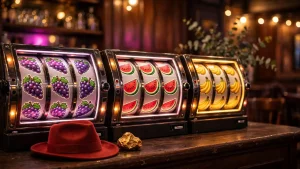
Every spin is generated independently by a Random Number Generator. The result of one spin does not make a particular result more likely on the next. A demo can feel persuasive because you see its outcomes one after another, but that sequence is not a preview or a promise. Same screen. No crystal ball.
That distinction matters when you are looking at games with a bonus feature that can be purchased. A free-play session might let you see the game’s ordinary layout and get a sense of its presentation. It cannot establish that paying to enter a feature would be worthwhile, or predict what that feature would return. “Practice run” sounds reassuring; it is only a way to look around without risking a stake.
Free access also does not turn a game into a safer route to a win. There is no real-money result to take home from a demo, and a strong-looking session does not carry forward into paid play. I’d use it to answer a modest question: do I understand what is on screen, and do I actually enjoy watching it? That is enough.
The wording people use for free bonus-buy play can suggest that the paid feature itself is available at no cost. Don’t assume that from a label or a search result. Free access may mean a demo of the game, not a free purchase of a bonus or a no-cost route to a real-money prize. Check what the screen actually offers, and stop if the terms are unclear.
Most importantly, don’t let a demo run decide your budget or persuade you to chase a result. If you move from free play to real-money gambling, you are making a different decision with money at risk. A demo can help you inspect a game. It cannot tell you how the next session will go.
Online Pokies: The Australian Access Reality
“Online” can sound like a simple matter of opening a game in a browser. In Australia, that word needs a legal asterisk. The Interactive Gambling Act 2001 prohibits Australian-licensed operators from offering pokies online, and online casino services that provide pokies and table games are restricted. A game appearing on a screen does not mean a locally licensed casino is offering it lawfully.
That distinction matters when you’re looking for Sweet Bonanza or other pokies with a bonus feature. A specialist review describes Sweet Bonanza as available to Australian players through offshore-licensed casinos, but that is not the same as local approval or protection. Offshore gambling services sit outside Australia’s consumer-protection framework, and the ACMA can ask internet providers to block websites carrying prohibited services. A page loading today is no promise of reliable access tomorrow. More importantly, visibility is not a stamp of safety.
I used to treat a working link as a kind of quiet endorsement. It isn’t. A lobby can show a game, and a search can turn up a site, without either establishing that the service is locally licensed or that Australian law permits the operator to provide online pokies here. The law places the prohibition on operators; individuals are not penalised simply for playing at an offshore site. Those are different points, and mixing them up makes the situation harder to read.

So if a bonus-buy game appears to be within reach, don’t let the feature name distract from the access question. The phrase “available in Australia” can mean only that someone can see a page or that an offshore site claims to accept Australian customers. It does not mean the game is supplied by an Australian-licensed online casino. There is no locally licensed online-pokies route to point to.
The ACMA is the federal authority responsible for enforcing the Act and monitoring compliance. Its blocking actions are part of why an offshore page may become inaccessible, even if it was reachable before. The regulator has blocked more than 1,455 illegal gambling and affiliate websites since November 2019. Accounts of withdrawals from the market since 2017 disagree: one reports more than 210 services, another more than 190. The exact total differs; the practical point is that enforcement changes what can be reached.
I’d keep the distinction plain: a game being visible is not local authorisation, and a bonus feature does not change the legal status of the service offering it. If you’re checking what “available” means, start with that—not the button promising a shortcut to the bonus round.
What Free Spins Can—and Can’t—Tell You
A run of free spins can feel like a preview: a few wins arrive, the screen stays quiet, or a feature appears sooner than expected. I used to treat those little streaks as clues about what might happen next. They aren’t. A slot uses a Random Number Generator, and each spin is a separate random event, independent of the spins before and after it.
That matters when you’re using a free demo to get a feel for a bonus-buy slot. A handful of spins can show you how the game looks and how its features behave when they appear. It cannot tell you whether the next spin will win, whether a bonus will land soon, or whether a similar run will happen again. There’s no “due” spin waiting in the wings.
A lucky demo streak is not a forecast. Neither is a run of blanks. I’ve made the mistake of reading both as signals, then carrying that confidence into a different session. The result was the same old lesson: a short run says what happened during that run, not what is about to happen.
The same goes for a bonus-buy feature. Seeing a bonus appear during free play tells you that it appeared in that session. It doesn’t establish how often it will appear in later play, or what a later feature round will return. A demo outcome is an outcome, not a promise.
So what is free play good for here? For watching the game in motion without turning each result into a prediction. Notice what happens on screen, and keep the limits of the exercise clear. If a run seems unusually generous or unusually dull, that impression still comes from a small set of independent spins.
I find it useful to separate two questions: “What did I just see?” and “What will happen next?” Free play can answer the first. Randomness leaves the second open. That can be frustrating, especially when a string of results looks like a pattern. But the next spin doesn’t owe the previous one a correction.
A demo can be interesting. It can’t see ahead.

The Bonus-Buy Feature Without the Sales Pitch
A bonus-buy feature is an option some slots provide to enter a bonus round by paying for access, rather than waiting for the game’s regular trigger. The name sounds tidy. The important detail is what the particular game says the feature does: rules and conditions are not interchangeable between titles, so a label alone does not tell you how a bonus is triggered or what happens inside it.
Sweet Bonanza is a useful example of why those details matter. A specialist review describes four or more scatters as awarding 10 free spins. That is a description of this game’s bonus mechanics, not a rule for every slot with a buy feature. It also does not mean a purchased entry, where one is offered, will produce a particular result.
During Sweet Bonanza’s free spins, multiplier bombs can appear. The same specialist review says their values are added together before being applied to a winning tumble. In plain English, the multipliers are combined first, then applied to the qualifying win. That explains the sequence; it does not tell you whether a tumble will win or what its value will be.
I used to read a feature name as if it were a promise of a more exciting round. It isn’t. A bonus is still part of a random game, and the description of its mechanics is not a forecast of the outcome. The buy option, if a game offers one, should not be confused with a guarantee of a win.
There is also an Australian context that marketing copy can leave out: real-money online casino games, including pokies, are prohibited services under the Interactive Gambling Act 2001 when offered to people in Australia. Explaining a mechanic is not a recommendation to seek out or use it.
So when you see a slot described as having a bonus-buy feature, look past the label. Check the game’s own rules for how its bonus works, and keep the explanation separate from any claim that paying for entry improves your chances. Mechanics are facts about the game. They are not a sales pitch.
RTP on a Slot With a Buy-Bonus Feature
When a slot lets you enter a bonus round by paying for it, RTP is still a useful number to understand—but it is not a forecast of what that purchase will return. RTP is a theoretical calculation of a game’s expected performance across a vast number of spins, often millions. It describes long-run behaviour, not the result of one session or one bonus round.
That distinction is easy to lose when a feature is presented as a shortcut. A displayed RTP does not tell you that buying access to a bonus will pay back a particular amount, or that it is more likely to produce a win than playing normally. It is not a promise attached to the feature. The same percentage cannot predict the outcome of your next spin.

If you are comparing games, a higher RTP theoretically points to a better return over time than a lower one. But that comparison only helps when you know which version of the game you are looking at. The figure is usually found in the game’s rules or paytable; it may take a few clicks to reach, rather than appearing on the lobby tile.
I learned not to treat a big feature button as information. The number in the game rules is more useful, provided it belongs to the version actually open in front of you. If the RTP is not shown clearly, you cannot make a sound comparison from the game’s name or artwork alone.
There is a limit to what the percentage can settle. RTP helps describe expected performance over time; it does not remove randomness, guarantee a return, or make a bonus purchase a safer choice. Keep those ideas separate. The feature is one thing. The long-run statistic is another.
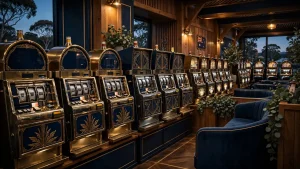
Before considering any wagering, check the game’s in-game rules or paytable for its displayed RTP configuration. Read the figure as context, not a promise about what happens next. A percentage is not a crystal ball.
Choosing a Slot Without Pretending There’s a Guaranteed Best
I’d be wary of anyone presenting one game as the best slot for buying a bonus. A feature does not turn a random game into a dependable way to win, and a confident label tells you nothing about the version you are looking at.
A more useful starting point is the return to player, or RTP. The general selection guideline is to look for a stated RTP of 96% or higher. That figure is a theoretical calculation across a vast number of spins, not a promise about a particular session. It can help you compare stated settings; it cannot tell you what will happen next.

There is another catch: a game’s lobby tile may not show the RTP setting in use. A specialist review reports that operators can select between RTP builds, so the displayed game name alone may not identify its configuration. Check the game’s own information panel or paytable and read the RTP shown there. If it does not match the figure you expected, that is worth noticing before making any decision.
I learned to stop treating a familiar title as a shortcut. “Best” is marketing language unless it is tied to a clear, checked setting—and even then, it describes a comparison, not a likely result. The number is context, not a forecast.
In Australia, real-money online pokies are prohibited services when offered to people in the country. So this is not a recommendation to seek out a site or play. If you are assessing a game’s published information, focus on its stated RTP and confirm the configuration in-game rather than trusting a tile or headline.
No guaranteed best. Just a setting you can verify, and an outcome you cannot.
Can Australian players legally play Sweet Bonanza?
Individuals are not penalised for playing at offshore sites, but operators cannot lawfully offer online pokies to Australian residents. Sweet Bonanza is available to Australian players only through offshore-licensed casinos, which are not locally licensed services.
Are there any strategies for choosing slot games based on RTP?
Check the game’s in-game rules or paytable, since the operator-selected RTP version may not be shown in the lobby. An RTP of 96% or higher is a useful comparison point, but RTP is a long-term theoretical measure, not a prediction for your spins.
Are three-reel pokies legal for Australian players in 2026?
Australian operators cannot offer online pokies, including three-reel games, to Australian residents. Individuals are not penalised simply for playing at offshore sites.
Is Sweet Bonanza high or low volatility?
Sweet Bonanza typically has an RTP of 96.51%, though the version you open may show a different figure. Check its in-game information panel for the RTP of that version.
What is the RTP number?
Sweet Bonanza typically has an RTP of 96.51%, but versions can differ. Check the game’s rules or paytable for the RTP of the version you are viewing.